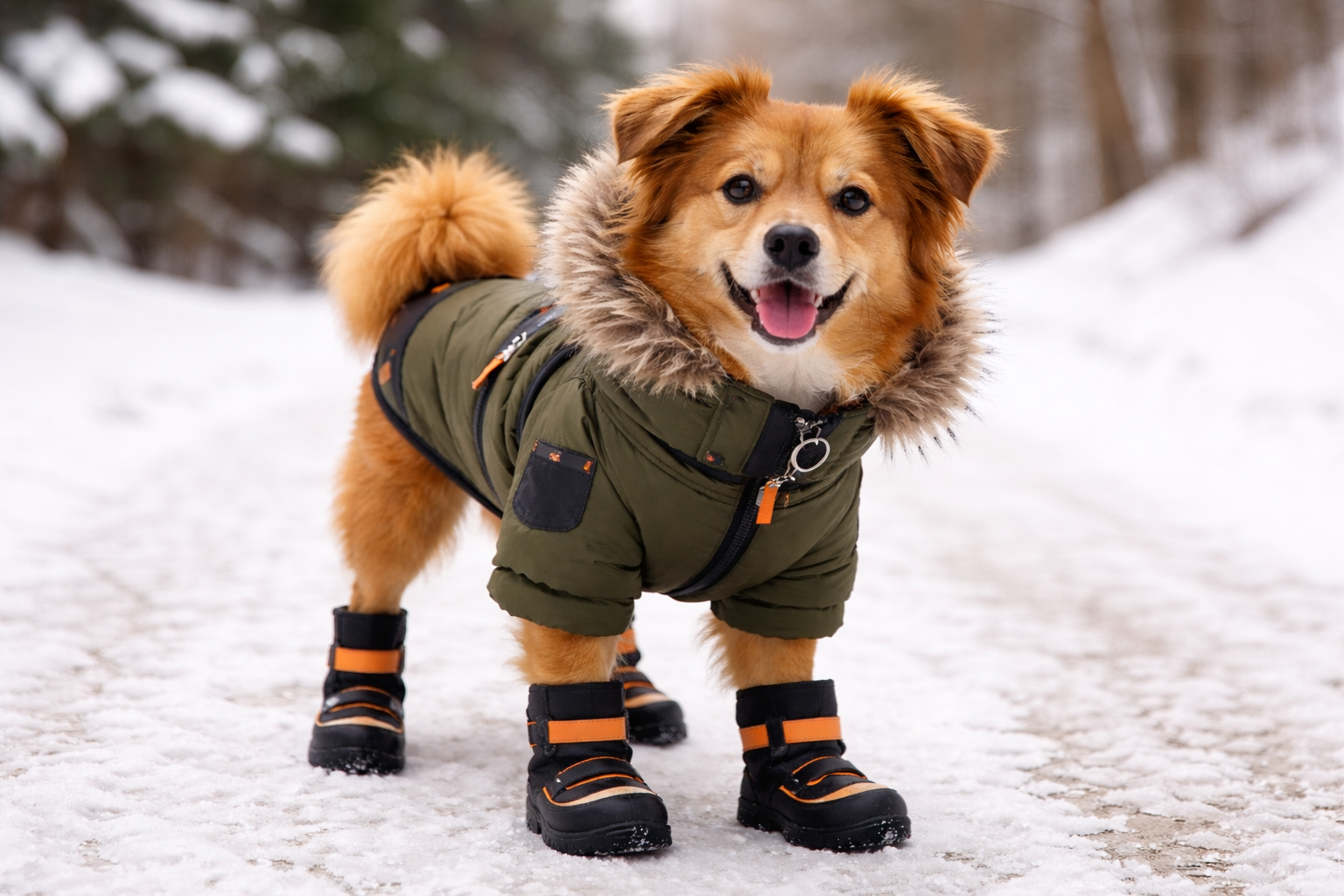
Key Takeaways
- Quality dog rain jackets provide full belly coverage and have adjustable straps, ensuring a proper fit that keeps your dog dry and comfortable across different body types.
- Dogs with short fur, seniors, and those recovering from surgery benefit most from weather protection gear, as it helps them stay warm, dry, and protected from health complications due to exposure.
- Ruffwear’s Sun Shower jacket provides excellent waterproofing without restricting movement, making it our top overall recommendation.
- Proper measurement is crucial; a raincoat should extend no more than halfway down your dog’s leg. This length keeps your dog dry while allowing full mobility, preventing restricted movement during walks.
- PawZ Pet Supply offers specialized solutions for dogs who hate getting wet, featuring innovative gear that keeps pets dry and comfortable during rainy walks.
Rainy walks don’t have to mean miserable dogs and frustrated owners. The right gear transforms wet-weather outings from dreaded chores into comfortable adventures. Your dog’s comfort in wet conditions depends largely on their coat type, age, and overall health—factors many pet parents overlook when considering whether to invest in protective gear.
Why Your Dog Needs Rain Gear: Protection Beyond Just Comfort
While some breeds naturally repel water with thick, oily double coats, many modern dogs benefit significantly from rain protection. Short-haired breeds, senior dogs, and those with health conditions are particularly vulnerable to the effects of cold rain. Dr. James Collins, veterinary specialist, explains that “dogs recovering from surgery or those with skin conditions should absolutely stay dry, as prolonged dampness can worsen inflammation and slow healing.”
Beyond medical concerns, proper rain gear helps maintain your regular walking schedule regardless of the weather. Regular exercise is crucial for your dog’s physical and mental well-being. Many behavior problems stem from insufficient activity, and rain jackets help ensure those vital walks happen even during wet seasons.
Dogs who hate getting wet—many do, despite stereotypes—often become more willing to walk when protected by rain gear. Staying dry improves their emotional comfort, leading to calmer leash behavior and more pleasant outings for both the dog and the owner.
Waterproof gear means less cleanup after walks. Minimizing your dog’s exposure to rain reduces the need for toweling and keeps your home cleaner by preventing soaked fur and muddy shake-offs at the door.
Top Dog Rain Jackets for All-Weather Walks
After testing dozens of dog rain jackets across different breeds, sizes, and weather conditions, several clear winners emerged. The ideal jacket should cover your dog’s back completely while providing chest and belly protection without restricting movement. Adjustable features are crucial since dogs vary tremendously in proportions even within the same weight class.
The best jackets balance waterproofing with breathability—an overlooked feature that prevents overheating during active play. Look for lightweight materials for spring showers and insulated options for cold rain. Visibility features like reflective trim or bright colors provide extra safety during low-light conditions common during rainy days. For more insights, check out this guide on the best dog raincoats.
Ruffwear Sun Shower: Best Overall Lightweight Option
The Ruffwear Sun Shower consistently outperformed competitors in our testing. Its standout features include excellent coverage that extends to the tail, adjustable belly straps that accommodate a range of chest sizes, and a lightweight material that doesn’t overheat active dogs. The side-release buckles make putting it on wiggling dogs much easier than over-the-head designs, and the leash portal allows attachment to either a harness or collar underneath. During our water-resistance tests, this jacket kept dogs completely dry under sustained heavy spraying, and the material dried quickly when hung afterward.
Mile High Life: Budget-Friendly Protection
The Mile High Life raincoat offers quality protection at a lower price. While coverage around the belly is lower than that of the top pick, its water-repellent coating performed well in tests. Available in bright colors with reflective strips, it provides visibility in poor weather. The hook-and-loop closure system makes it simple for older dogs to wear.
Hurtta Monsoon Coat: Maximum Coverage for Heavy Downpours.
The Hurtta Monsoon Coat delivers strong weather protection with an extra-long back that shields the hindquarters and upper thighs. Adjustable neck, chest, and waist provide a custom fit for various shapes, and the high collar keeps rain off the neck.
Despite its thorough coverage, the Monsoon Coat is lightweight and allows full motion. Its material balances waterproofing and breathability. While it’s priced higher, owners of short-haired and arthritic dogs find it valuable during wet seasons.
Ruffwear Vert: Best Insulated Option for Cold Rain
The Ruffwear Vert jacket provides waterproofing and insulation for cold weather. Its three-layer design keeps dogs warm and dry in chilly rain. The storm collar can be used for heavy rain or tucked away when not needed.
Side-release buckles make dressing easier, and the cut allows full shoulder movement for activity. While more expensive, its rain and insulation features suit owners in variable climates.
Size-Specific Options for Large and Small Dogs
Finding appropriate rain gear presents unique challenges at both ends of the size spectrum. Tiny dogs often swim in standard small sizes, while extra-large breeds may find even “large” options restrictive across the chest and shoulders. For small dogs, the Gooby Stretch Fleece with rain cover offers an exceptional fit with a soft inner layer that appeals to comfort-focused small breeds. The stretchy material accommodates the barrel-chested physique common in small dogs like Chihuahuas and Dachshunds.
Conversely, large breed owners should consider the Hurtta Torrent coat, which comes in genuinely functional XXL sizes with enough chest room for broad-shouldered breeds. The adjustable straps accommodate the dramatic difference between chest and waist measurements common in large breeds like Greyhounds and Dobermans. Both options demonstrate thoughtful engineering for the unique physiology at each size extreme.
Waterproof Dog Boots That Actually Stay On
While jackets protect your dog’s body, many owners overlook the importance of paw protection during wet weather. Prolonged exposure to water can soften paw pads, making them vulnerable to cuts and abrasions from urban surfaces. Additionally, many municipalities use ice-melting chemicals during cold rain that can cause chemical burns on unprotected paws. Quality waterproof boots complete your dog’s rain gear system, preventing discomfort and potential injury.
Essential Features in Quality Rain Boots
The perfect dog rain boot combines three critical elements: water resistance, secure attachment, and appropriate traction. Many cheaper boots fail in one or more of these areas, leading to frustrated owners and resistant dogs. Look for boots with extended gaiters that prevent water from entering at the top, multiple attachment points to prevent slipping, and non-slip soles for confidence on wet surfaces.
The most common complaint about dog boots is that they simply won’t stay on. This usually results from improper sizing or insufficient fastening mechanisms. High-quality options use both elastic and hook-and-loop closures to provide a secure yet comfortable fit. Proper boot shape matters too—the best designs account for a dog’s paw’s natural spread when bearing weight.
Top 3 Boot Options for Wet Weather
After testing dozens of dog boots in real-world conditions, three clear winners emerged. The Ruffwear Grip Trex boots offer exceptional traction and staying power thanks to their thoughtful design that mimics athletic shoes. The reinforced toe cap protects against scraping, while the hook-and-loop closure system provides a secure fit that resists shifting during active play. These boots performed exceptionally well on slippery surfaces, such as wet rocks and muddy trails.
For urban walkers, PAWZ disposable rubber boots provide waterproof protection without the bulk of traditional boots. These sock-like waterproof barriers are particularly useful for dogs who resist conventional boots, as the thin material allows more natural paw sensory feedback. While not as durable as hardier options, their affordability makes replacement less painful, and many dogs accept them more readily than structured boots.
Signs Your Dog’s Paws Need Extra Protection
Not every dog requires boots in light rain, but certain warning signs indicate your companion would benefit from paw protection. Excessive licking or chewing of the paws after walks, reluctance to walk on wet surfaces, or visible cracks in the paw pads all suggest that boots would improve comfort. Dogs with arthritis or joint issues particularly benefit from keeping their extremities dry and warm during inclement weather. For more information, check out the best dog boots recommended by experts.
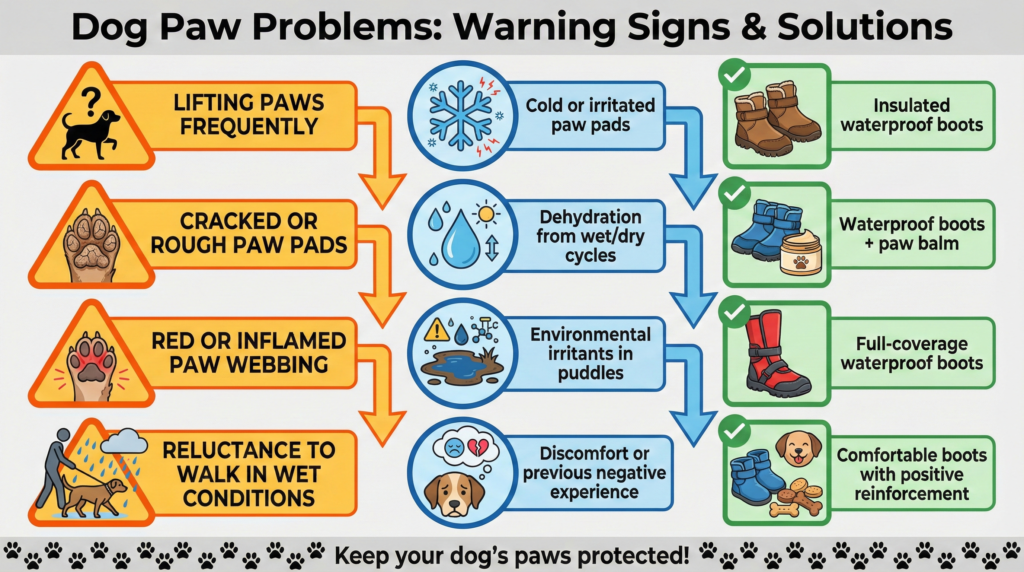
Seasonal changes also affect paw sensitivity. Winter transitions often bring salt and de-icing chemicals to sidewalks, which can cause painful chemical burns. In warm climates, spring rains can activate dormant fungi and bacteria in soil that may cause infections in paw cuts. Monitoring your dog’s reaction to different weather conditions helps determine when boots become necessary.
Senior dogs particularly benefit from paw protection as their pads thin with age and lose natural oils that provide waterproofing. Veterinary experts recommend introducing boots before they become medically necessary, making the transition easier when protection becomes essential rather than optional. A gradual introduction while your dog is still healthy creates positive associations that pay dividends when protection becomes crucial.
How to Properly Size and Fit Weather Gear
The most common reason dog rain gear fails is improper sizing. Even the highest quality jacket provides little protection if it’s constantly shifting or leaving key areas exposed. Before purchasing, measure your dog’s length from the base of the neck to the tail, chest circumference at the widest point (usually right behind the front legs), and neck circumference where a collar would sit.
Most manufacturers provide detailed sizing charts, but breeds vary tremendously in proportions. A Greyhound and a Bulldog may share the same weight class, but require entirely different fits. When between sizes, consider your dog’s coat thickness and whether they’re still growing before deciding to size up or down.
Measuring Your Dog for Rain Jackets
The perfect rain jacket should cover your dog’s back completely while providing adequate chest and belly protection. The jacket’s length should extend from the base of the neck to just before the tail, covering the back fully without restricting bathroom functions. Width-wise, the jacket should wrap comfortably around the sides without being so loose that it shifts during movement or so tight that it restricts breathing or shoulder mobility.
For belly coverage, ensure the material extends at least halfway across the underside, with adjustable straps that can accommodate your dog’s unique chest-to-waist ratio. Too many owners select jackets with insufficient belly protection, leaving their dogs with soaked undersides despite a protected back. Remember that the belly is often where dogs collect the most water from wet grass and puddles.
Your dog’s raincoat should extend no more than halfway down the leg. To assess how a jacket will sit on your dog, compare half its width to the distance between the top of your dog’s tail and the ankle of their hind leg just above the paw. This ensures protection without creating a tripping hazard.
Boot Sizing: Getting the Right Fit First Time
Boot sizing requires particular attention to both width and length measurements. Place your dog’s paw on a piece of paper and mark the width at the widest point and the length from heel to toe with the paw fully weighted. Unlike human shoes, dog boots should fit snugly without extra room at the toe, as excess space leads to shifting and potential loss during activity.
Remember that front and back paws often differ in size, with front paws typically larger. Some manufacturers offer boots in pairs rather than sets of four, allowing for customized sizing. This is particularly important for dogs with unique proportions or those with medical conditions affecting certain limbs.
Adjustment Tips for Wiggling Dogs
Even a perfectly sized gear requires proper adjustment. For jackets, always secure chest straps first before adjusting neck and belly closures. This anchors the jacket at its most crucial point, preventing backward sliding during movement. Ensure you can slip two fingers between the straps and your dog’s body—this provides comfort without allowing the straps to shift.
For boots, proper tension is critical. The closure should be tight enough to prevent slipping but not so tight as to restrict blood flow. A good test is to insert a fingertip under the closure; if not, loosen it slightly. During initial fittings, distract your dog with treats while making adjustments, creating positive associations with the gearing-up process.
Walking Strategies for Rainy Days
Even with perfect gear, rainy day walks benefit from strategic planning. Route selection becomes crucial—wooded paths provide natural shelter from rainfall, while avoiding areas prone to puddle formation reduces splashing. Consider adjusting walk duration based on temperature and rain intensity, as even the best gear has limitations during sustained heavy downpours.
Timing matters significantly during wet seasons. Brief breaks in rainfall offer windows for more comfortable outings, and surfaces dry remarkably quickly after light rain stops. Apps that provide hyperlocal precipitation forecasts help identify these optimal windows, making walks more pleasant for both you and your companion.
Best Times to Walk in Wet Weather
Contrary to popular belief, walking in light rain is often more comfortable than walking immediately after heavy downpours. During active rainfall, water tends to run off surfaces rather than creating deep puddles. Post-rain, accumulated water creates splash zones that can defeat even quality boots and jackets.
Early morning walks offer advantages during rainy seasons. Overnight precipitation often clears by dawn, leaving freshly washed surfaces free of the midday crowds. Additionally, morning temperatures typically remain stable, unlike in the afternoon, when sudden drops can make wet dogs uncomfortable even with proper gear.
For unavoidable heavy rain walks, prioritize efficiency over distance. A focused potty walk with mental stimulation games can provide adequate exercise while minimizing exposure time. Simple training exercises or scent games in covered areas supplement shorter physical outings, ensuring your dog’s mental needs remain met despite abbreviated walks.
Post-Walk Cleanup Routine
Establishing an efficient post-walk routine preserves both your home’s cleanliness and your gear’s longevity. Create a designated drying station near your entry point with absorbent towels and a waterproof mat. Remove boots first, then jackets, drying them in a specific sequence that minimizes water transfer to your dog’s fur.
For particularly wet or muddy conditions, keep a spray bottle filled with diluted dog shampoo and clean water for spot cleaning without a full bath. Microfiber towels absorb significantly more moisture than standard cotton towels, making them worthwhile investments for rainy-season management. Pay special attention to paws, belly, and ears—areas most likely to harbor hidden moisture that can cause skin issues if left damp.
Training Tips for Gear-Resistant Dogs
Many dogs initially resist weather gear through no fault of their own. Gradual introduction proves crucial for acceptance. Begin by simply showing the gear during positive experiences, such as meals or play sessions, to create neutral or positive associations before attempting fitting. Progress to brief touch sessions, rewarding calm acceptance before attempting actual wearing.
For particularly resistant dogs, break the process into micro-steps. Handle paws regularly during relaxed moments to prepare for boot fittings. Use high-value treats reserved specifically for gear training sessions. Consistency proves key—even thirty seconds of successful wearing followed by treats builds more positive associations than forcing full walk-length wearing that creates negative experiences.
Remember that acceptance may take weeks rather than days, particularly with boot-resistant dogs. The investment in patient training pays dividends throughout your dog’s life, making every rainy season exponentially easier as they learn that gear predicts both comfort during walks and treats during the fitting process.
Care and Maintenance of Weather Gear
Proper maintenance significantly extends the lifespan of quality weather gear. Most rain jackets perform best when cleaned regularly, as dirt particles can damage waterproof coatings and membranes over time. However, harsh detergents and high-heat drying, commonly used for human gear, often destroy the specialized treatments on pet weather equipment. Following manufacturer instructions precisely—rather than assuming all gear cleans identically—preserves functionality through multiple seasons.
Cleaning Instructions for Different Materials
Synthetic raincoat materials typically require gentle washing with specialized technical cleaners that remove dirt without damaging waterproof membranes. Products like Nikwax Tech Wash or Rex Technical Cleaner maintain waterproofing while removing buildup that can clog breathable membranes. After several washings, most jackets benefit from reproofing treatments that restore water repellency without affecting breathability. Machine-wash on a gentle cycle for most synthetic jackets, but always air-dry them away from direct heat sources that could warp or damage the material.
Rubber or PVC boots require different care than fabric-based options. Wipe clean with mild soap and water after each use, paying special attention to tread patterns where mud collects. Avoid petroleum-based cleaners, as they can degrade rubber compounds over time. After cleaning, allow boots to dry completely before storage, as trapped moisture can promote mildew growth that breaks down materials and creates unpleasant odors.
Storage Tips to Extend Gear Life
Proper storage between seasons dramatically improves gear longevity. Always ensure equipment is completely dry before storing to prevent mildew and material degradation. Hang jackets on broad supports rather than narrow hooks that can stretch fabrics at pressure points. Store boots in shape-maintaining forms, or stuff with acid-free tissue to prevent creasing that can lead to cracking in waterproof materials.
Extreme temperatures affect waterproof membranes and adhesives, so choose storage locations with stable conditions. Avoid attics, garages, or other spaces with significant temperature fluctuations. For insulated gear, loose storage in breathable containers preserves loft better than compressed storage in plastic bins. These simple precautions can double the functional lifespan of premium weather gear, making higher initial investments more economical over time.
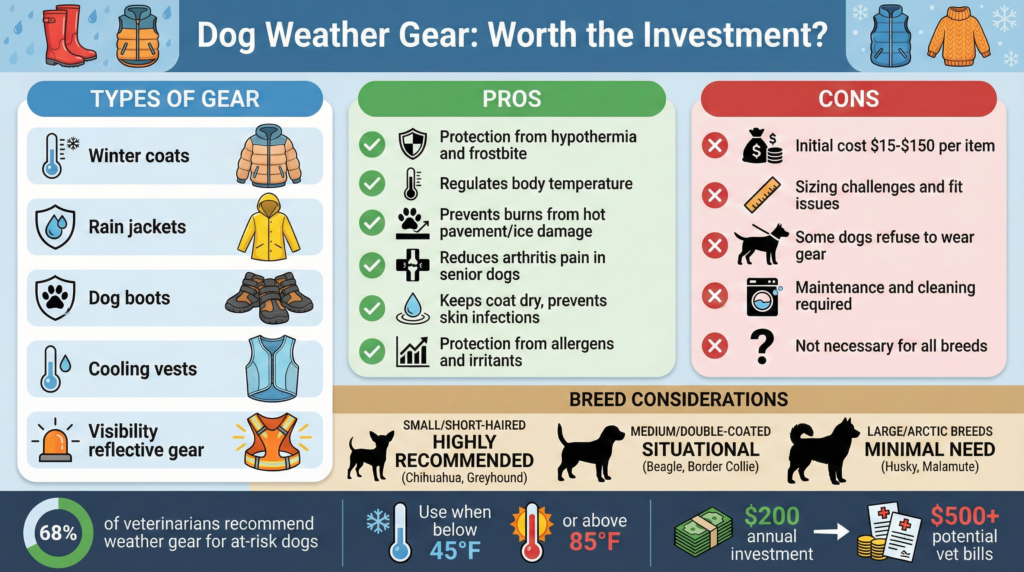
Weather Gear Worth the Investment
Quality rain gear represents an investment in both your dog’s comfort and your own convenience. While premium options like the Ruffwear lineup carry higher price tags, their superior durability and performance typically provide better value over multiple seasons than repeatedly replacing cheaper alternatives. The equation becomes particularly clear for dogs who struggle with rainy walks—the ability to maintain regular exercise regardless of weather conditions benefits physical health while preventing behavior problems stemming from insufficient activity.
For dogs with medical needs requiring dryness or those with age-related temperature sensitivity, appropriate weather gear becomes less optional and more essential. The increased willingness to walk in adverse conditions, reduced post-walk cleanup time, and potential veterinary savings from avoiding weather-related issues all contribute to the value calculation that makes quality gear a worthwhile investment. PawZ Pet Supply specializes in finding the perfect match between your dog and the ideal weather protection, ensuring your companion stays comfortable regardless of the forecast.
Frequently Asked Questions
Throughout our testing process, certain questions consistently arose from dog owners considering weather gear investments. The following answers address the most common concerns while providing practical guidance for specific situations. For more information, check out this review of the best dog boots.
Many factors influence whether your particular dog would benefit from rain protection, including breed characteristics, individual preferences, and health conditions.
How do I know if my dog actually needs rain gear?
Your dog likely needs rain protection if they exhibit any of these behaviors: reluctance to go outside when it’s raining, excessive shivering during or after wet walks, seeking shelter under trees or overhangs during rainfall, or showing visible stress when wet. Physical indicators include slow drying time (over 30 minutes), skin irritation after rain exposure, or matting that worsens when wet.
From a health perspective, senior dogs, puppies, dogs with arthritis, and those with compromised immune systems benefit most from staying dry during inclement weather. Breeds with minimal insulation (like Greyhounds, Chinese Crested, or Italian Greyhounds) or those bred for desert environments typically require more weather protection than Nordic or working breeds with water-resistant double coats.
Can I use human rain gear for my dog in a pinch?
- Children’s raincoats can work temporarily, but typically lack appropriate openings for leash attachment and bathroom functions.
- Human gear rarely provides proper chest/belly coverage, whereas dogs collect most of their water from ground splashing.
- The noise from human raincoat materials often causes stress in dogs sensitive to unusual sounds.
- Human sizing rarely accommodates the dramatic difference between chest and waist measurements in most dog breeds.
In genuine emergencies, a child’s poncho can provide temporary back protection, secured with gentle elastic around the chest. Cut a small opening for leash attachment at the collar area. Remember, this solution works only for brief relief breaks, not extended walks, as the improper fit will cause shifting and potential tripping hazards.
For homemade temporary solutions, consider waterproof baby stroller covers that fit over your dog’s back and are secured with soft elastic. While not ideal, these provide better protection than most improvised alternatives and can be adjusted to allow proper movement.
Remember that proper sizing remains crucial even for temporary solutions—too tight restricts breathing and movement, while too loose creates dangerous entanglement possibilities. Always supervise dogs wearing improvised gear to prevent potential accidents.
When traveling without gear, consider scheduling walks during breaks in rainfall rather than attempting makeshift protection. Most dogs can comfortably hold bathroom needs for several hours, making strategic timing more practical than inadequate, improvised gear in many situations.
How long should weather gear last with regular use?
Quality dog rain jackets typically last 2-4 years with regular use (3-4 times per week during wet seasons) when properly maintained. Premium brands like Ruffwear and Hurtta often sit at the upper end of this range, while budget options may need to be replaced after 1-2 seasons. Key factors affecting longevity include washing frequency, storage conditions, and your dog’s activity level and environment.
- Waterproof coatings begin diminishing after approximately 20-30 washes, though reproofing treatments can restore performance.
- Seam sealing typically remains effective for 2-3 years before potential failure points develop at stress areas.
- Closures represent the most common failure points, with velcro lasting 1-2 years and buckles typically surviving the full gear lifespan.
- Urban environments with higher pollution levels shorten the lifespan of waterproof membranes compared to rural environments.
Boots typically have shorter lifespans than jackets, with heavy-duty models lasting 1-2 seasons of regular use before tread patterns wear and waterproofing diminishes. Disposable options like PAWZ provide 2-5 uses per boot, depending on terrain and activity level. Rotating between multiple pairs extends the useful life by allowing complete drying between uses. For more information on durable footwear, check out the best dog boots recommended by experts.
Signs that replacement time has arrived include visible seam separation, persistent dampness under the jacket after rain exposure, or significant color fading that indicates UV damage to waterproof treatments. For boots, replacement becomes necessary when tread patterns have worn smooth, affecting traction on wet surfaces, or when closures no longer maintain secure positioning during normal activity. For more information on quality options, check out the best dog boots available.
Why does my dog hate wearing boots, and how can I help?
Dogs primarily resist boots because they dramatically reduce sensory feedback from their paws—a critical source of information about terrain and stability. This sensory deprivation can cause the exaggerated high-stepping gait commonly seen in new boot wearers. Additionally, the weight difference affects proprioception (body awareness), as humans do when adjusting to ankle weights. Rather than stubbornness, this response represents a natural adaptation to altered sensory input.
A successful boot introduction requires patience and positive association-building. Start with single-boot sessions of just 30 seconds, providing high-value treats and play as a distraction. Progress extremely gradually, adding time before adding additional boots. Indoor practice sessions provide a controlled environment, free from additional weather stressors. Movement helps dogs adjust faster than standing still, so encourage gentle leashed walking immediately after fitting. Products with thinner soles, like PAWZ rubber boots, often gain acceptance faster than structured boots, providing a potential stepping stone to more protective options as acceptance grows.
Are there waterproof options for dogs with unusual body shapes?
Specialized manufacturers now offer solutions for dogs with proportions that defy standard sizing. For barrel-chested breeds like Bulldogs, Voyagers K9 Apparel creates custom-patterned rainwear with extra chest room without excessive back length. Dachshunds and similar long-backed breeds benefit from Gold Paw’s stretch rainwear that accommodates length without chest restriction. Dogs with mobility issues or arthritis often do better with side-opening designs like HurttaPro that minimize lifting of sensitive limbs during dressing.
Three-legged dogs face unique challenges with standard gear. Ruffwear’s Web Master Plus provides stability and weather protection simultaneously by combining harness support with waterproof panels. For dogs with significant weight loss from illness or surgical alterations to normal body contours, adjustable systems with multiple connection points allow customized fitting that standard designs cannot provide.
PawZ Pet Supply specializes in finding the perfect match between uniquely shaped dogs and their ideal weather protection, ensuring every dog can enjoy comfortable protection regardless of their specific body challenges. With proper measurement and specialized designs, even the most unusually proportioned dogs can enjoy the comfort and protection that make rainy-day adventures possible.
Leave a Reply