
Key Takeaways
- Chocolate, caffeine, and xylitol can be deadly to dogs even in small amounts, causing seizures, organ failure, and death if not treated immediately.
- Grapes and raisins can cause sudden kidney failure in dogs, with some pets being extremely sensitive to even a single grape.
Our dogs are family, but what nourishes us can poison them. Many common foods in your kitchen right now could send your furry friend to the emergency vet or worse. Understanding which foods pose serious threats to your dog is an essential responsibility of pet ownership and could save your dog’s life.
As responsible pet parents, we need to know exactly which human foods pose dangers to our canine companions.
Deadly Foods That Can Kill Your Dog
Some foods aren’t just harmful to dogs – they can be lethal, even in small amounts. These high-priority toxins should never be accessible to your pet under any circumstances, as they can lead to rapid organ failure, seizures, and death without immediate veterinary intervention.
Chocolate and Caffeine: Silent Killers
Chocolate contains theobromine and caffeine, stimulants that dogs cannot metabolize effectively. The darker the chocolate, the more dangerous it is; baking chocolate and cocoa powder are the most toxic. Even a small amount of dark chocolate can cause vomiting, diarrhea, increased heart rate, muscle tremors, seizures, and death.
The severity of chocolate poisoning depends on the type of chocolate, the amount consumed, and your dog’s size. A 10-pound dog could experience toxic effects from as little as one ounce of dark chocolate. Coffee, tea, energy drinks, and caffeinated sodas pose similar dangers due to their caffeine content.
Signs of chocolate or caffeine poisoning typically appear within 6-12 hours and may include excessive thirst, urination, panting, restlessness, and elevated heart rate. If you suspect your dog has consumed chocolate or caffeine, contact your veterinarian immediately, as prompt treatment significantly improves the prognosis.
Xylitol: Hidden Danger in Sugar-Free Products
Xylitol, a sugar substitute found in sugar-free gum, candy, baked goods, and even some peanut butter brands, causes a rapid insulin release in dogs. This sudden insulin surge can cause hypoglycemia (low blood sugar) within 10-60 minutes after ingestion. Even small amounts—less than a stick of gum—can be life-threatening to small dogs.
This sweetener is particularly dangerous because it’s increasingly common in household products that owners might not think to keep out of reach of pets. Symptoms include weakness, lack of coordination, seizures, and potential liver failure. Always check labels for xylitol, especially on “sugar-free” products, and store them securely out of your dog’s reach.
Grapes and Raisins: Small Fruits With Deadly Consequences
Grapes and raisins can cause acute kidney failure in dogs, and what makes them particularly dangerous is that the toxic dose varies dramatically between individual dogs. Some dogs may eat a few grapes with no apparent effects, while others suffer kidney failure from a single grape. This unpredictability means all grapes and raisins should be considered extremely hazardous.
Serious Toxins That Damage Your Dog’s Health
Beyond the immediately life-threatening foods, many common ingredients can cause serious organ damage, painful symptoms, or long-term health problems. These foods might not kill your dog immediately, but they can lead to severe illness and reduced quality of life.
Onions and Garlic: Destroyers of Red Blood Cells
All members of the allium family—onions, garlic, leeks, and chives—contain compounds that damage dogs’ red blood cells, potentially causing hemolytic anemia. Garlic is approximately five times more toxic than onions, and cooking doesn’t reduce the danger. Even small amounts of onion or garlic powder can be harmful, so many human foods seasoned with these ingredients pose hidden risks.
Macadamia Nuts: Why Even Small Amounts Are Dangerous
Macadamia nuts contain an unknown toxin that affects dogs’ nervous systems and muscles. As few as four nuts can cause weakness, overheating, vomiting, tremors, and painful joint inflammation. While rarely fatal, the symptoms are extremely uncomfortable for dogs and typically require veterinary treatment to resolve.
Alcohol: Effects on Dogs vs. Humans
Dogs are far more sensitive to alcohol than humans, with even small amounts causing significant intoxication, dangerous drops in blood sugar, blood pressure, and body temperature. Beer, wine, liquor, and foods containing alcohol (like rum cake) can all cause alcohol poisoning in dogs. The smaller the dog, the more severe the effects, with potentially fatal consequences from amounts that would barely affect a human.
Raw Yeast Dough: Double Danger of Expansion and Alcohol
Raw yeast dough creates two distinct hazards for dogs. First, the warm, moist environment of a dog’s stomach causes the dough to expand, potentially leading to painful bloating and dangerous intestinal obstruction. Second, as yeast ferments in the digestive tract, it produces alcohol that’s rapidly absorbed into the bloodstream, causing symptoms of alcohol poisoning.
Never allow your dog access to unbaked bread dough, pizza dough, or other raw yeast products. Symptoms of ingestion include a distended abdomen, vomiting, weakness, and, in severe cases, seizures or coma. This is an urgent veterinary emergency requiring immediate professional attention.
Common Kitchen Items That Poison Dogs
Your kitchen contains numerous items that seem harmless but can cause significant health problems for your canine companion. These everyday foods and ingredients require careful management to keep your dog safe.
Even small amounts of these common kitchen items can lead to digestive upset, organ damage, or other serious health complications. Being vigilant about keeping these foods secure and educating family members about the risks is crucial to your dog’s well-being.
Avocados: Beyond the Pit Problem
While the pit presents an obvious choking and intestinal blockage risk, avocados contain persin, a fungicidal toxin that can cause vomiting, diarrhea, and myocardial damage in dogs. Although dogs are less sensitive to persin than other animals, such as birds and horses, it’s best to keep avocados and guacamole away from your dog to avoid potential adverse reactions and gastrointestinal distress.
Salt and Salty Snacks: Hidden Dangers
Excessive salt intake can lead to sodium ion poisoning in dogs, causing symptoms ranging from vomiting and diarrhea to seizures and death in severe cases. Potato chips, pretzels, popcorn, and other salty snacks can quickly exceed a dog’s safe sodium threshold, especially in smaller breeds.
Dogs with certain heart conditions are particularly vulnerable to salt’s effects, as increased sodium can worsen fluid retention and cardiac stress. Even foods we don’t consider “salty,” like cheese or lunch meats, often contain high sodium levels that accumulate quickly when fed as treats or table scraps.
Dairy Products: Why Milk Makes Dogs Sick
Most dogs are lactose intolerant, lacking sufficient lactase enzyme to properly digest milk sugar. When dogs consume dairy products such as milk, ice cream, or cheese, undigested lactose ferments in the intestines, causing gas, bloating, diarrhea, and abdominal discomfort. While not typically life-threatening, dairy consumption significantly impacts your dog’s comfort and digestive health.
Fruit and Vegetable Dangers Most Owners Miss
Many pet owners assume all fruits and vegetables are healthy for dogs, but this dangerous misconception puts pets at risk. Several common produce items contain compounds specifically toxic to canine physiology, causing effects ranging from mild digestive upset to serious organ damage.
The safest approach is to thoroughly research any fruit or vegetable before sharing it with your dog, paying attention to which parts are dangerous (seeds, stems, leaves) and which varieties pose specific risks. When in doubt, stick with veterinarian-approved, dog-safe options.
Stone Fruit Pits: Cyanide Poisoning Risk
Cherries, peaches, plums, and apricots contain pits with cyanide compounds that release when chewed or damaged. Beyond the obvious choking hazard, these pits can cause cyanide poisoning, characterized by dilated pupils, difficulty breathing, bright red gums, and shock. Always keep stone fruits stored securely, dispose of pits carefully, and only offer small amounts of the flesh (never the pit) as an occasional treat.
Unripe Tomatoes and Tomato Plants
While ripe tomato flesh is generally considered safe in small amounts, green tomatoes and all parts of the tomato plant (stems, leaves, vines) contain solanine and tomatine, compounds toxic to dogs. Symptoms of tomato plant poisoning include gastrointestinal upset, ataxia (loss of coordination), weakness, and cardiac effects.
If you grow tomatoes in your garden, ensure your dog cannot access the plants. For dogs that enjoy vegetables, there are many safer alternatives that don’t pose a toxic risk.
Green Potatoes and Potato Plants
Potatoes that have turned green from exposure to light develop solanine, the same toxic compound found in tomato plants. All above-ground parts of the potato plant (leaves, stems, flowers), as well as green potatoes and potato eyes, can cause significant toxicity in dogs.
- Green or sprouting potatoes should never be fed to dogs
- Potato plants should be kept inaccessible to dogs in gardens
- Symptoms include vomiting, diarrhea, seizures, and cardiac problems
- Properly cooked, peeled, plain white potatoes are generally safe in moderation
The distinction between safe and unsafe forms makes potatoes particularly tricky. While plain, cooked potatoes are generally considered acceptable in small amounts, raw potatoes, potato skins, and anything green or sprouting should be strictly avoided.
Potato chips, French fries, and other processed potato products pose additional concerns due to their high fat, salt, and sometimes garlic or onion content, creating multiple layers of potential toxicity.
For dogs that enjoy the texture of potatoes, sweet potatoes (yams) are a safer alternative when prepared without added seasonings or butter.
Frequently Asked Questions
Even careful pet owners sometimes encounter confusing situations regarding their dog’s diet and potential exposures to toxic foods. These frequently asked questions address common scenarios you might encounter and provide practical, actionable advice.
Remember that while general guidelines are helpful, individual dogs may react differently to various substances based on their size, breed, age, and overall health status. When in doubt, consulting with your veterinarian is always the safest approach.
- What should I do if I don’t know exactly what my dog ate, but they’re acting sick?
- Can cooking toxic foods make them safe for dogs?
- Are puppies more vulnerable to food toxins than adult dogs?
- Should I keep ipecac or other emergency medicines on hand?
If your dog is showing unusual symptoms like lethargy, vomiting, diarrhea, or behavior changes, seek veterinary care promptly, even if you haven’t witnessed them consuming anything harmful. Many toxins act gradually, and early intervention significantly improves outcomes.
Can one grape really kill my dog?
- Individual sensitivity to grape toxicity varies dramatically between dogs
- Some dogs show severe kidney damage after consuming a single grape
- Others may eat several with no apparent effect
- There’s no way to predict which dogs are highly sensitive
This unpredictability makes grapes and raisins particularly dangerous toxins. Unlike chocolate, where we can calculate relatively safe amounts based on weight and cocoa content, no “safe” threshold exists for grapes. The mechanism behind grape toxicity remains poorly understood despite extensive research.
What makes grape toxicity particularly insidious is that initial symptoms might seem mild—vomiting, lethargy, or reduced appetite—but kidney damage progresses silently until reaching critical levels. By the time severe symptoms appear, irreversible damage may have occurred.
The safest approach is zero tolerance: no grapes or raisins for any dog, ever. This includes foods containing these ingredients, like certain breads, cookies, cereals, and salads. Be especially vigilant with children who might share their snacks without understanding the consequences.
Is peanut butter safe for dogs?
Most peanut butter is safe for dogs in moderation, but you must check ingredient labels carefully for xylitol, which appears in some “natural” or reduced-sugar varieties. This artificial sweetener is extremely toxic to dogs, causing rapid insulin release and potential liver failure. Brands containing xylitol typically list it in the first 3-5 ingredients, though manufacturers sometimes change formulations, so regular label checking is essential.
- Choose natural peanut butter with only peanuts and salt
- Avoid reduced-sugar or “light” varieties, which more commonly contain xylitol
- Limit portions as peanut butter is high in fat and calories
- Consider dedicated pet-specific peanut butter brands for added safety
When used safely, peanut butter can be an excellent training reward or medication delivery vehicle. Many dogs who refuse pills will happily consume them hidden in a small amount of peanut butter. Just remember that even safe peanut butter is calorie-dense, so adjust your dog’s regular meals accordingly when using it as a treat.
Why can some dogs eat “toxic” foods without getting sick?
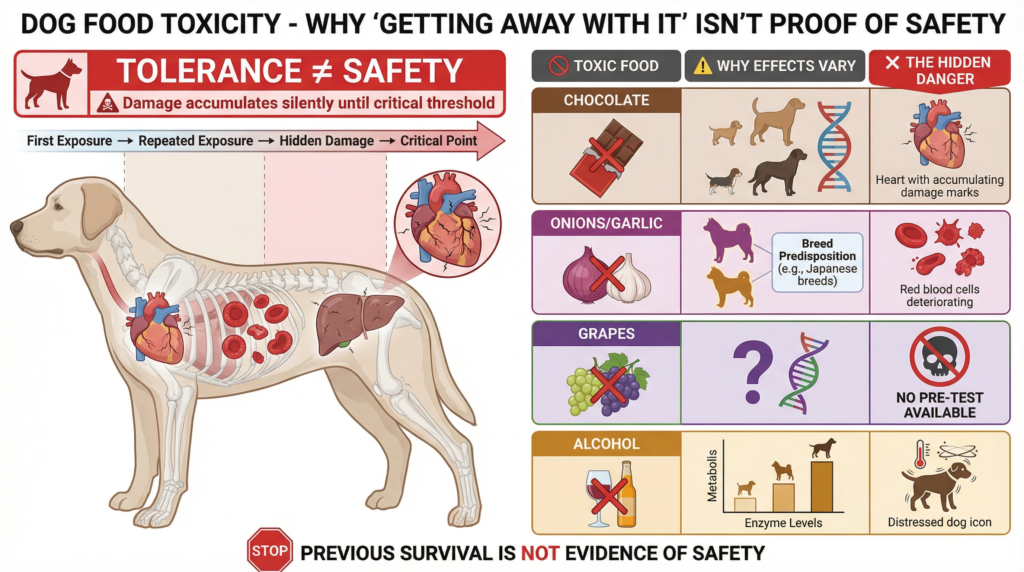
Individual variation in dogs’ metabolism, genetics, and microbiomes affects how they process potential toxins. This variability creates dangerous false confidence when dogs consume typically toxic foods without apparent consequences. A dog might eat chocolate once with minimal effects, leading owners to believe it’s safe, only to suffer severe poisoning with the next exposure.
Toxicity thresholds also vary by size, with smaller dogs experiencing effects at much lower doses than larger breeds. A piece of chocolate that barely affects a Great Dane could cause serious symptoms in a Chihuahua. Age and health status further complicate the picture, with puppies, seniors, and dogs with pre-existing conditions typically being more vulnerable.
Some dogs develop tolerance to certain foods through repeated exposure, but this doesn’t make these foods safe. Gradual damage accumulation can occur without obvious symptoms until it reaches a critical threshold. The fact that a dog “got away with it before” should never be taken as evidence that a food is safe for that individual.
How long after eating something toxic will my dog show symptoms?
Symptom onset varies significantly depending on the toxin, the amount consumed, and your dog’s size and metabolism. Chocolate and caffeine typically produce effects within 6-12 hours, while xylitol can cause hypoglycemia within 30 minutes. Grapes may not show kidney damage effects for 24-48 hours, and onion/garlic toxicity may take several days to appear, as red blood cells are gradually damaged. This variable timeline makes it essential to seek veterinary advice immediately upon suspected ingestion rather than waiting for symptoms to develop.
Are table scraps always bad for dogs?
Not all table scraps are created equal. Plain, cooked lean meat without seasonings can be a healthy protein source for dogs. Similarly, many plain vegetables, such as carrots and green beans, are nutritious and low in calories. The danger lies in prepared human foods that contain multiple ingredients, many of which may be harmful to dogs.
The primary concerns with table scraps include high fat content, which can lead to pancreatitis; hidden ingredients such as onion or garlic powder in seasonings; excessive salt; and the development of begging behavior. Additionally, regularly feeding scraps can create nutritional imbalances in your dog’s diet and contribute to obesity.
If you choose to share appropriate human foods with your dog, do so in moderation and as planned treats rather than spontaneous handouts during meals. This approach maintains your position as the provider rather than encouraging pushy begging behaviors that many guests and family members find uncomfortable. For the safest approach, consider preparing dedicated dog-friendly “human food” treats, then separating them before adding any potentially harmful seasonings or ingredients to your own meal.
For healthy, happy dogs, maintaining a consistent diet of quality dog food with occasional safe treats is the best strategy.
Further Reading> What To Do When Your Dog Eats Something Toxic?
Leave a Reply