Secure your dog during car trips with crash-tested harnesses, protective covers, and travel essentials. Learn which gear helps prevent injuries and protect your vehicle.
Your dog bolts into the car like it’s a theme park ride, ready for adventure.
Three minutes in, your dog crawls over the console, blocks your view, and you grip the wheel, worried that today something will go wrong.
An unrestrained dog turns your vehicle into a hazard zone. In a sudden stop, a 50-pound dog becomes a 2,500-pound projectile.
Beyond safety, you deal with distractions, dirt, potential car damage, and the stress of having to redirect your attention from the road to your pet.
The solution is simple: use dog gear that works in real conditions, whether on highways, short errands, long trips, or messy adventures.
The right equipment keeps your dog secure, your car protected, and your focus where it belongs: on driving safely.
Understanding the Basics
Before selecting specific gear, understand what the restraint actually accomplishes.
A secured dog can’t lurch, be thrown during hard braking, or jump out at a stop.
Proper gear keeps fur and dirt off upholstery, prevents scratches, and contains spills or accidents.
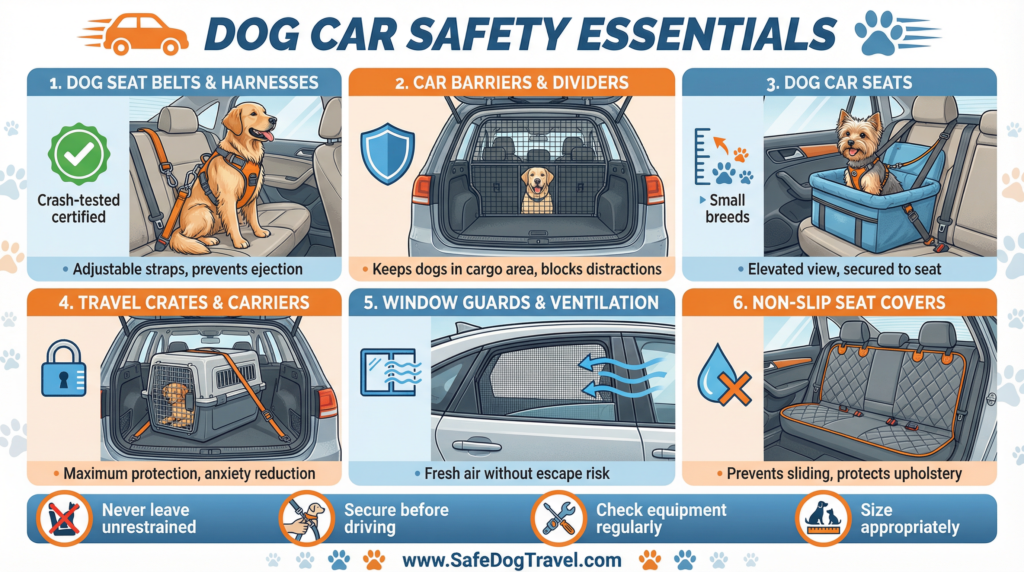
The most effective practical dog gear falls into three categories. First, restraint systems include harnesses, seat belts, and crates, which keep your dog physically secure. Second, protective covers such as seat hammocks and door guards shield your car’s interior. Third, travel accessories such as bowls, first-aid kits, and carriers enhance safety and comfort during trips.
Restraint systems are essential for safety; other gear enhances comfort and protects your vehicle.
Select a restraint based on your dog’s size, temperament, and vehicle, but always keep your dog secured.
Why Generic Pet Products Fail
Walk into any big-box pet store, and you’ll find dozens of “car safety” products. Most of them are garbage.
Thin nylon straps and weak plastic clips break easily. Seat covers slip off quickly.
Carriers may crack in normal use, let alone in accidents.
Effective gear is crash-tested, well-made, and engineered. You’re buying life-saving equipment, not just an accessory.
Key Considerations
Size and Breed Compatibility
Your dog’s size decides what works. A 12-pound terrier needs completely different equipment than a 90-pound German Shepherd.
Small dogs (under 20 pounds) fit in booster seats or carriers. Medium dogs (20-60 pounds) use harnesses and crates.
Large dogs need heavy-duty restraints or reinforced crates secured to anchor points.
Durability Matters
Cheap, practical dog gear fails when you need it most.
Choose gear with reinforced stitching, metal hardware, and strong materials. Metal carabiners, heavy-duty nylon, and swivel connectors prevent tangling or breakage.
Your dog will test their restraint every trip, so it must be durable.
Crash Testing Standards
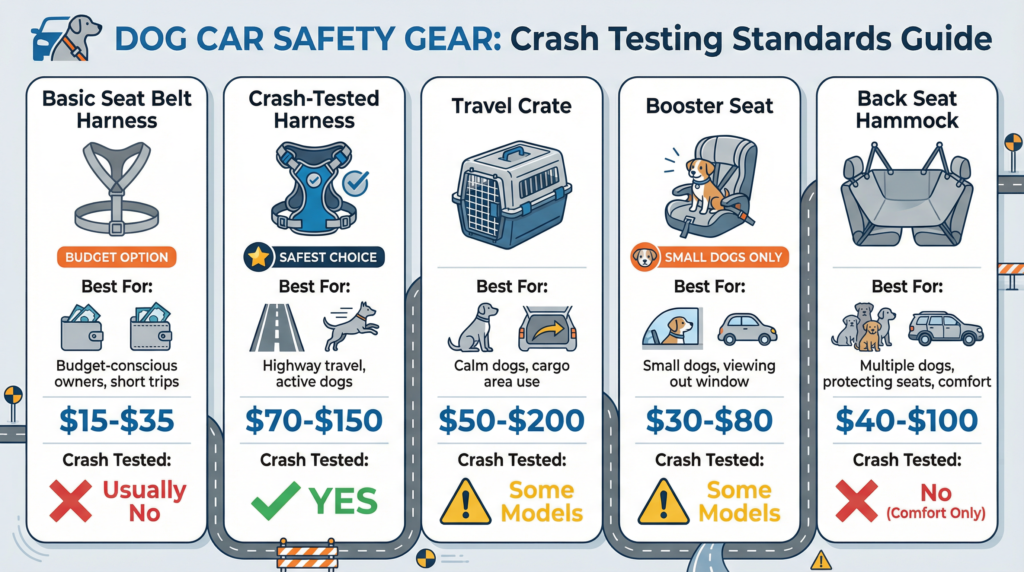
Products tested through simulated collisions provide measurable protection. The Center for Pet Safety establishes baselines for crash-tested harnesses and carriers using protocols similar to those for child safety seat testing.
These products have been impact-tested to demonstrate that they protect your dog in the event of an accident. This is especially important if you often drive on highways or in heavy traffic.
Ease of Installation and Adjustment
Gear you can’t easily install becomes gear you don’t use.
The best gear attaches to seat belt anchors or LATCH points, no tools needed.
Adjustable gear fits different dogs or makes sharing vehicles easy.
Step-by-Step Guide
Step 1: Assess Your Vehicle and Dog
Inventory your vehicle’s restraint points. Most modern cars have LATCH anchors in rear seats and seat belt systems.
Note whether you have cargo space (SUV or wagon) or limited space (sedan).
Measure your dog’s length from the neck to the base of the tail, and note their weight.
Does your dog shift around, or settle quietly? Are they anxious, or do they watch the scenery calmly?
Step 2: Choose Your Primary Restraint
Three solid options exist.
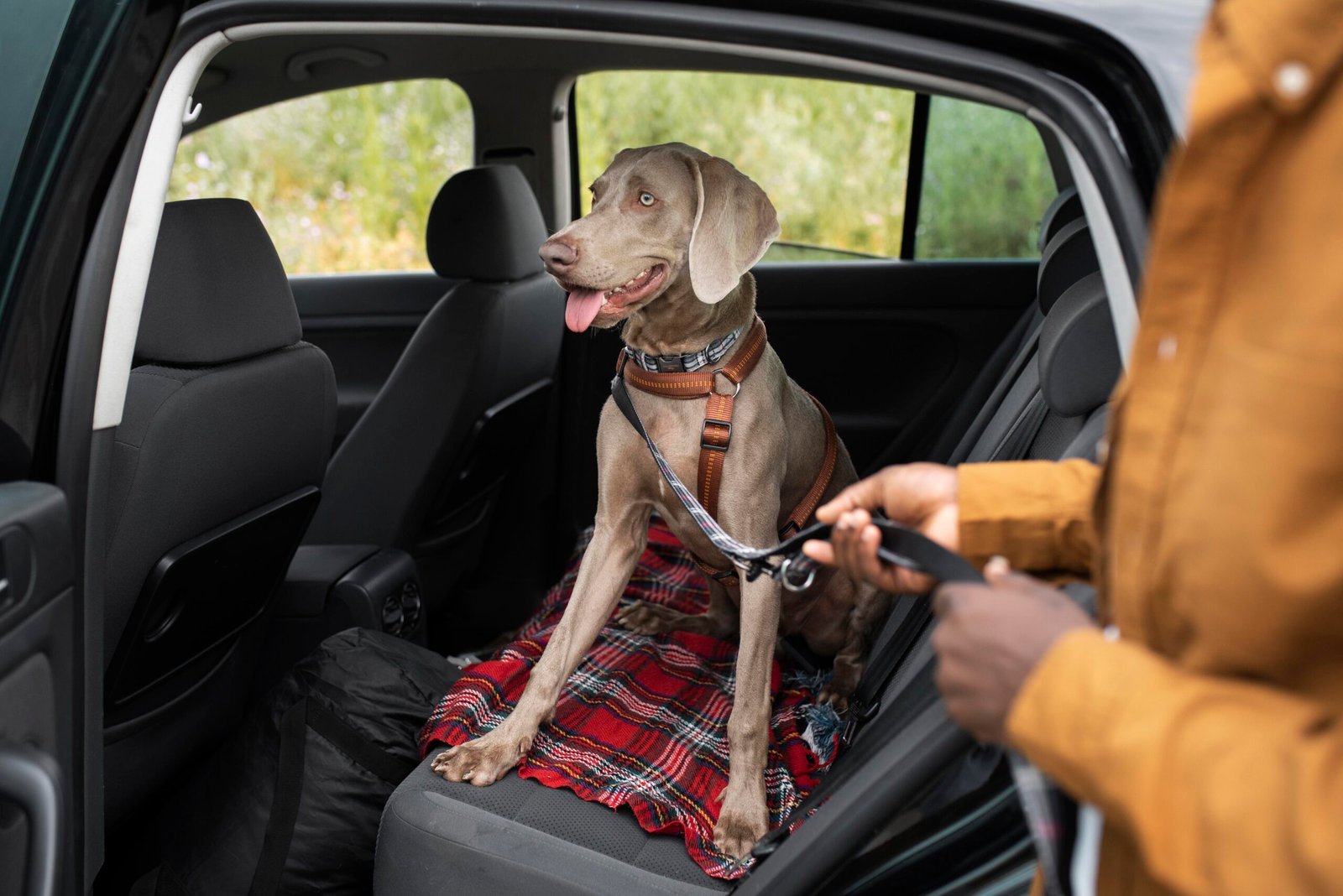
Seat belt harnesses attach to your dog’s harness (never collar) and clip to seat belts or LATCH. They’re affordable, easy to transfer, and work for most dogs.
The harness distributes force across your dog’s body during sudden stops rather than concentrating it on the neck.
Crash-tested harnesses add protection with shock-absorbing padding and strong attachment points.
They cost more but provide measurable crash protection comparable to that of child car seats.
Crates suit dogs who like enclosed spaces. Secure crates to the backseat floor or cargo area with seatbelts or straps.
This approach prevents your dog from moving forward during accidents and keeps them contained.
Step 3: Add Protective Layers
Once restraint is handled, add protective gear.
Seat hammocks extend across the back seat, preventing your dog from falling into the footwells while protecting the upholstery from dirt and hair. Many include openings for seat belt clips so your restraint system still functions.
Check out our top-rated waterproof seat covers here →
These covers typically feature:
- Waterproof backing that blocks spills from reaching upholstery
- Non-slip surfaces that keep your dog stable
- Side flaps that protect doors from scratches
- Machine-washable materials for easy cleaning
Car door protectors mount to windows to prevent scratches and dirt from accumulating. Suction or tabs hold them in place without damaging the interior.
Step 4: Stock Travel Essentials
Dog gear goes beyond restraint.
Keep a first aid kit with bandages, antiseptic wipes, eye wash, tweezers, and a thermometer. Stash a spare leash, collar, waste bags, and paper towels in your glove box.
Travel bowls and water bottles with attached bowls reduce spills. Choose non-slip or gravity-feed options.
The best designs collapse flat for storage and expand when needed. Your dog needs access to water, especially on trips longer than 30 minutes in warm weather.
Step 5: Condition Your Dog
Restraint gear requires adjustment time.
Start with short trips to let your dog adjust to the restraint gear. Let them sit in the car with the gear on, parked, before actual drives.
This reduces anxiety and stops first-trip struggles.
Reward calm behavior with treats. Make the car a positive space before adding the stress of movement and traffic.
🐕 Essential Car Safety Gear for Dogs 🚗
Welcome to the Dog Car Safety Quiz! Traveling with your furry friend requires proper safety equipment. Test your knowledge about essential car safety gear for dogs and learn how to keep your canine companion secure on the road. Answer all questions to see your final score!
Expert Tips
Harnesses Over Collars, Always
Harnesses distribute crash forces across the chest and body, helping prevent neck injuries during sudden stops.
Collars concentrate that force on the trachea, increasing the risk of injury even at moderate speeds.
Even a 15 mph collision generates enough force to cause serious neck trauma when a collar is the attachment point.
Pair Restraints with Window Control
Lock the rear doors and keep the windows barely open.
Your dog may jump unexpectedly. Window guards help, but locked doors matter most.
Adjust for Comfort and Security
The tether or harness should let your dog sit, lie down, and move without sliding, but not be so loose that they can reach the front seat or get tangled.
Test the fit by checking that you can fit two fingers under the straps. Too tight restricts breathing.
Too loose means no protection.
Use Multi-Functional Equipment
A seat cover hammock protects your car and works as an outdoor mat.
A travel harness works for both the car and hiking.
GPS trackers designed for road trips also help during campground adventures. You’re limited on storage space, especially in apartments.
Every piece of gear needs to earn its place.
Apply Seat Covers from Day One
Use covers to protect your car from damage. Repairs cost far more than protectors.
Professional detailing to remove fur and stains costs $200–$400. A quality seat cover costs $40–$80 and lasts for years.
The math makes sense.
Common Mistakes
Securing the Leash to a Collar Instead of a Harness
This causes injury during stops or accidents. The force is concentrated on the neck rather than distributed across the body.
Your dog’s safety depends on proper attachment points.
Collars are for identification tags, not restraint systems.
Leaving Crates Unsecured
A loose crate can become a projectile in accidents, harming your dog more than no restraint.
Always secure crates with belts or straps to anchor points. Crates should be immobile.
Buying Oversized Carriers
A carrier should fit your dog without excessive movement. Too much space allows sliding during acceleration and braking, reducing protection and increasing anxiety.
Your dog should be able to stand, turn around, and lie down comfortably. That’s it.
Extra space adds risk.
Neglecting the First Aid Kit
Emergencies happen at rest stops, hiking trailheads, and campgrounds, situations where immediate veterinary care isn’t available.
A basic first aid kit handles cuts, bleeding wounds, and minor injuries that could otherwise escalate. Include your vet’s phone number and the number for a 24-hour emergency clinic.
Mixing Restraint Systems
Don’t mix a harness with a collar attachment, or use a crate that’s supposed to serve as both a booster seat and a crate.
Hybrid approaches compromise safety. Pick one primary restraint and use it consistently.
Your dog shouldn’t be able to override the system by shifting their weight or pulling.
Underestimating Water Needs
Your dog needs access to water, especially on longer trips. Spill-proof bowls and travel water bottles prevent your car’s interior from becoming a mess while keeping your dog hydrated.
Dogs overheat faster than humans. A 30-minute errand on a 75-degree day can leave your dog panting and stressed, without access to water.
Practical Dog Gear Recommendations by Scenario
City Apartment Dweller Making Frequent Errands
Focus on portable, space-saving gear. A lightweight harness that attaches to your seat belt, a collapsible travel bowl, and a compact seat cover provide protection and convenience without taking up storage space in limited urban housing.
You’re probably taking your dog on quick vet visits, trips to dog parks, and errands where they tag along. The gear needs to be installed and removed quickly.
Active Outdoor Enthusiast Taking Weekend Trips
Invest in crash-tested harnesses, a GPS tracker for unfamiliar areas, and a sturdy crate for cargo security. These pieces of practical dog gear prioritize safety during highway driving and outdoor adventures, where your dog is more exposed.
You’re likely doing 2-4-hour drives to trailheads and campsites. The equipment is under greater stress and must perform reliably over longer distances.
First-Time Dog Owner Building a System
Start with a mid-range seat belt tether and a basic hammock seat cover. This combination provides core safety and protection while you learn your dog’s preferences.
Upgrade to crash-tested gear once you understand your specific needs. You don’t need the most expensive equipment right away, but you do need the basics.
Senior Dog Owner Managing Mobility Concerns
Booster seats elevate smaller senior dogs, reducing strain on joints during entry and exit. A car door protector keeps your senior dog’s paws clean when they rest their chin on the window.
Practical dog gear means reducing physical stress while maintaining safety. Ramps or steps that help dogs climb into SUVs prevent injury for dogs with arthritis or hip issues.
Conclusion
Your dog’s safety during car travel depends on the equipment you choose and how consistently you use it.
The best gear doesn’t sit in your trunk unused. It’s installed and ready for every trip, from the commute to your dog’s veterinary appointment to the weekend road trip you’ve been planning.
Start with a quality restraint system. This is your foundation.
Harnesses, crash-tested systems, or properly secured crates all provide genuine protection.
Then layer on protective covers to shield your vehicle’s interior. Add travel accessories to manage water, food, and waste cleanly.
The right gear doesn’t restrict your dog’s comfort or your driving freedom. It creates boundaries that keep everyone safer while making your vehicle easier to maintain.
Your dog still gets to enjoy car rides. You still get to concentrate on the road ahead.
The difference is that both of you reach your destination without incident.
That’s the entire point.