Category: Health & Care

  • Odie Pet Insurance 2026 Review & Worth for Dog Owners?

    Odie Pet Insurance 2026 Review & Worth for Dog Owners?

    Odie Pet Insurance at a Glance

    • Odie Pet Insurance was founded in 2020 by Miles and Zabrina Thorson, two dog owners with over 30 years of combined insurance experience, and was built specifically to address the affordability gap in pet health coverage.
    • Odie offers customizable accident and illness plans, an accident-only option, and optional wellness add-ons with no upper age limit for enrollment.
    • Claims are typically paid out within five days, but Odie has received low customer ratings on BBB and Trustpilot — a detail worth knowing before you sign up.
    • Odie’s annual limit maxes out at $40,000, which puts it behind competitors that offer up to $100,000 — a real consideration for high-cost breeds or complex conditions.
    • Keep reading to find out exactly who Odie is right for, where it falls short, and how it stacks up against top competitors in 2026.

    If you’re weighing whether Odie Pet Insurance is worth your money in 2026, the short answer is: it depends entirely on what you need from a policy.

    Pet insurance has gone from a niche product to a near-essential financial tool for dog owners — and with hundreds of thousands of pets now insured across the U.S., the competition between providers has never been fiercer. Odie entered the market in 2020 with a clear value proposition: flexible, affordable coverage with no age limits and fast claim payouts. For budget-conscious pet owners, that combination is genuinely attractive.

    But affordability alone doesn’t make a policy worth buying. Coverage gaps, waiting periods, and customer service track records all matter — sometimes more than the monthly premium. This review breaks down everything you need to know about Odie in 2026, from what’s actually covered to how it compares against stronger competitors.

    Odie Pet Insurance: The Fast Facts Dog Owners Need

    Odie is a California-based pet insurance company that has been covering dogs and cats nationwide since 2020. It’s one of the newer players in a crowded space, but it has carved out a niche by offering customizable, low-cost plans that work for a wide range of pet owners — from those insuring puppies to senior dogs with no upper age limit.

    Founded in 2020 by Two Dog Owners With Insurance Expertise

    Miles Thorson and Zabrina Thorson co-founded Odie after recognizing a gap in the market for pet insurance that was both genuinely affordable and flexible enough to fit different budgets. With more than three decades of combined insurance industry experience between them, the Thorsons built Odie from the ground up to make quality coverage accessible. That origin story matters because it shaped how Odie structures its plans — prioritizing customization and price over one-size-fits-all coverage tiers.

    Available in All 50 U.S. States

    Odie is available nationwide, including travel coverage that extends to Canada and Puerto Rico. That’s a meaningful perk for dog owners who travel frequently or split time between locations. You can use any licensed veterinarian in your state, which means you’re not locked into a network — a flexibility point that not every competitor offers.

    Scored 4.2 Out of 5 Stars in Independent Methodology Testing

    In independent review methodology scoring, Odie has earned a 4.2 out of 5 stars — a solid result for a company only a few years old. However, customer-facing ratings tell a different story. Odie currently holds a 1-star rating on the Better Business Bureau and a 2.2-star rating on Trustpilot. That gap between methodology scores and real customer experiences is something to factor carefully into your decision.

    What Odie Pet Insurance Actually Covers

    Odie’s coverage breaks down into two core plan types — accident and illness, and accident-only — plus optional wellness add-ons. Understanding exactly what falls inside and outside those plans is the most important part of evaluating whether Odie is right for your dog.

    Accident and Illness Plan: What’s Included

    Odie’s flagship plan covers a broad range of medical situations. Here’s what’s included under the accident and illness plan:

    • Accidental injuries (fractures, lacerations, swallowed objects)
    • Illnesses, including infections, cancer, and diabetes
    • Genetic and hereditary conditions
    • Specialist and emergency vet care
    • Diagnostic tests, imaging, and bloodwork
    • Surgeries and hospitalization
    • Prescription medications
    • Chronic condition management

    Coverage for hereditary and genetic conditions is a standout feature — many budget pet insurance providers exclude these entirely, which can be a costly oversight for purebred dog owners prone to breed-specific conditions like hip dysplasia in German Shepherds or heart disease in Cavalier King Charles Spaniels.

    Accident-Only Plan: Who It’s Best For

    The accident-only plan is Odie’s most affordable entry point. It covers injuries from unexpected events — think broken bones, bite wounds, or toxic ingestion — but excludes illness coverage entirely. This plan suits owners of young, healthy dogs who want a financial safety net for emergencies without paying for full illness coverage they may not need yet.

    Optional Add-Ons That Boost Your Coverage

    Odie offers wellness plan add-ons that go beyond what standard accident and illness policies include. These optional riders cover routine and preventative care, such as annual exams, vaccinations, flea and tick prevention, and dental cleanings. Adding a wellness plan transforms Odie from a reactive coverage tool into something closer to a comprehensive pet health management solution — though the added cost needs to be weighed against what you’d actually use.

    What Odie Does Not Cover

    Like every pet insurance provider, Odie has exclusions. The most important ones to know upfront:

    • Pre-existing conditions (conditions that existed before your policy start date)
    • Cosmetic procedures
    • Breeding costs and pregnancy
    • Elective surgeries
    • Experimental treatments

    Pre-existing condition exclusions are standard across the industry, but they’re especially worth noting if you’re enrolling an older dog or one with a documented health history. Waiting periods also apply before coverage kicks in — which leads directly into the cost and timing details below.

    Get Your Quote By Clicking Here

    How Much Does Odie Pet Insurance Cost for Dogs

    Odie’s pricing is one of its strongest selling points. Monthly premiums vary based on your dog’s age, breed, species, and ZIP code, but Odie consistently positions itself among the more affordable options on the market. That said, “affordable” looks different depending on how you configure your policy — and the customization options Odie offers give you real control over what you pay each month.

    Deductible, Reimbursement, and Annual Limit Options

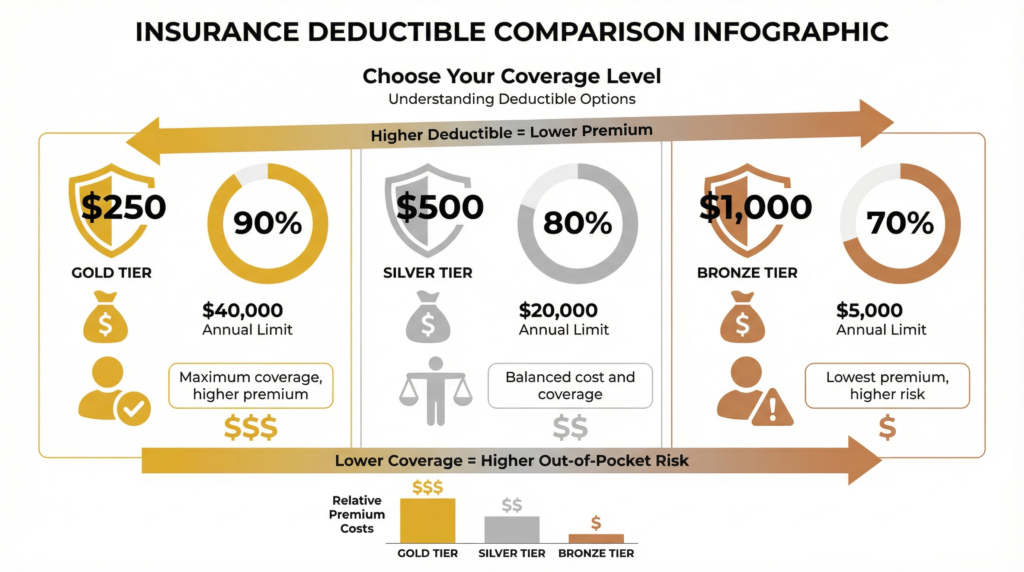
    Odie gives you three key levers to adjust your monthly premium: your annual deductible, your reimbursement percentage, and your annual limit. Deductibles range from $250 to $1,000 — the higher you set it, the lower your monthly cost. Reimbursement rates sit at 70%, 80%, or 90%, meaning Odie covers that percentage of eligible vet bills after your deductible is met. Annual limits range from $5,000 to $40,000, offering budget-conscious owners flexibility but falling short of competitors that offer $100,000 or unlimited annual limits.

    5% Multi-Pet Discount and Other Ways to Save

    If you have more than one pet, Odie offers a 5% multi-pet discount — a straightforward saving that adds up over a 12-month policy year. It’s not the deepest discount in the industry, but it’s a consistent perk for multi-dog households.

    Beyond the multi-pet discount, the most effective way to lower your Odie premium is to raise your deductible and lower your reimbursement rate. Setting a $1,000 deductible with a 70% reimbursement rate will produce the lowest monthly premium, though it means more out-of-pocket cost when you actually file a claim. Finding the right balance between premium and out-of-pocket risk is the core financial decision every pet owner needs to make before selecting a plan tier.


    Keep in mind that your pet’s age and breed will influence which configuration actually makes financial sense. A three-year-old mixed breed in a low-cost-of-living state will look very different on paper compared to a six-year-old French Bulldog in California — a breed notoriously prone to respiratory, spinal, and skin conditions that generate significant vet bills.

    Odie Waiting Periods Dog Owners Should Know

    Waiting periods are the gap between when your policy starts and when your coverage actually kicks in. Every pet insurance provider has them — they exist to prevent owners from signing up right before a known vet visit and immediately filing a claim. Odie’s waiting periods are mostly in line with industry standards, with one notable exception that dog owners need to pay close attention to.

    For accident coverage, Odie imposes a three-day waiting period — meaning you’re covered for injuries starting on day four of your policy. Illness coverage has a 14-day waiting period, which is standard across most providers. These timeframes are manageable and shouldn’t be a dealbreaker for most owners who are planning ahead rather than reacting to an existing problem.

    Where Odie stands out — and not in a good way — is its cruciate ligament waiting period. Odie requires a six-month waiting period before cruciate ligament injuries are covered. This is significantly longer than what many competitors impose and is a critical detail for owners of larger breeds like Labrador Retrievers, Rottweilers, and Golden Retrievers, which are statistically more prone to cruciate ligament tears.
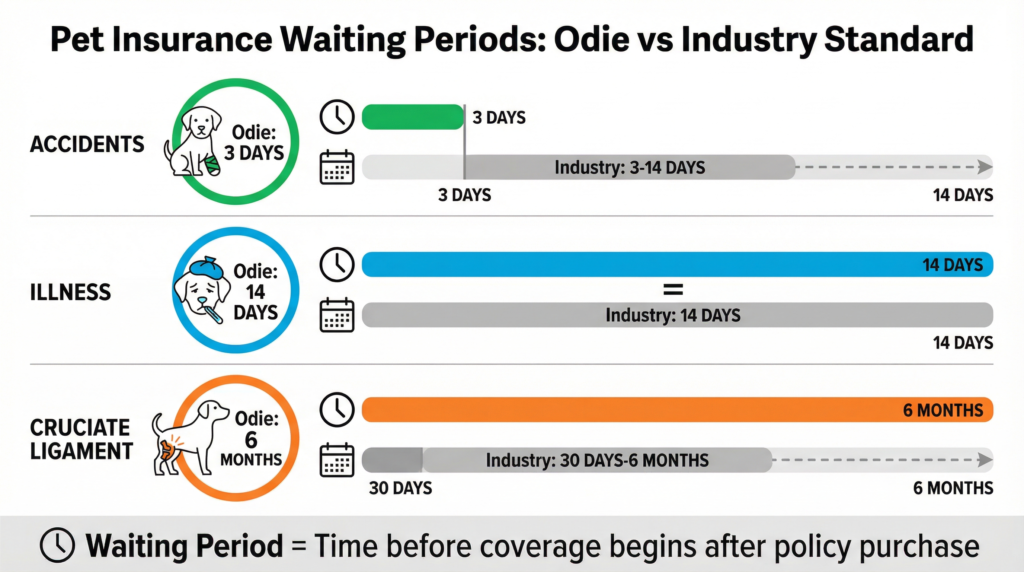


    Six-Month Cruciate Ligament Waiting Period vs. Industry Standard

    A cruciate ligament surgery for a dog can cost anywhere from $3,500 to $7,000 per leg, making it one of the most financially devastating orthopedic injuries a dog owner can face. Waiting six months for that coverage to activate means you’re carrying significant financial risk during that window. If your large-breed dog tears a cruciate ligament in month three of your policy, you’re paying the entire bill out of pocket. For owners of high-risk breeds, this waiting period alone may be reason enough to look at competitors with shorter windows.

    Odie’s Wellness Plan: Is Preventive Coverage Worth Adding?

    Odie’s optional wellness add-on covers the routine care that standard accident and illness plans skip entirely — annual wellness exams, core and non-core vaccinations, flea, tick, and heartworm prevention, and dental cleanings. For dog owners who already spend consistently on preventive care each year, a wellness rider can effectively turn those predictable expenses into covered line items. The value equation is simple: add up what you spend annually on routine vet visits and prevention, then compare that to the add-on cost. If your routine spending exceeds the rider premium, it’s worth it. If your dog is young and healthy with minimal preventative needs, the math may not work in your favor.

    How Odie Handles Claims and Payouts

    The claims process is where pet insurance companies either earn or lose their customers’ trust. Odie’s system is straightforward — you pay your vet bill upfront, submit a claim through Odie’s website, and wait for reimbursement. The absence of direct vet payment means you need to have the funds available to cover a bill before you see any money back, which is worth factoring into your financial planning.

    Five-Day Claim Payout Timeframe

    Odie advertises a five-day claim payout window — meaning once your claim is approved, you can expect reimbursement within five business days. That’s faster than many competitors in the space and is one of Odie’s most frequently praised operational features. For owners dealing with a large unexpected vet bill, a five-day turnaround versus a 10-to-30-day wait from other providers is a meaningful difference in cash flow management.

    Direct Deposit vs. Check Reimbursement

    Odie offers two reimbursement methods: direct deposit to your bank account or a traditional check by mail. Direct deposit is the faster option, and the one most owners will prefer — particularly given the five-day payout promise. Choosing check reimbursement adds mail delivery time to the processing window, which can push your actual receipt of funds well past that five-day benchmark.

    No Mobile App: Filing Claims Through the Website Only

    Important Note for Tech-Forward Pet Owners: Odie does not currently offer a dedicated mobile app. All claim submissions, policy management, and account access are handled through the Odie website. If a streamlined mobile experience is important to you, this is a genuine limitation compared to competitors like Nationwide or Trupanion, which offer app-based claim filing and policy tracking.

    The lack of a mobile app is a usability gap that feels increasingly significant in 2026, when most financial and insurance products have moved to mobile-first experiences. Filing a claim from an emergency vet’s waiting room via a mobile browser is doable, but it’s a friction point that a dedicated app would eliminate.

    That said, Odie offers 24/7 access to a vet hotline — a feature that partially compensates for the app gap by giving owners immediate professional guidance without going through the claims portal. The hotline lets you speak with a licensed veterinarian at any hour, which is particularly valuable for late-night health concerns that may or may not warrant a costly emergency vet visit.

    Overall, Odie’s claims process is functional and faster than average on paper, but the website-only submission model and the requirement to pay upfront mean it works best for owners who are organized, financially prepared, and comfortable navigating a desktop or mobile browser interface when stress is running high.

    Odie Pet Insurance vs. Top Competitors

    Odie competes in a crowded market against well-established providers with deeper resources, longer track records, and in some cases, significantly broader coverage options. Where Odie wins is almost always on price. Where it loses is typically on annual limits, customer satisfaction ratings, and features like mobile apps or direct vet payment. Understanding those trade-offs is essential before committing to a policy.

    The table below shows how Odie stacks up against key competitors on the metrics that matter most to dog owners making a coverage decision in 2026.


    Odie vs. GEICO Pet Insurance: Coverage Gaps to Know

    When comparing Odie directly to GEICO Pet Insurance — which partners with third-party underwriters to offer its policies — the most notable difference is in the annual limit ceiling. GEICO’s pet insurance offerings can reach up to $100,000 in annual coverage, more than double Odie’s $40,000 maximum. For owners of large or high-risk breeds where a single orthopedic surgery, cancer treatment, or chronic condition management plan could run $15,000 to $30,000 or more in a single policy year, that $60,000 gap in maximum coverage is not a minor distinction — it’s the difference between being fully protected and being underinsured when it matters most.

    Where Odie Wins on Price

    Odie’s monthly premiums are consistently lower than most mid-tier and premium competitors. For owners of young, healthy mixed-breed dogs in lower-cost-of-living states, Odie can deliver solid accident and illness coverage at a price point that makes financial sense — especially when configured with a higher deductible and a moderate reimbursement rate. The no-upper-age-limit policy also means senior dog owners who get priced out or flatly rejected by other providers have a real option with Odie.

    Where Odie Falls Short Against Rivals

    The $40,000 annual limit ceiling is the single biggest structural weakness in Odie’s offering. Cancer treatment for dogs — one of the most common reasons pet owners file large claims — can easily exceed $10,000 to $20,000 for chemotherapy, radiation, and surgery combined. Add a second major condition in the same policy year, and you can see how a $40,000 cap gets consumed faster than most owners anticipate. Beyond limits, the low BBB and Trustpilot ratings signal real customer experience issues that go beyond isolated complaints. And without a mobile app, Odie simply doesn’t meet the convenience standard set by competitors like Trupanion and Lemonade.

    Who Should Buy Odie Pet Insurance in 2026?

    Odie makes the most sense for a specific type of pet owner. If you have a young, generally healthy dog, you’re working with a tight monthly budget, and you want basic financial protection against unexpected accidents and illnesses without paying for premium-tier features you may never use, Odie is a legitimate option worth getting a quote on. The no-age-limit enrollment is also a genuine differentiator for owners of senior dogs who need coverage but keep hitting rejection walls with other providers.

    Odie is a harder sell for owners of large-breed dogs prone to orthopedic injuries, purebred dogs with known hereditary condition risks, or anyone whose dog has already been diagnosed with a condition that could escalate into five-figure treatment costs. In those situations, the $40,000 annual cap and the six-month cruciate ligament waiting period create coverage gaps that could cost you significantly more than the premium savings are worth. The right fit for Odie is a budget-first, lower-risk dog owner — not a high-need medical pet household.

    Is Odie Pet Insurance Worth It for Dog Owners?

    Odie Pet Insurance is worth it if price is your primary driver and your dog doesn’t fall into a high-risk category. It delivers real, customizable coverage at competitive monthly rates, pays claims faster than most plans, and removes the age barrier that keeps senior dog owners out of other plans. But if you’re looking for the highest annual limits, the best customer satisfaction ratings, or a seamless mobile claims experience, there are stronger options on the market in 2026. Odie earns its place as a budget-tier provider — just go in with clear eyes about what the $40,000 limit and six-month cruciate waiting period actually mean for your specific dog’s risk profile.

    Frequently Asked Questions

    Does Odie Pet Insurance Cover Preexisting Conditions?

    No — Odie does not cover preexisting conditions. A preexisting condition is any illness, injury, or symptom that existed before your policy’s effective start date, including conditions your dog showed signs of during the waiting period. This is standard practice across the pet insurance industry and is not unique to Odie, but it makes timing your enrollment critically important. The earlier you enroll your dog — ideally while they’re young and healthy with no documented health history — the fewer conditions are likely to be classified as preexisting and excluded from your coverage.

    Is There an Age Restriction for Dogs on Odie’s Plans?

    No. Odie has no upper age limit for enrollment, which sets it apart from many competitors that cap enrollment at 8 or 10 years old. This is one of Odie’s most meaningful policy features for owners of older dogs who are often left with few or no options as their pets age into higher-risk health territory.

    That said, while there’s no hard age cutoff, premiums do increase with age — as they do with every pet insurance provider. An eight-year-old Labrador will cost significantly more to insure than a two-year-old of the same breed, regardless of which provider you use. The no-age-limit policy means you can get coverage, but the cost of coverage does not stay flat as your dog gets older.

    Can I Use Any Vet With Odie Pet Insurance?

    Yes. Odie operates on a reimbursement model that lets you use any licensed veterinarian in the United States. You are not restricted to an in-network provider list, which means you can continue seeing your existing vet, visit a specialist, or use an emergency animal hospital and still be eligible for reimbursement on covered expenses.

    The reimbursement model requires you to pay your vet bill upfront and then submit a claim for reimbursement afterward. This is the standard operating model for most U.S. pet insurance providers — true direct-pay arrangements where the insurer pays the vet directly are rare. Make sure you have a financial buffer available to cover unexpected vet bills in full before reimbursement arrives, even with Odie’s relatively fast five-day payout window.

    What Is Odie’s 30-Day Free-Look Period?

    Odie offers a 30-day free-look period, which means you can cancel your policy within the first 30 days for a full refund — as long as you haven’t filed a claim during that time. This is a consumer-protection feature that gives new policyholders a genuine trial window to review the full terms and conditions of their policy after purchase.

    Use the 30-day free-look period intentionally. Read through your policy documents carefully during this window, paying specific attention to the exclusions list, waiting period timelines, and how your chosen deductible and reimbursement rate interact with your annual limit. If anything doesn’t align with what you expected when you bought the policy, this is your no-risk exit opportunity.

    Does Odie Pet Insurance Cover Prescription Medications for Dogs?

    Yes — prescription medications are covered under Odie’s accident and illness plan when they are prescribed to treat a covered condition. This includes medications related to infections, chronic illness management, post-surgical recovery, and other medically necessary treatments that fall within the scope of your policy.

    Medications prescribed to treat a preexisting condition, however, are not covered. If your dog was already on a long-term prescription before your policy started — for allergies, thyroid disease, or joint pain, for example — those ongoing medication costs will not be reimbursable through Odie.

    Routine flea, tick, and heartworm prevention medications are not covered under the standard accident and illness plan. These fall under preventative care and are only reimbursable if you’ve added a wellness plan rider to your base policy. If your annual prevention spending is a meaningful budget line, the wellness add-on may be worth pricing out to see whether it covers enough of that cost to justify the additional monthly premium.

    Get Your Quote By Clicking Here


  • What to Do When Your Dog Eats Something Toxic

    What to Do When Your Dog Eats Something Toxic

    Key Takeaways

    • Most comprehensive toxic food guides recommend immediate veterinary care if you suspect your dog has consumed any dangerous foods.
    • The first 30 minutes after toxic food ingestion are critical; prompt action can save your dog’s life.

    Time is critical when your dog consumes a toxic food. Swift, appropriate action can mean the difference between a frightening but manageable situation and a tragedy. Having a plan in place before an emergency occurs gives your dog the best chance for a positive outcome.

    Emergency Steps: First 30 Minutes Are Critical

    The moments immediately following toxic food ingestion are crucial for your dog’s survival. Do not wait for symptoms to appear before taking action, as some toxins can cause irreversible damage before visible signs develop. First, secure any remaining toxic food and packaging for identification purposes. Then call your veterinarian, emergency animal hospital, or the ASPCA Animal Poison Control Center (888-426-4435) immediately.

    Never induce vomiting without professional guidance, as this can sometimes worsen the situation, especially with caustic substances or if your dog is already showing neurological symptoms. The poison control expert may instruct you to give activated charcoal if available, but only do so under their specific direction.

    When to Call vs. When to Rush to the Vet

    While a phone call should always be your first step, some situations require immediate transportation to an emergency veterinary facility. Take your dog to the vet immediately if they show difficulty breathing, collapse, seizures, excessive drooling, severe vomiting, or abnormal gum color (very pale, blue, or bright red). For less urgent cases where your dog appears normal but has consumed a known toxic food, follow your veterinarian’s guidance on whether immediate examination is necessary.

    Keep in mind that evening and weekend emergency veterinary care can be significantly more expensive, but delaying treatment to avoid costs can lead to more extensive (and costly) treatments or even loss of your pet. Many pet insurance policies cover emergency toxicity treatment, making it easier to make decisions based on medical need rather than financial concerns.

    Information Your Vet Needs to Know

    • What exactly was consumed (bring packaging if available)
    • Approximate quantity ingested
    • How long ago ingestion occurred
    • Your dog’s weight
    • Any symptoms currently displayed
    • Any pre-existing health conditions or medications

    The more precise information you can provide, the better your veterinarian can determine appropriate treatment. Taking photos of the consumed product, noting ingredient lists, and estimating quantities will help your vet calculate toxic doses and determine the best course of action.

    Safe Food Alternatives Your Dog Will Love

    Rather than focusing only on what dogs can’t eat, it’s helpful to know which human foods make safe, healthy treats for your canine companion. These nutritious alternatives let you share food with your pet without compromising their health.

    Remember that even safe human foods should make up no more than 10% of your dog’s daily caloric intake to maintain a proper nutritional balance. Treats are not meal replacements, and sudden diet changes can cause digestive upset even with safe foods.

    5 Healthy Human Foods Dogs Can Safely Enjoy

    Plain, cooked lean meats like chicken, turkey, and beef provide excellent protein without the harmful seasonings or fats of processed foods. Fresh vegetables such as carrots, green beans, cucumbers, and zucchini make crunchy, low-calorie treats that are rich in nutrients and fiber. Blueberries, strawberries, and small pieces of apple (without seeds) deliver antioxidants and vitamins in naturally sweet packages that dogs love. Plain, cooked eggs offer complete protein and can be especially beneficial for dogs with sensitive stomachs. Finally, plain pumpkin (not pie filling) helps regulate digestion and can be frozen in small portions for refreshing summer treats.

    Veterinarian’s Note: “When introducing any new food to your dog’s diet, start with very small amounts and monitor for any adverse reactions. Even ‘safe’ foods can cause digestive upset if introduced too quickly or in large quantities. Always consult with your veterinarian before making significant changes to your dog’s diet, especially for dogs with existing health conditions.”


    Homemade Dog Treats Without Toxic Ingredients

    Creating homemade treats gives you complete control over ingredients while still indulging your desire to provide special goodies for your dog. Simple recipes like peanut butter and pumpkin biscuits (using xylitol-free peanut butter) or frozen banana and yogurt bites provide healthier alternatives to commercial treats that might contain artificial preservatives or excessive salt.

    When baking for dogs, avoid common human recipe ingredients such as vanilla extract (which contains alcohol), baking powder/soda (high in sodium), nutmeg, or excessive sugar. Instead, enhance flavors with dog-safe additions like cinnamon, parsley, or mint, which can also help freshen breath naturally.

    Dog-Proofing Your Kitchen and Home

    • Install childproof latches on cabinets containing food and trash
    • Use sealed containers for toxic foods rather than open packaging
    • Keep counters clear of food items even when “just stepping away for a minute.”
    • Hang grocery bags on hooks rather than setting them on floors
    • Establish a household rule that all food shared with pets must be approved by the primary caretaker

    Prevention is always better than emergency treatment. Dogs are opportunistic eaters with impressive determination and problem-solving abilities when motivated by food. Even well-trained dogs may yield to temptation when hungry or bored, especially if they’ve previously been reinforced with table scraps or human food rewards.

    Many toxic food ingestion cases occur during holidays or gatherings when routine is disrupted, and more food is accessible. Consider confining your dog to a pet-safe room during parties or meal preparation when supervision may be limited.

    Remember that trash cans present particular risks, as they often contain harmful food scraps, packaging with residue, or used cooking items like aluminum foil with concentrated flavors that attract dogs. Secure all trash containers with locking lids or inside latched cabinets.

    Smart Food Storage Solutions

    Invest in airtight containers with secure locking mechanisms to store potentially hazardous foods such as chocolate, raisins, and baking supplies. Consider designating a high cabinet or pantry shelf exclusively for foods toxic to dogs, and make it a habit to always place these items in the designated “unsafe for pets” location.

    Training Techniques to Prevent Counter Surfing

    Counter surfing—when dogs steal food from countertops or tables—is a common behavior that puts pets at risk of toxic ingestion. This natural scavenging behavior can be managed through consistent training that establishes boundaries while appropriately meeting your dog’s needs.

    Start by implementing a solid “leave it” command, practicing first with low-value items before progressing to food. Reward your dog for choosing to ignore accessible food items, gradually building duration and difficulty. For persistent counter surfers, consider using deterrent devices like motion-activated air canisters or aluminum foil on counter edges when you can’t supervise.

    Most importantly, never reward counter surfing by allowing your dog to keep what they’ve stolen. This only reinforces that the behavior is worthwhile, making future training more difficult. Instead, provide appropriate alternative behaviors, such as settling on a mat during food preparation, and deliver occasional rewards there.

    How to Manage Guests Who Want to Feed Your Dog

    Well-meaning visitors often don’t understand the dangers of sharing their plate with your dog. Before gatherings, explicitly communicate your no-sharing policy to guests, explaining that certain foods can be fatal to dogs. Consider preparing a small container of safe treats for guests to offer, allowing them to bond with your pet without risking health complications.

    The Bottom Line: Creating a Safe Food Environment

    Protecting your dog from toxic foods requires vigilance, education, and preparation. By knowing which foods pose dangers, properly securing your home, and having an emergency plan, you significantly reduce the risk of poisoning incidents. Remember that dogs rely completely on our judgment to keep them safe, as they cannot discern which human foods are dangerous.

    While this responsibility might seem overwhelming, implementing these precautions quickly becomes second nature. The peace of mind knowing you’ve protected your canine companion from preventable suffering is well worth the effort of keeping chocolate bars in upper cabinets and grapes in sealed containers.

    Frequently Asked Questions

    Even the most careful dog owners can encounter confusing food situations from time to time. These common questions address real-life scenarios many people face and provide practical guidance on next steps.

    Keep in mind that every dog is different. Size, age, breed, and overall health can all affect how a dog reacts to certain foods or substances. If you’re ever unsure, checking in with your vet is always the safest choice.

    • What should I do if I don’t know exactly what my dog ate, but they’re acting unwell?
    • Can cooking toxic foods make them safe for dogs?
    • Are puppies more vulnerable to food toxins than adult dogs?
    • Should I keep ipecac or other emergency medicines at home?

    If your dog starts showing unusual signs like low energy, vomiting, diarrhoea, or sudden behaviour changes, it’s best to contact your vet right away — even if you didn’t see them eat anything dangerous. Some toxins take time to cause noticeable symptoms, and acting early can make all the difference.

    What should I do immediately if my dog eats something toxic?

    Don’t panic, but act fast. Take the food away, grab the packaging if you can, and call your vet or an emergency animal clinic straight away. If you can’t reach them, contact the Animal Poison Control Center. Even if your dog seems fine, it’s important to get advice right away.


    When should I call the vet instead of rushing straight to the clinic?

    You should always start with a call, but if your dog is having trouble breathing, collapsing, seizing, vomiting heavily, or acting very unlike themselves, don’t wait — get to an emergency clinic immediately. If they seem normal, your vet can help you decide what to do next.


    Should I make my dog throw up if they eat something toxic?

    No, not unless a vet specifically tells you to. Making a dog vomit can actually make things worse in some situations, especially with certain foods or if your dog is already showing symptoms.


    What details will the vet or poison control need in an emergency?

    They’ll want to know what your dog ate, how much you think they got, when it happened, and your dog’s size. It also helps to mention any symptoms you’ve noticed and whether your dog takes medication or has health issues. If you have the packaging, bring it along or take a photo.


    What can I give my dog instead of risky human foods?

    Stick to simple, plain foods. Cooked chicken or turkey, vegetables such as carrots or green beans, a few berries, plain eggs, or a bit of plain pumpkin are all dog-friendly options. Keep portions small. Treats should be a bonus, not a meal.


  • Toxic Foods Dogs Should Never Eat: Harmful Dog Food List

    Toxic Foods Dogs Should Never Eat: Harmful Dog Food List

    Key Takeaways

    • Chocolate, caffeine, and xylitol can be deadly to dogs even in small amounts, causing seizures, organ failure, and death if not treated immediately.
    • Grapes and raisins can cause sudden kidney failure in dogs, with some pets being extremely sensitive to even a single grape.

    Our dogs are family, but what nourishes us can poison them. Many common foods in your kitchen right now could send your furry friend to the emergency vet or worse. Understanding which foods pose serious threats to your dog is an essential responsibility of pet ownership and could save your dog’s life.

    As responsible pet parents, we need to know exactly which human foods pose dangers to our canine companions.

    Deadly Foods That Can Kill Your Dog

    Some foods aren’t just harmful to dogs – they can be lethal, even in small amounts. These high-priority toxins should never be accessible to your pet under any circumstances, as they can lead to rapid organ failure, seizures, and death without immediate veterinary intervention.

    Chocolate and Caffeine: Silent Killers

    Chocolate contains theobromine and caffeine, stimulants that dogs cannot metabolize effectively. The darker the chocolate, the more dangerous it is; baking chocolate and cocoa powder are the most toxic. Even a small amount of dark chocolate can cause vomiting, diarrhea, increased heart rate, muscle tremors, seizures, and death.

    The severity of chocolate poisoning depends on the type of chocolate, the amount consumed, and your dog’s size. A 10-pound dog could experience toxic effects from as little as one ounce of dark chocolate. Coffee, tea, energy drinks, and caffeinated sodas pose similar dangers due to their caffeine content.

    Signs of chocolate or caffeine poisoning typically appear within 6-12 hours and may include excessive thirst, urination, panting, restlessness, and elevated heart rate. If you suspect your dog has consumed chocolate or caffeine, contact your veterinarian immediately, as prompt treatment significantly improves the prognosis.

    Xylitol: Hidden Danger in Sugar-Free Products

    Xylitol, a sugar substitute found in sugar-free gum, candy, baked goods, and even some peanut butter brands, causes a rapid insulin release in dogs. This sudden insulin surge can cause hypoglycemia (low blood sugar) within 10-60 minutes after ingestion. Even small amounts—less than a stick of gum—can be life-threatening to small dogs.

    This sweetener is particularly dangerous because it’s increasingly common in household products that owners might not think to keep out of reach of pets. Symptoms include weakness, lack of coordination, seizures, and potential liver failure. Always check labels for xylitol, especially on “sugar-free” products, and store them securely out of your dog’s reach.

    Grapes and Raisins: Small Fruits With Deadly Consequences

    Grapes and raisins can cause acute kidney failure in dogs, and what makes them particularly dangerous is that the toxic dose varies dramatically between individual dogs. Some dogs may eat a few grapes with no apparent effects, while others suffer kidney failure from a single grape. This unpredictability means all grapes and raisins should be considered extremely hazardous.

    Serious Toxins That Damage Your Dog’s Health

    Beyond the immediately life-threatening foods, many common ingredients can cause serious organ damage, painful symptoms, or long-term health problems. These foods might not kill your dog immediately, but they can lead to severe illness and reduced quality of life.

    Onions and Garlic: Destroyers of Red Blood Cells

    All members of the allium family—onions, garlic, leeks, and chives—contain compounds that damage dogs’ red blood cells, potentially causing hemolytic anemia. Garlic is approximately five times more toxic than onions, and cooking doesn’t reduce the danger. Even small amounts of onion or garlic powder can be harmful, so many human foods seasoned with these ingredients pose hidden risks.

    Macadamia Nuts: Why Even Small Amounts Are Dangerous

    Macadamia nuts contain an unknown toxin that affects dogs’ nervous systems and muscles. As few as four nuts can cause weakness, overheating, vomiting, tremors, and painful joint inflammation. While rarely fatal, the symptoms are extremely uncomfortable for dogs and typically require veterinary treatment to resolve.

    Alcohol: Effects on Dogs vs. Humans

    Dogs are far more sensitive to alcohol than humans, with even small amounts causing significant intoxication, dangerous drops in blood sugar, blood pressure, and body temperature. Beer, wine, liquor, and foods containing alcohol (like rum cake) can all cause alcohol poisoning in dogs. The smaller the dog, the more severe the effects, with potentially fatal consequences from amounts that would barely affect a human.

    Raw Yeast Dough: Double Danger of Expansion and Alcohol

    Raw yeast dough creates two distinct hazards for dogs. First, the warm, moist environment of a dog’s stomach causes the dough to expand, potentially leading to painful bloating and dangerous intestinal obstruction. Second, as yeast ferments in the digestive tract, it produces alcohol that’s rapidly absorbed into the bloodstream, causing symptoms of alcohol poisoning.

    Never allow your dog access to unbaked bread dough, pizza dough, or other raw yeast products. Symptoms of ingestion include a distended abdomen, vomiting, weakness, and, in severe cases, seizures or coma. This is an urgent veterinary emergency requiring immediate professional attention.

    Common Kitchen Items That Poison Dogs

    Your kitchen contains numerous items that seem harmless but can cause significant health problems for your canine companion. These everyday foods and ingredients require careful management to keep your dog safe.

    Even small amounts of these common kitchen items can lead to digestive upset, organ damage, or other serious health complications. Being vigilant about keeping these foods secure and educating family members about the risks is crucial to your dog’s well-being.

    Avocados: Beyond the Pit Problem

    While the pit presents an obvious choking and intestinal blockage risk, avocados contain persin, a fungicidal toxin that can cause vomiting, diarrhea, and myocardial damage in dogs. Although dogs are less sensitive to persin than other animals, such as birds and horses, it’s best to keep avocados and guacamole away from your dog to avoid potential adverse reactions and gastrointestinal distress.

    Salt and Salty Snacks: Hidden Dangers

    Excessive salt intake can lead to sodium ion poisoning in dogs, causing symptoms ranging from vomiting and diarrhea to seizures and death in severe cases. Potato chips, pretzels, popcorn, and other salty snacks can quickly exceed a dog’s safe sodium threshold, especially in smaller breeds.

    Dogs with certain heart conditions are particularly vulnerable to salt’s effects, as increased sodium can worsen fluid retention and cardiac stress. Even foods we don’t consider “salty,” like cheese or lunch meats, often contain high sodium levels that accumulate quickly when fed as treats or table scraps.

    Dairy Products: Why Milk Makes Dogs Sick

    Most dogs are lactose intolerant, lacking sufficient lactase enzyme to properly digest milk sugar. When dogs consume dairy products such as milk, ice cream, or cheese, undigested lactose ferments in the intestines, causing gas, bloating, diarrhea, and abdominal discomfort. While not typically life-threatening, dairy consumption significantly impacts your dog’s comfort and digestive health.

    Fruit and Vegetable Dangers Most Owners Miss

    Many pet owners assume all fruits and vegetables are healthy for dogs, but this dangerous misconception puts pets at risk. Several common produce items contain compounds specifically toxic to canine physiology, causing effects ranging from mild digestive upset to serious organ damage.

    The safest approach is to thoroughly research any fruit or vegetable before sharing it with your dog, paying attention to which parts are dangerous (seeds, stems, leaves) and which varieties pose specific risks. When in doubt, stick with veterinarian-approved, dog-safe options.

    Stone Fruit Pits: Cyanide Poisoning Risk

    Cherries, peaches, plums, and apricots contain pits with cyanide compounds that release when chewed or damaged. Beyond the obvious choking hazard, these pits can cause cyanide poisoning, characterized by dilated pupils, difficulty breathing, bright red gums, and shock. Always keep stone fruits stored securely, dispose of pits carefully, and only offer small amounts of the flesh (never the pit) as an occasional treat.

    Unripe Tomatoes and Tomato Plants

    While ripe tomato flesh is generally considered safe in small amounts, green tomatoes and all parts of the tomato plant (stems, leaves, vines) contain solanine and tomatine, compounds toxic to dogs. Symptoms of tomato plant poisoning include gastrointestinal upset, ataxia (loss of coordination), weakness, and cardiac effects.

    If you grow tomatoes in your garden, ensure your dog cannot access the plants. For dogs that enjoy vegetables, there are many safer alternatives that don’t pose a toxic risk.

    Green Potatoes and Potato Plants

    Potatoes that have turned green from exposure to light develop solanine, the same toxic compound found in tomato plants. All above-ground parts of the potato plant (leaves, stems, flowers), as well as green potatoes and potato eyes, can cause significant toxicity in dogs.

    • Green or sprouting potatoes should never be fed to dogs
    • Potato plants should be kept inaccessible to dogs in gardens
    • Symptoms include vomiting, diarrhea, seizures, and cardiac problems
    • Properly cooked, peeled, plain white potatoes are generally safe in moderation

    The distinction between safe and unsafe forms makes potatoes particularly tricky. While plain, cooked potatoes are generally considered acceptable in small amounts, raw potatoes, potato skins, and anything green or sprouting should be strictly avoided.

    Potato chips, French fries, and other processed potato products pose additional concerns due to their high fat, salt, and sometimes garlic or onion content, creating multiple layers of potential toxicity.

    For dogs that enjoy the texture of potatoes, sweet potatoes (yams) are a safer alternative when prepared without added seasonings or butter.


    Frequently Asked Questions

    Even careful pet owners sometimes encounter confusing situations regarding their dog’s diet and potential exposures to toxic foods. These frequently asked questions address common scenarios you might encounter and provide practical, actionable advice.

    Remember that while general guidelines are helpful, individual dogs may react differently to various substances based on their size, breed, age, and overall health status. When in doubt, consulting with your veterinarian is always the safest approach.

    • What should I do if I don’t know exactly what my dog ate, but they’re acting sick?
    • Can cooking toxic foods make them safe for dogs?
    • Are puppies more vulnerable to food toxins than adult dogs?
    • Should I keep ipecac or other emergency medicines on hand?

    If your dog is showing unusual symptoms like lethargy, vomiting, diarrhea, or behavior changes, seek veterinary care promptly, even if you haven’t witnessed them consuming anything harmful. Many toxins act gradually, and early intervention significantly improves outcomes.

    Can one grape really kill my dog?

    • Individual sensitivity to grape toxicity varies dramatically between dogs
    • Some dogs show severe kidney damage after consuming a single grape
    • Others may eat several with no apparent effect
    • There’s no way to predict which dogs are highly sensitive

    This unpredictability makes grapes and raisins particularly dangerous toxins. Unlike chocolate, where we can calculate relatively safe amounts based on weight and cocoa content, no “safe” threshold exists for grapes. The mechanism behind grape toxicity remains poorly understood despite extensive research.

    What makes grape toxicity particularly insidious is that initial symptoms might seem mild—vomiting, lethargy, or reduced appetite—but kidney damage progresses silently until reaching critical levels. By the time severe symptoms appear, irreversible damage may have occurred.

    The safest approach is zero tolerance: no grapes or raisins for any dog, ever. This includes foods containing these ingredients, like certain breads, cookies, cereals, and salads. Be especially vigilant with children who might share their snacks without understanding the consequences.

    Is peanut butter safe for dogs?

    Most peanut butter is safe for dogs in moderation, but you must check ingredient labels carefully for xylitol, which appears in some “natural” or reduced-sugar varieties. This artificial sweetener is extremely toxic to dogs, causing rapid insulin release and potential liver failure. Brands containing xylitol typically list it in the first 3-5 ingredients, though manufacturers sometimes change formulations, so regular label checking is essential.

    • Choose natural peanut butter with only peanuts and salt
    • Avoid reduced-sugar or “light” varieties, which more commonly contain xylitol
    • Limit portions as peanut butter is high in fat and calories
    • Consider dedicated pet-specific peanut butter brands for added safety

    When used safely, peanut butter can be an excellent training reward or medication delivery vehicle. Many dogs who refuse pills will happily consume them hidden in a small amount of peanut butter. Just remember that even safe peanut butter is calorie-dense, so adjust your dog’s regular meals accordingly when using it as a treat.

    Why can some dogs eat “toxic” foods without getting sick?

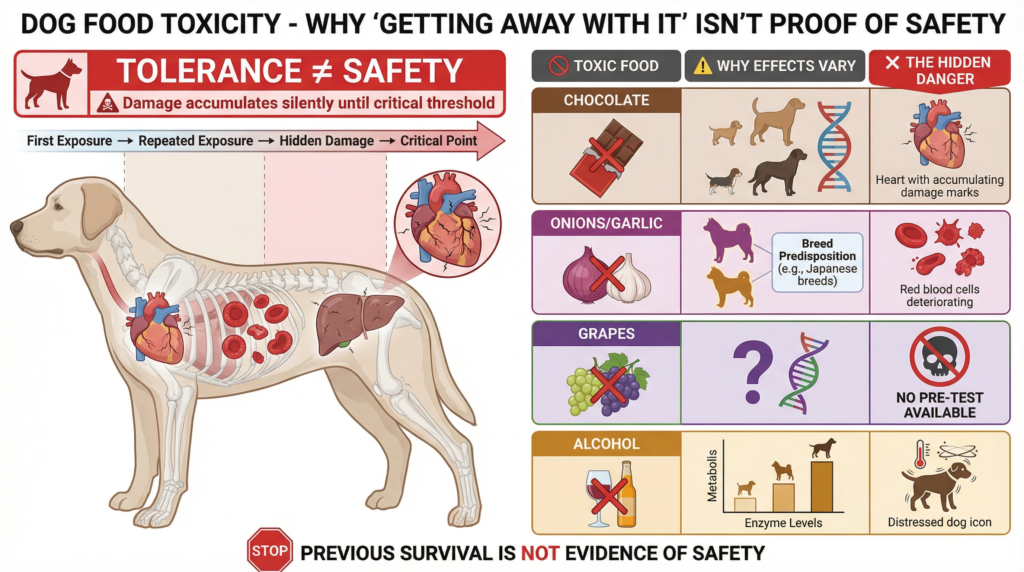
    Individual variation in dogs’ metabolism, genetics, and microbiomes affects how they process potential toxins. This variability creates dangerous false confidence when dogs consume typically toxic foods without apparent consequences. A dog might eat chocolate once with minimal effects, leading owners to believe it’s safe, only to suffer severe poisoning with the next exposure.

    Toxicity thresholds also vary by size, with smaller dogs experiencing effects at much lower doses than larger breeds. A piece of chocolate that barely affects a Great Dane could cause serious symptoms in a Chihuahua. Age and health status further complicate the picture, with puppies, seniors, and dogs with pre-existing conditions typically being more vulnerable.

    Some dogs develop tolerance to certain foods through repeated exposure, but this doesn’t make these foods safe. Gradual damage accumulation can occur without obvious symptoms until it reaches a critical threshold. The fact that a dog “got away with it before” should never be taken as evidence that a food is safe for that individual.

    How long after eating something toxic will my dog show symptoms?

    Symptom onset varies significantly depending on the toxin, the amount consumed, and your dog’s size and metabolism. Chocolate and caffeine typically produce effects within 6-12 hours, while xylitol can cause hypoglycemia within 30 minutes. Grapes may not show kidney damage effects for 24-48 hours, and onion/garlic toxicity may take several days to appear, as red blood cells are gradually damaged. This variable timeline makes it essential to seek veterinary advice immediately upon suspected ingestion rather than waiting for symptoms to develop.

    Are table scraps always bad for dogs?

    Not all table scraps are created equal. Plain, cooked lean meat without seasonings can be a healthy protein source for dogs. Similarly, many plain vegetables, such as carrots and green beans, are nutritious and low in calories. The danger lies in prepared human foods that contain multiple ingredients, many of which may be harmful to dogs.

    The primary concerns with table scraps include high fat content, which can lead to pancreatitis; hidden ingredients such as onion or garlic powder in seasonings; excessive salt; and the development of begging behavior. Additionally, regularly feeding scraps can create nutritional imbalances in your dog’s diet and contribute to obesity.

    If you choose to share appropriate human foods with your dog, do so in moderation and as planned treats rather than spontaneous handouts during meals. This approach maintains your position as the provider rather than encouraging pushy begging behaviors that many guests and family members find uncomfortable. For the safest approach, consider preparing dedicated dog-friendly “human food” treats, then separating them before adding any potentially harmful seasonings or ingredients to your own meal.

    For healthy, happy dogs, maintaining a consistent diet of quality dog food with occasional safe treats is the best strategy.


    Further Reading> What To Do When Your Dog Eats Something Toxic?

  • Planning Ahead: Senior Dog Care Essentials Made Simple

    Planning Ahead: Senior Dog Care Essentials Made Simple

    As dogs age, their needs and routines change. Planning ahead ensures your senior dog stays comfortable, happy, and healthy. This guide outlines what every pet owner should know when caring for an older dog.

    1. Regular Veterinary Checkups
    To start, older dogs are more likely to develop health problems like arthritis, dental disease, or organ issues. Take your dog to the vet at least twice a year. Regular checkups help catch problems early, so your dog can get the care they need.

    2. Tailored Nutrition
    Next, as dogs get older, their metabolism slows, and their diet needs to change. Pick a good senior dog food that helps with joints, is easy to digest, and keeps their weight in check. Ask your vet if supplements like omega-3s or joint support are right for your dog.

    3. Comfortable Living Spaces
    In addition to food, many older dogs have stiff joints and trouble moving around. Give them orthopedic beds and non-slip rugs, and make sure they can easily reach their favorite places. Ramps or stairs can help them reach higher spots safely.

    4. Exercise and Mental Stimulation
    Aside from physical comfort, even if your dog has less energy, gentle exercise is still important for their muscles and overall health. Try shorter, more frequent walks or low-impact activities like swimming. Puzzle toys and games can also keep their mind active.

    5. Grooming and Hygiene
    In addition to activity, older dogs may need more frequent grooming to help with shedding and skin issues. Brush them regularly, trim their nails, and care for their teeth to prevent discomfort or infection. Look for any new lumps or changes in their skin while grooming.

    6. Monitor Behavior and Comfort
    Paying close attention to your dog’s behavior is also key. Watch for changes in appetite, sleep, movement, or mood. These signs can indicate health problems. Your dog may need pain relief, including medicine, physical therapy, or other treatments.

    7. Emergency Preparedness and End-of-Life Planning
    Finally, be ready for emergencies by keeping your dog’s medical records handy and having a plan to get them to the vet if needed. Though it can be hard, thinking ahead about end-of-life care, like hospice or in-home euthanasia, can help make things less stressful and more dignified when the time comes.

    Conclusion
    Caring for an older dog takes patience, flexibility, and love. If you plan ahead and pay attention to your dog’s changing needs, you can help make their later years happy and comfortable.


  • What Are The Signs My Dog Is In Pain

    What Are The Signs My Dog Is In Pain

    Dogs often hide pain, an instinct from their wild ancestors, when showing weakness was dangerous. This can cause dogs to suffer quietly, leaving owners unsure whether the discomfort is serious or minor.

    Recognising signs of pain in dogs lets you act early, improve comfort, and keep minor issues from becoming major problems.


    Common Behaviour Changes That May Signal Pain

    Subtle behaviour changes are often the first warning.

    • Reduced interest in walks, games, or toys
    • Increased irritability, snapping, or growling
    • Becoming withdrawn or unusually clingy
    • Restlessness, pacing, or trouble settling at night.

    A change in your dog’s personality may signal pain.


    Changes in Movement, Mobility, and Posture

    Pain often changes how a dog moves or stands.

    • Limping or stiffness, especially after rest
    • Difficulty standing, sitting, or lying down
    • Hesitation when using stairs or jumping
    • Hunched back or lowered head
    • Slower pace on walks

    Joint pain, muscle strain, or arthritis commonly affects medium to large breeds.


    Vocal Signs of Pain in Dogs

    Not all dogs cry out, but some do.

    • Whining or whimpering
    • Growling when touched
    • Sudden barking without a clear cause

    Take prompt action if any new or unusual vocalisation is observed.


    Eating, Drinking, and Toilet Changes

    Pain disrupts routines.

    • Reduced appetite or reluctance to chew
    • Drooling or pawing at the mouth
    • Drinking more or less than usual
    • Accidents indoors or straining to use the toilet

    Dental pain, digestive issues, or internal discomfort may be involved.


    Excessive Licking, Chewing, or Scratching

    Dogs often self-soothe sore areas.

    • Licking one spot repeatedly
    • Chewing paws or joints
    • Over-grooming that causes redness or bald patches.

    This can indicate joint pain, skin irritation, or nerve discomfort.


    Facial Expressions and Body Language

    Pain is often visible in your dog’s face.

    • Squinting or half-closed eyes
    • Flattened or pinned-back ears
    • Tense jaw or tight mouth
    • Avoiding eye contact

    Veterinarians increasingly use facial expressions as reliable indicators of pain.


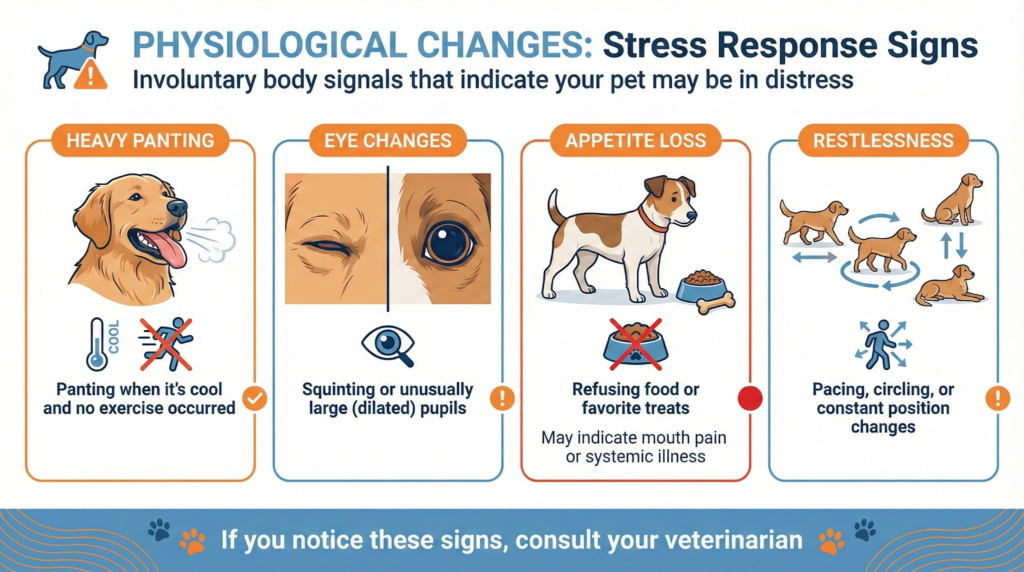
    Physiological Changes

    Some signs are involuntary and relate to the body’s stress response.


    Signs of Pain in Puppies

    Pain in puppies can be harder to spot because playfulness masks discomfort.

    Watch for:

    • Sudden yelping during play
    • Reluctance to run or jump
    • Excessive sleeping or hiding
    • Limping after exercise
    • Chewing at joints or paws

    Growing pains, injuries, and swallowed objects are common concerns for puppies.


    Signs of Chronic Pain in Senior Dogs

    Chronic pain develops slowly and is often mistaken for normal ageing.

    • Slower movement or shorter walks
    • Difficulty rising after rest
    • Sleeping more than usual
    • Weight gain due to reduced activity
    • Increased grumpiness or anxiety

    Arthritis is common in older dogs and often responds to treatment and lifestyle adjustments.


    But when are signs of pain serious enough for veterinary care? Know when to make the call.

    Contact your vet if:

    • Pain signs last longer than 24 hours
    • Symptoms appear suddenly or worsen.
    • Your dog cries out, collapses, or won’t move.
    • There’s vomiting, diarrhoea, or bleeding.

    ⚠️ Never give human painkillers to dogs. If you suspect pain, call your vet immediately for safe advice—many medications are toxic and potentially fatal.


    How Practical Dog Gear Can Help Reduce Pain

    Veterinary care is essential, but the right equipment can greatly improve comfort.

    Helpful options include:

    • Orthopaedic dog beds for joint support
    • Non-slip mats on hard floors
    • Ramps or steps for sofas and cars
    • Well-fitting harnesses instead of neck collars

    Comfort-focused gear like supportive beds and ramps helps reduce strain on joints and muscles, preventing pain from getting worse and aiding recovery.


    Frequently Asked Questions (FAQ)

    How can I tell if my dog is in pain but hiding it?

    Look for changes, not dramatic symptoms. If you suspect pain, keep a diary of your dog’s behaviour and consult your vet with specific examples to help them assess the situation.

    Do dogs always cry when they’re in pain?

    No. Many dogs never vocalise at all, even with severe discomfort.

    Can dogs have pain for weeks without obvious signs?

    Yes. Chronic pain develops gradually and is commonly overlooked until mobility drops significantly.

    Is limping always painful?

    Almost always. Even mild limping suggests discomfort and should be monitored closely.


    Final Thoughts

    You know your dog better than anyone. Trust your instincts—if something feels off, it probably is. Spotting pain early allows for quicker treatment, better comfort, and a happier, healthier life for your dog.

    A comfortable dog isn’t spoiled — they’re supported. 🐾


  • Dog Health and Welfare: A Comprehensive Guide

    Dog Health and Welfare: A Comprehensive Guide

    Owning a dog is a journey of companionship that brings immense joy, but it also entails profound legal and moral responsibilities. As our understanding of canine sentience evolves, so do the standards for their care. In 2025, the focus has shifted from merely keeping a dog alive to ensuring they thrive—physically, mentally, and emotionally.

    To move beyond basic survival toward true well-being, consider the Five Welfare Needs. This framework, established by the Animal Welfare Act, guides responsible pet ownership.


    1. Health: Protection from Pain, Injury, and Disease

    Physical health is the most visible aspect of welfare. It requires a proactive rather than reactive approach.

    • Preventative Care: Annual or bi-annual vet checks are essential. These allow early detection of conditions such as arthritis, dental disease, and heart murmurs. Vaccinations and parasite control (fleas, ticks, and worms) remain the frontline defense against preventable illness.
    • The Rise of Health Tech: In 2025, wearable technology—such as smart collars—allows owners to track pets’ heart rate, activity levels, and sleep patterns in real time. This continuous data helps veterinarians identify health issues earlier, guide treatment, and offer more personalized care.
    • Dental Hygiene: Periodontal disease is common in dogs over 3 years old. Daily brushing or using specially formulated dental chews should be considered essential to maintaining a dog’s health.

    2. Diet: The Right Fuel for Life

    Nutrition is not one-size-fits-all. A dog’s diet must be tailored to its life stage, breed, and activity level.

    • Weight Management: Obesity remains a significant welfare challenge. It stresses joints and can result in diabetes. Assess your dog’s health using a Body Condition Score and weight.
    • Fresh and Personalized Nutrition: Personalized meal plans and fresh food services provide balanced, human-grade nutrients tailored to your dog’s unique needs.
    • Toxic Foods: Common household items such as grapes, raisins, onions, chocolate, and Xylitol (sometimes found in peanut butter) can be extremely dangerous. Remain vigilant to protect your dog.

    3. Environment: A Suitable Place to Live

    A dog’s home should be their sanctuary. This includes more than just a roof over their head.

    • Safe Resting Space: Every dog needs a quiet, comfortable area to retreat to and sleep undisturbed.
    • Climate Considerations: With more extreme weather patterns, ensuring your dog has access to shade and cool water in summer and warmth in winter is critical.
    • Hygiene: Regular cleaning of bedding and bowls helps prevent bacterial buildup and skin irritation.

    4. Behaviour: The Ability to Express Natural Instincts

    Mental health is as important as physical health. A “well-behaved” dog is one whose natural needs are appropriately met.

    • Mental Enrichment: Boredom leads to destructive behavior. Activities like “sniffaries” (scent-focused walks), scatter feeding, and puzzle toys challenge a dog’s brain.
    • Training: Move away from “dominance” theories. Modern welfare standards emphasize positive reinforcement and reward-based training to build a bond of trust rather than fear.
    • Exercise: Every breed has unique physical requirements. For example, a Greyhound will benefit from short, high-speed runs, whereas a Border Collie needs tasks and mental engagement. Match your dog’s exercise to their instincts and build.

    5. Companionship: Social Needs and Stability

    Dogs are social animals, and prolonged isolation is a significant welfare concern.

    • Separation Anxiety: Many dogs struggle with being left alone for more than 4 hours. In 2025, tools like pet cameras with two-way audio and professional dog-walking services will help busy owners bridge the gap.
    • Socialization: This isn’t just about playing with other dogs; it’s about positive exposure to different sights, sounds, and people, especially during the “golden window” of puppyhood.
    • Dogs thrive on routine. Consistent feeding, walking, and interaction reduce stress and anxiety.

    Modern Welfare Reforms

    It is important to note that as of late 2025, new government strategies (such as the UK’s Animal Welfare Strategy) have introduced stricter regulations to end “puppy farming” and “puppy smuggling.” As a responsible owner, always ensure you source pets from ethical breeders or reputable rescue organizations that prioritize the animal’s long-term health over profit.

    Summary Tip: Give your dog choices—where to sleep, which path to walk, or which toy to play with. Autonomy boosts their confidence and well-being.