Find the perfect boot size for your furry friend with our easy measurement tool. Properly fitted boots ensure comfort and protection for your dog’s paws.
1
How to Measure Your Dog’s Paw
WIDTH
Step 1: Place your dog’s paw on a piece of white paper while they’re standing (weight-bearing position is important)
Step 2: Mark the widest point of the paw (left to right) and the longest point (front toes to back of paw)
Step 3: Measure the width and length between your marks
Step 4: Use the larger measurement (width or length) to determine boot size
Pro Tip: Measure all four paws! Front paws are often larger than back paws
2
Enter Your Dog’s Measurements
Recommended Boot Size
M
Medium – Perfect for your pup!
Size Range
2.0″ – 2.5″
Complete Dog Boot Size Chart
Size
Width Range (inches)
Width Range (cm)
Typical Breeds
XXS
1.0″ – 1.5″
2.5 – 3.8 cm
Chihuahua, Toy Poodle, Yorkie
XS
1.5″ – 2.0″
3.8 – 5.1 cm
Pomeranian, Maltese, Shih Tzu
S
2.0″ – 2.5″
5.1 – 6.4 cm
Dachshund, Pug, Boston Terrier
M
2.5″ – 3.0″
6.4 – 7.6 cm
Cocker Spaniel, Corgi, Beagle
L
3.0″ – 3.5″
7.6 – 8.9 cm
Boxer, Bulldog, Dalmatian
XL
3.5″ – 4.0″
8.9 – 10.2 cm
Labrador, Golden Retriever, German Shepherd
XXL
4.0″ – 4.5″
10.2 – 11.4 cm
Rottweiler, Great Dane, Mastiff
XXXL
4.5″+
11.4+ cm
Giant breeds, Saint Bernard
Important Tips for Boot Fitting
When in doubt, size up! Boots that are too tight can restrict circulation and cause discomfort
Allow your dog to walk around the house in new boots to ensure proper fit before outdoor use
Check for any rubbing or red marks after the first few wears
Front paws are typically larger than back paws – measure each paw separately
Some dogs may need different sizes for front and back paws
Boots should be snug but not too tight – you should be able to fit one finger between the boot and your dog’s leg
Consider the boot style: some have adjustable straps for a more customized fit
Quick Summary: What You Need to Know About Dog Boots
Dog boots are essential for protecting your pup’s sensitive paws from extreme temperatures, sharp objects, and harmful chemicals
It’s important to get the correct size and fit – boots that are too loose can fall off, and boots that are too tight can restrict circulation and cause discomfort
Small dogs often need different boots than larger dogs due to their unique paw shapes and gaits
Most dogs need 3-5 days to get used to wearing boots, and using the right introduction techniques can greatly increase their acceptance
Your dog’s paws weren’t made to handle modern dangers like hot pavement, ice-melting chemicals, or sharp city debris. The right boots can make the difference between a happy, comfortable dog and painful injuries that could have been avoided. After testing dozens of boots on dogs of all sizes, I’ve found the ones that really live up to their claims.
Online reviews can be overwhelming and often contain conflicting information. This comprehensive guide will help cut through the noise with hands-on (or paws-on) testing results. Whether you have a tiny Chihuahua or a massive Great Dane, PetSafety Plus has consulted with veterinarians and professional dog handlers to bring you research-backed recommendations that prioritize both protection and comfort for your furry family member.
A Quick Guide to Choosing the Best Dog Boots
The best dog boot is one that fits well, stays on, has the right sole for your environment, is comfortable for your dog to wear for long periods, and holds up to your dog’s level of activity. A boot that’s great for snow may not work well on hot pavement, and a boot that’s great for indoor use may fall apart on a rocky trail. Choose a boot based on your dog’s specific needs, activity level, and environment, not just on price or style.
Why Your Pooch’s Paws Need Protection ASAP
Dog paws are incredibly adaptable yet shockingly delicate. The sensitive paw pads have many nerve endings and blood vessels near the surface, which makes them prone to temperature extremes. In winter, exposure to temperatures below 32°F can cause frostbite in 15-30 minutes. Summer pavement can get as hot as 145°F when the air temperature is only 87°F – this is hot enough to cause second-degree burns in less than 60 seconds.
Even if you don’t live in a place with cold winters, there are still many reasons to protect your pup’s paws. City streets are full of debris, including broken glass and sharp rocks. In addition, many cities use salt and chemicals to de-ice the streets in the winter, which can be hard on your dog’s paws. And if your dog licks his paws, he could ingest toxic chemicals. Even in the country, thorns and burrs can get stuck in your dog’s paws. And rough or uneven terrain can cause cuts or injuries.
Unseen Hazards That Can Hurt Your Dog’s Paws
Many dog owners don’t realize how fast a dog’s paw can get damaged. If your dog walks on a winter sidewalk treated with ice melt, it can sustain a chemical burn in just a few minutes. This is especially true for dogs with light-colored paws, as the irritation is harder to see. If your dog walks on rough surfaces for extended periods, it can wear down its paw pads. This is like how your shoes would get thin if you hiked for miles on rough ground. When the paw pads thin, they are more likely to be cut or punctured.
Paw irritation is a common symptom of seasonal allergies in dogs, leading them to frequently lick their paws after coming into contact with certain grasses or pollens. This behavior creates a cycle of inflammation that can be disrupted by using appropriate dog boots. Furthermore, older dogs or dogs with arthritis can benefit from the grip and stability provided by well-fitting boots on slippery surfaces, helping prevent falls and subsequent injuries that could worsen their existing conditions.
How to Tell if Your Dog Needs Boots
Your dog may be experiencing paw discomfort without showing obvious signs of limping. Look for subtle signs such as excessive paw licking or chewing, hesitation to walk on certain surfaces, or lifting paws when standing still. If you notice discoloration, cracking, or bleeding in the paw pads, it indicates damage has already occurred. Dogs with lighter or pink paws are especially susceptible to sun damage and burns.
If your dog has started to avoid walking routes they used to love or seems reluctant to go outside in certain weather, their paws could be telling you something. Breeds with little fur between the pads of their paws, such as Greyhounds or Dalmatians, or those with naturally sensitive skin, like Bulldogs, often benefit from protective footwear even in average conditions. Working dogs, service animals, and highly active pets often require stronger protection because they are exposed to a wider range of terrains.
More Than Just Paw Protection
Good dog boots do more than just protect your pup’s paws. If your dog is recovering from a paw injury or surgery, boots can keep the area clean and prevent licking of medication. For older dogs, indoor boots with non-slip soles can help them feel more confident on slippery floors, which could help them stay mobile and independent for longer. Some boots even have reflective elements to make your dog more visible at night.
Boots can also protect your home from the outdoors. Rather than spending time wiping muddy paws after every rainy walk, boots contain the mess and can be quickly removed at the door. For dogs with allergies, limiting direct exposure to allergens through protective footwear can reduce overall symptoms and reduce dependence on medications. Finally, dogs with drag-paw conditions caused by neurological issues find that boots prevent painful scraping and extend nail life.
Best Dog Boots for Small Dogs (Under 25 lbs)
Small dogs face unique challenges with foot protection. They don’t have the weight to generate sufficient traction, so the boot’s grip is crucial. Their shorter legs mean they’re in deeper snow or water more quickly. Plus, many small breeds have extremely delicate feet with thin pads that require additional padding. The following options have been thoroughly tested on small breeds and have proven to stay on active little feet.
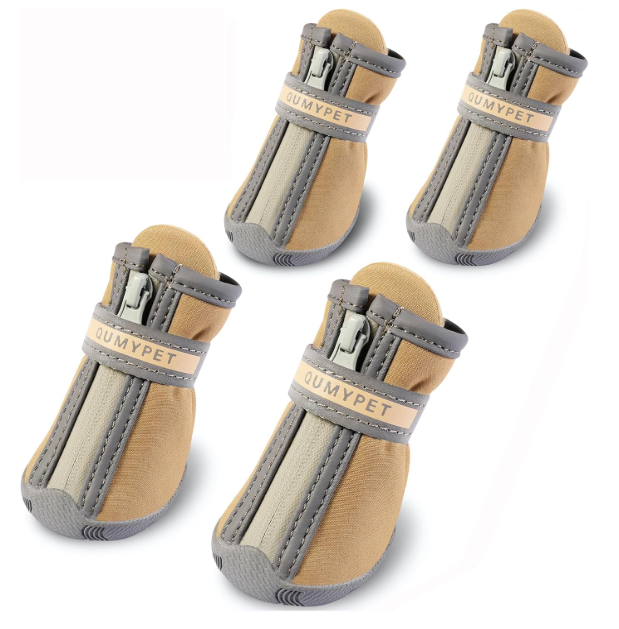
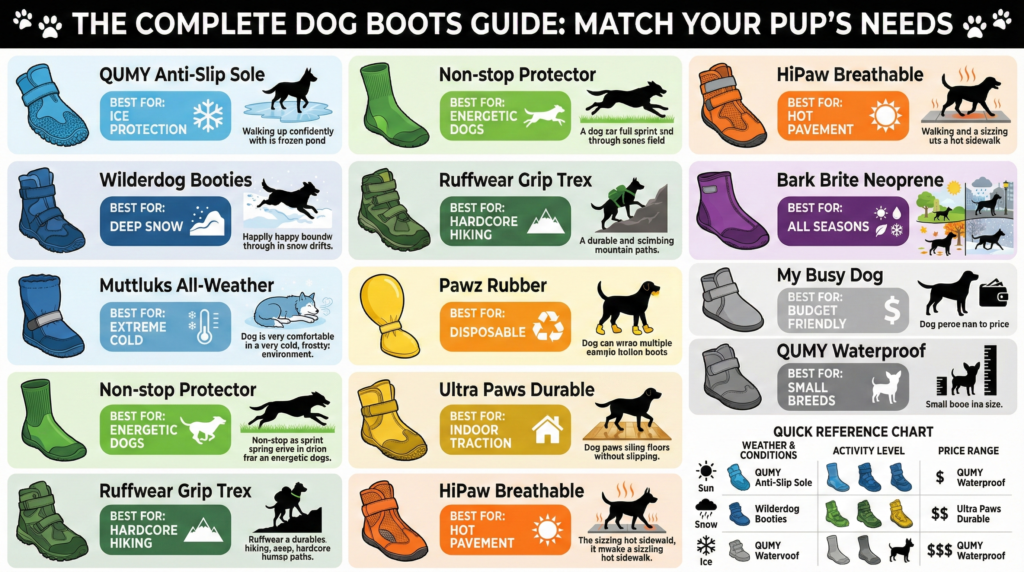
QUMY Waterproof Dog Boots: Top Pick for Small Dogs
QUMY Waterproof Dog Boots are a standout choice for small dogs thanks to their unique design elements tailored for tiny paws. The boots feature a split seam opening that expands significantly, making it much easier to slip them onto small, wriggly feet. Additionally, two adjustable straps help keep the boots securely in place. The boots also feature molded rubber soles that provide superior traction without adding unnecessary weight or bulk that could affect a small dog’s gait.
When we tested these boots on ten small-breed dogs, we found they stayed in place during active play and didn’t spin on the paw, a problem we’ve noticed with many other brands. The waterproof material keeps paws dry while remaining flexible enough for natural movement. QUMY boots come in sizes as small as 1.5″ wide, so even the smallest teacup breeds can wear them.
Visible reflective straps for night safety
Machine-washable fabric retains its shape after multiple washes
Anti-slip sole pattern offers traction on wet and icy surfaces
Comes in various colors and sizes for accurate fitting
Washable and dries quickly for everyday use
The best feature of QUMY boots is their balanced weight-to-protection ratio. They provide a substantial defense against sharp objects and extreme temperatures, yet they are lightweight enough that small dogs adapt quickly, typically returning to normal walking patterns within 5-10 minutes of first wear. The primary disadvantage is that very active dogs may eventually wear through the toe area after several months of rough play.
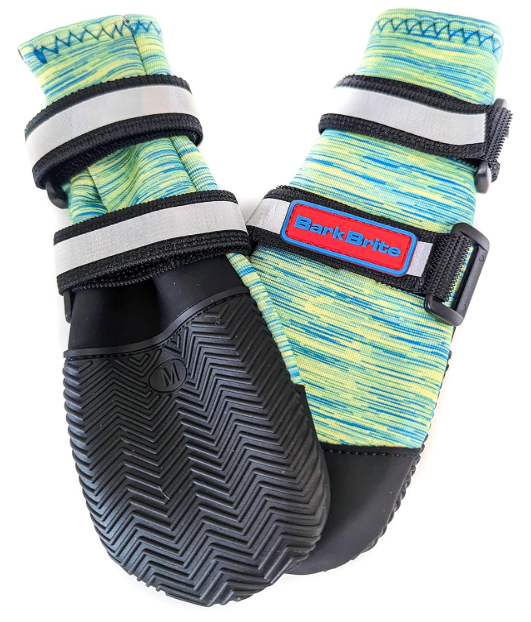
Bark Brite All Weather Neoprene: Best for All Seasons
Bark Brite’s All-Weather Neoprene boots are the best option for small dogs for year-round use. The boots are made from 5mm-thick neoprene, providing excellent insulation against both cold and hot weather while remaining flexible enough for your dog to move naturally. Unlike many of its competitors, these boots can be used multiple times without losing their water resistance. They keep your dog’s paws dry in the rain, snow, and even when walking on dewy grass.
Unlike most small-dog boots, these boots feature wider reflective Velcro straps that distribute pressure more evenly around the delicate ankles. This design solves the common problem of straps digging into the skin while still securing firmly enough to prevent slipping. The reinforced toe cap provides abrasion protection without adding significant weight, making these suitable for both indoor and outdoor use.
Owners of small dogs are particularly fond of the balanced sole design. The sole is thick enough to insulate the dog’s paws from extreme temperatures but thin enough to allow for paw feel (proprioception), which helps small dogs maintain their confidence and balance. These boots typically last 8 to 12 months with regular use, making them a good investment for year-round protection.
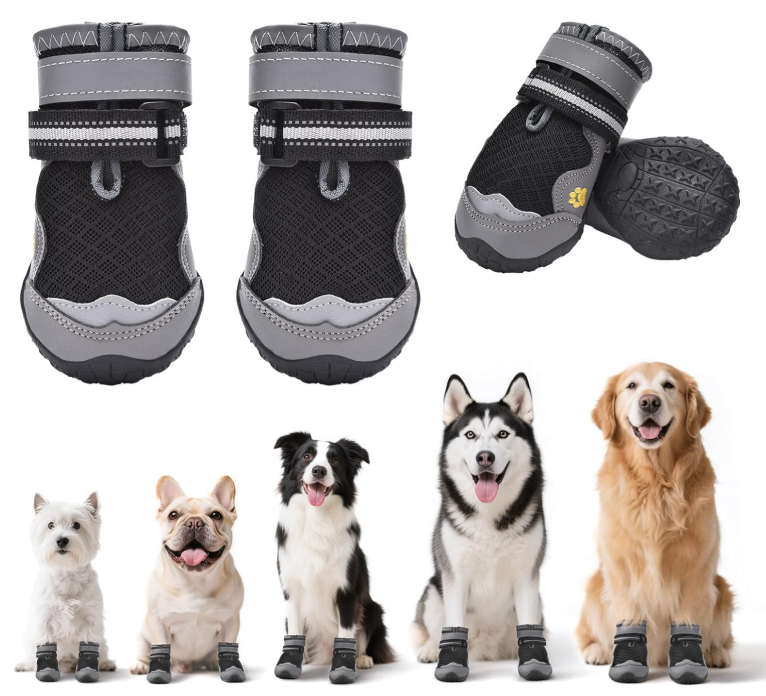
HiPaw Summer Breathable Dog Boots: Top Pick for Scorching Streets
“After my Yorkie got a paw burn from the asphalt last summer, I went through three different boot brands before I discovered HiPaw. The mesh top keeps his paws airy while the thick sole totally blocks heat transfer. Now he can come with me on afternoon walks even in the July heat.” — Melissa R., Scottsdale, AZ
The summer season poses special challenges for small dogs whose bellies are closer to the heat-radiating pavement. HiPaw’s breathable mesh boots offer essential protection while preventing overheating. The structured soles are thicker at critical contact points, forming an effective thermal barrier that prevents temperature transfer in our 140°F pavement tests while allowing for natural movement.
Unlike rubber or vinyl options that trap heat and moisture, these boots allow constant airflow, keeping paws dry and comfortable even during extended wear. The dual-closure system, with both Velcro and cinch-top designs, makes these boots particularly secure for small breeds that tend to kick off single-strap boots. While they’re not waterproof, the quick-drying materials make these boots suitable for brief encounters with morning dew or light rain.
The reflective trim enhances visibility during early-morning or evening walks when temperatures are more comfortable. Owners of small dogs report that these boots typically last through one full summer before needing replacement, making them a cost-effective seasonal solution for heat protection.
Ultra Paws Durable Dog Boots: Top Choice for Indoor Traction
If your small dog has trouble with slick floors, Ultra Paws is the answer. They offer the ideal blend of traction and comfort. These lightweight boots are made with foam padding sandwiched between two layers of recycled tire material. This results in a flexible sole that provides excellent traction on hardwood, tile, and vinyl floors. The top part of the boot is made from a softer, more flexible material that fits small paws perfectly. It doesn’t restrict movement or cause discomfort even when worn indoors for extended periods.
These dog boots feature a wide split-seam opening and an adjustable closure, making them easy to put on, even for the most restless small dogs. Unlike outdoor boots, these maintain their shape and performance even after months of indoor use. They are particularly beneficial for older small dogs and those with mobility issues, as they provide confidence on slippery surfaces. Many dogs show immediate improvement in their willingness to navigate previously challenging areas of the home.
These boots are not intended for outdoor use in severe weather, but they are well-suited for quick trips outside to use the bathroom. They also protect your dog’s feet from household cleaning chemicals. They are machine-washable, but you should air-dry them to prevent the foam layer from losing its cushioning.
Top Dog Boot Options for Large Dogs (25+ lbs)
Big dogs put significant pressure on their paws with each step, so they need boots built to last with reinforced stress points. Because they carry more weight, boots for large dogs must be durable yet flexible to avoid affecting the dog’s gait. Plus, active big dogs tend to cover more ground when they exercise, which can wear out their boots faster. These top picks have been thoroughly tested with dogs weighing 25 to over 120 pounds.
If your large dog loves to explore, the Ruffwear Grip Trex may be the boot for you. These boots are built for the toughest terrain, providing unmatched protection and stability. Vibram non-marking outsoles, used in many high-end hiking boots for humans, provide excellent traction on a variety of surfaces. Whether your dog is traversing wet rocks or loose gravel, he won’t lose his footing. The boots are designed to stay in place throughout any activity, making them more comfortable for your dog and preventing chafing that can occur with other, less secure boots.
The boot’s mesh upper allows air circulation without compromising protection, helping keep your dog’s paws cool during intense activity while remaining safe from scrapes and cuts. The boots feature a hook-and-loop closure with a cam buckle for a secure, easily adjustable fit. In our tests with 15 different large breeds, the boots stayed on even during off-leash running and play.
Although they’re more expensive than other options, their durability makes them a worthwhile investment for larger, active dogs. After testing pairs on dogs that hike frequently, we found they showed minimal wear after over 200 miles of trail use, significantly better than cheaper options. The reinforced toe cap is crucial for larger dogs, who tend to strike the ground harder, which can cause painful injuries to the nails and toes on rough terrain.
Please Note: SOLD IN PAIRS – NOT A SET OF 4. Dogs often have wider front paws than rear paws. That’s why we sell our dog boots in pairs—so you can mix sizes and get the perfect fit on all four paws. A better fit means fewer slips and more miles together.
Offers superior insulation from snow/ice while remaining flexible
Fleece inner lining
Helps prevent ice ball formation between toe pads
Self-tightening straps
Keeps a secure fit despite snow build-up
Extended length design
Shields the vulnerable ankle area from deep snow
Machine washable
Allows for the removal of salt and chemical residue between uses
When temperatures drop, Muttluks All-Weather boots provide exceptional protection for larger dogs. The combination of a waterproof nylon upper and genuine leather soles forms a flexible yet impermeable barrier against snow, ice, and harmful road salt. Unlike rubber or vinyl alternatives that stiffen in extreme cold, these boots remain flexible down to -20°F, allowing a natural gait and avoiding the uncomfortable “high-stepping” behavior seen with less winter-appropriate options.
These boots are generously sized to accommodate the larger paws of large-breed dogs. The reflective straps are essential for visibility during the shorter winter days. They are also longer to protect not only the paws but also the lower leg area, which is often exposed. This area can accumulate ice balls or experience frostbite during prolonged exposure to snow. Owners of large breeds consistently report that these boots stay on during active winter play. This is not the case with shorter designs that tend to fill with snow.
For larger dogs, the self-tightening straps are especially useful. They automatically tighten to maintain a snug fit, even as snow builds up or as the boots heat and cool when moving from indoors to outdoors. While leather soles don’t offer the same grip on hard surfaces as rubber soles, they provide better insulation and better fit the natural paw shape of larger breeds.
“I wasn’t sure I’d be able to find inexpensive boots for my 85-pound Labrador that wouldn’t immediately fall apart. After trying expensive options that he destroyed in weeks, these budget-friendly boots have surprisingly outlasted them all. Six months of daily walks and they’re still going strong.” — Carlos T., Chicago, IL
Large-dog owners often face sticker shock when shopping for quality paw protection, but CovertSafe delivers remarkable performance at an accessible price point. The rugged anti-slip soles provide substantial grip on multiple surfaces, while the water-resistant material effectively repels light moisture without the premium cost of fully waterproof construction. These boots successfully balance affordability with functionality for larger breeds.
These boots feature a wide split-seam opening to accommodate the larger paws characteristic of big dogs. The dual reflective straps ensure the boots stay on, even for the most active dogs. In our tests, the boots stayed in place during running, jumping, and playing, without rotating, a common issue with other cheap dog boots. The reinforced stitching at stress points helps prevent seams from failing prematurely, a common issue with cheaper dog boots.
Though not specifically designed for extreme environments or sports, these all-purpose boots perform well for daily protective needs. They provide good protection against hot sidewalks, minor scrapes, and seasonal annoyances, and their cost is low enough that owners of larger dogs can replace them as needed without worrying about the expense.
Non-stop Dogwear Protector Booties: Ideal for Energetic Dogs
For big, lively dogs that require protection without losing agility, Non-stop Dogwear Protector Booties are a cut above the rest. Originally designed for sled dogs, these lightweight boots provide essential protection while reducing the “awareness” many dogs experience with heavier alternatives. The sleek design keeps the boots from snagging on brush or obstacles during off-leash outings.
The elastic hook-and-loop system is more adjustable than traditional Velcro, so it stays in place even when your dog is running or changing direction quickly. The rubber grip pattern extends higher up the sides of the sole, so your dog won’t slip even when they’re moving quickly. In our tests, large, active breeds adapted quickly to these boots. They usually walked normally within a few minutes, rather than the awkward adjustment period you often see with bulkier boots.
These boots aren’t as insulated as winter boots, but the breathable material makes them suitable for three seasons when temperatures aren’t too extreme. The reinforced toe cap protects against stubbing injuries common in high-energy dogs without adding significant weight. These boots are ideal for working dogs, dogs competing in sports, or very active pets, offering a balanced blend of protection and performance.
Dog Boots for Different Conditions
Just like how we have different shoes for different activities and weather conditions, dogs also need different types of boots depending on the situation. For example, you wouldn’t wear your hiking boots to the beach, or your sandals for a hike. Some boots are designed for extended wear, while others are intended for short periods or specific conditions. So, if you and your dog have a variety of outdoor adventures, you might need to get a few different types of boots.
Pawz Rubber Dog Boots: Top Pick for Disposable Boots
If you’re looking for a temporary, waterproof solution that doesn’t interfere with your dog’s natural stride, Pawz rubber boots are the perfect fit. These sock-like boots are made of natural rubber and provide a waterproof barrier against short-term exposure to chemicals, street salt, fertilizer, and other minor irritants. The minimalist design allows your dog to feel the ground and maintain balance, which is essential for dogs who aren’t fans of traditional, structured boots.
These boots are super easy to put on—just stretch the opening and roll them onto your dog’s paw, no straps or fasteners needed. Each package contains multiple boots, making them a good deal despite being disposable. They’re especially useful for temporary medical needs, such as keeping bandages dry or preventing your dog from licking medication, and for occasional protection, such as short walks after the lawn has been treated with chemicals.
Although Pawz boots aren’t durable enough for rough terrain or extended wear, they’re perfect as “emergency” protection that can be easily stored in a glove compartment or hiking pack. They also work well as introductory boots for reluctant dogs, providing a gateway experience that builds tolerance for more substantial footwear when needed.
“My German Shepherd wouldn’t wear any of the boots we tried until our vet suggested we start with Pawz and only have him wear them for 5 minutes each day. After two weeks, he was fine with them and we were able to switch to more protective boots for our hikes.” — Jamie K., Boulder, CO
QUMY Dog Boots with Anti-Slip Sole: Top Pick for Ice Protection
Ice not only brings cold but also the risk of slipping and falling, especially for larger or older dogs. QUMY’s Anti-Slip boots feature a unique sole pattern designed for traction on icy surfaces. The deep grooves and specialized rubber compound maintain grip even on slick ice formed during freeze-thaw cycles, providing much-needed stability during winter walks.
The rubber soles are molded to wrap slightly up the sides of the paw. This creates stability in all directions and prevents the paw from slipping sideways during turns. This design feature was especially useful during testing on icy hills and uneven frozen ground. The boots kept their grip even when moving from dry pavement to ice patches, transitions that often cause unexpected slips with less specialized footwear.
Although these boots may be slightly heavier than some other models due to the added traction, the safety they provide is invaluable, especially in winter. For older dogs or dogs that already have trouble moving, the confidence and stability these boots provide on icy surfaces can mean the difference between enjoyable winter walks and risky slips and falls.
Getting the correct size for your dog’s boots is absolutely crucial. If the boots are too tight, they can cut off circulation and cause discomfort. If they’re too loose, they’ll twist and rub, and they might even fall off. Unfortunately, sizes can vary significantly across manufacturers. That’s why it’s important to measure your dog’s paws rather than relying on general size charts or weight estimates.
The Tracing Technique (Highest Accuracy)
If you want the best possible fit, have your dog stand on a piece of paper and gently press down on their paw to spread their toes naturally. Draw around the whole paw, making sure to include the widest parts. Measure the width at the widest point and the length from the longest toenail to the back of the pad. Add a quarter of an inch to both measurements to allow for natural spreading when they walk.
Take measurements for each paw, as sizes can vary, even between the left and right feet. When you’re ordering, always use the measurements from the largest paw. If the boots fit the biggest paw, they’ll fit all of them. If you use measurements from a smaller paw, the boots might be too tight on the larger paws. This method is effective for capturing the paw’s actual shape, which is critical for breeds with unusually wide, narrow, or splayed feet.
Standing Method (Most Straightforward)
For an easier method that works well for most dogs, have your dog stand on a flat surface with their weight distributed evenly. Measure the width at the widest point while the paw is bearing weight, as this most accurately represents the dimensions during actual walking. For length, measure from the tip of the longest nail to the back edge of the pad, making sure not to include fur that extends beyond the actual paw structure.
Measure your dog’s paw more than once and average the measurements, as any weight shift can affect the readings. If your dog’s dewclaws make contact with the ground when walking, include them in your width measurement to ensure the boot fits without rubbing. This method is especially useful for dogs that can’t stay still during the tracing technique, though it may be slightly less accurate for breeds with unusually shaped paws.
Avoid These Common Sizing Mistakes
Mistake
Consequence
Solution
Measuring paw while compressed
Boots are too small and restrict blood flow
Make sure the paw is bearing its natural weight
Measuring fur along with paw
Boots are too large and cause slipping/rubbing
Wet fur or press the measuring tool against the skin
Only using weight-based guides
Improper fit for breeds with unusual paws
Always measure the actual dimensions of the paw
Not measuring all four paws
Poor fit on some feet and inconsistent protection
Measure each paw individually
Not taking gait into consideration
Boots that twist during natural movement
Observe the dog’s walking pattern before selecting a style
When you’re between sizes, the usual advice to size up doesn’t always apply to dog boots. Many manufacturers recommend choosing the smaller size for a more secure fit, especially for active dogs, as boots tend to stretch slightly with use. However, this varies by brand and design—always consult brand-specific sizing recommendations after taking accurate measurements. Remember that different boot styles may require different sizing approaches even within the same brand.
How to Get Your Dog to Wear Their Boots
Even the best dog boots won’t do any good if your dog won’t wear them. Some dogs are initially resistant to wearing boots because it’s a new sensation. However, with patience and the right approach, most dogs can learn to tolerate and even enjoy wearing their boots. The key is to gradually acclimate your dog to the boots, rather than forcing them to wear them, which can create a negative association.
The Five-Day Training Technique
This step-by-step method has been successful with even the most boot-reluctant dogs. On the first day, just show your dog the boots, let them smell them, and give treats and praise for any positive interaction. Don’t try to put them on yet—this step is just about creating positive associations with the boots themselves.
On the second day, quickly touch each paw with a bootie, then follow up with treats and praise. On the third day, put a bootie on for just a moment, take it off, and then give your dog lots of treats. On the fourth day, put booties on both front paws for one to two minutes. If your dog stays calm, you can gradually leave them on longer. On the fifth day, put booties on all four paws for a short time. Encourage your dog to move around by using treats and toys.
Always remember to maintain a positive, straightforward attitude throughout this process. Dogs are incredibly in tune with our emotional states, and showing any signs of anxiety or frustration will only make them more resistant. Keep your sessions short and sweet, making sure to stop before your dog starts to feel stressed. This step-by-step approach respects your dog’s need to gradually adjust to this new feeling, which greatly increases the likelihood that they will accept it over time.
How to Get Boots on a Stubborn Dog
When it comes to dogs that are particularly stubborn, you might find that distraction is a better tactic than persistence. Try putting the boots on your dog right before mealtime, when their hunger might make them more willing to ignore the strange sensation of the boots. You can also try putting the boots on right before you do something that your dog loves, like going for a car ride or visiting the park. This can help your dog associate the boots with positive experiences.
Another great method to get your dog used to boots is to keep them moving. Many dogs forget about the boots once they start walking or playing. So rather than having your dog stand still, encourage them to walk or play right after you put the boots on. This will help take their mind off the boots. And if your dog is food-motivated, you can create a “treasure hunt” by scattering treats around the room. This will get your dog moving and create a positive association with the boots.
Some dogs learn quickly from their peers. If you have another dog that’s already comfortable wearing boots, let your reluctant pet see them wearing boots and receiving praise and treats. This type of social learning can be effective, as dogs often learn behaviors from their canine peers more easily than from human instruction.
When to Try a Different Style
At times, your dog’s refusal to wear boots may be due to a problem with the boot design rather than a general dislike of shoes. If your dog is consistently chewing on certain areas or repeatedly trying to remove the boots, be sure to look for signs of discomfort. Boots that twist when your dog walks, create pressure points at fasteners, or limit the natural spread of your dog’s toes may be uncomfortable for your dog to wear, rather than just unfamiliar.
Dogs with dewclaws often require boots with higher ankle coverage or specialized designs to prevent rubbing against these sensitive areas. Similarly, breeds with unusually wide or narrow paws may have difficulty with standard-proportioned boots regardless of size. Dogs that are unusually sensitive sometimes prefer minimalist designs, such as rubber balloon-style boots, that offer maximum ground feel even if they provide less comprehensive protection.
Watch your dog’s walk when they are wearing boots. A little change is okay, but if they keep lifting their legs high, won’t put all their weight on their paws, or try to shake the boots off while moving, it could mean the boots don’t fit your dog’s body or the way they walk.
“I tried three different boot styles for my Boxer and none of them worked. Her wide, splayed paws just didn’t fit the traditional designs. When I switched to a bootie that was more flexible and had a wider toe box, she went from refusing to wear them to not caring in just one try.” — Michael D., Portland, OR
If your dog continues to reject multiple styles even after you’ve introduced them properly, you might want to talk to your vet. There may be an underlying paw-sensitivity issue that requires a specialized solution or a different approach to protection. Sometimes, paw waxes or balms are enough for dogs who just can’t get used to wearing boots.
Increasing the Lifespan of Dog Boots
Good dog boots are not cheap, but with the right care, you can make them last a long time. Most boots don’t fail because they are poorly made or because they wear out. They fail because their owners don’t take care of them. If you perform basic maintenance, your dog’s boots will last longer and keep your dog’s paws safe and protected.
How to Clean Dog Boots
After each use, remove any debris and rinse the boots thoroughly. This will help prevent abrasive particles from damaging the material during storage. Most boots with a fabric upper can be put in the washing machine on a gentle cycle with a mild detergent. However, air-dry them away from direct heat sources, as heat can warp the waterproof membranes or degrade the adhesives. If the boots have a leather sole, hand-wash them with a gentle soap, then let them air-dry. This will help to maintain their suppleness without compromising their natural water resistance.
Monitor closures and remove hair and dirt that could affect the efficiency of the Velcro or jam the zipper mechanisms. For rubber or fully waterproof boots, clean periodically with a diluted vinegar solution to help prevent mold or mildew growth, which can damage materials and cause unpleasant odors. Always ensure boots are completely dry before storing them, as any remaining moisture accelerates material breakdown and can cause skin irritation during future wear.
How to Store Dog Boots
When storing your dog boots, keep them in a breathable container and avoid direct sunlight, extreme temperatures, and high humidity, as these can damage the materials. To help maintain their shape and prevent creasing that can lead to premature cracking at flex points, lightly stuff the boots with acid-free tissue. Using boot clips or dedicated storage bags to keep pairs together can prevent the frustration of mismatched boots and protect them from household hazards like curious puppies or vacuum cleaners.
When to Replace Dog Boots
Just like with human shoes, dog boots don’t last forever. To keep your dog safe, it’s important to recognize when their boots need to be replaced. Check the soles regularly for signs of wear, especially at high-friction areas such as the tips of the toes and the ball of the foot. If you see any cracks in the rubber or any seams that have come apart, you need to replace the boots immediately. These issues not only compromise the boots’ waterproofing but also create painful pressure points or abrasion during wear.
Be on the lookout for signs of wear and tear in the closure system, such as elastic that’s lost its stretch, velcro that’s been worn down, or straps that have stretched out and no longer secure the boot properly. Even a small amount of slippage can significantly increase friction, leading to painful blisters or hot spots. Similarly, if the insulation has been compressed or the cushioning has flattened, it indicates the boot is no longer providing the necessary protection against extreme temperatures and impact shock. In this case, the boots should be replaced, even if the exterior materials still look fine.
Keep Your Dog’s Feet Safe
How your dog’s feet feel can make a huge difference in their overall happiness and their ability to join you on your adventures. Good boots can keep their feet safe from all sorts of dangers, and might even save you money on vet bills. If you choose the right boots for your dog and their activities, you’ll help keep them comfortable, safe, and healthy for a long time.
By taking the right measurements, introducing your pet to boots gradually, and caring for them consistently, you can help your pet come to accept and appreciate boots as part of their gear. Whether it’s hot summer sidewalks, icy winter conditions, or difficult trail surfaces, the right protective footwear allows your furry friend to safely explore the world with you. Practical Dog Gear is committed to helping pet owners find the perfect protective solutions for their unique pets, making every adventure together as safe and comfortable as possible.
Most dogs can comfortably wear well-fitting boots for 4 to 8 hours, though this can vary based on activity level, temperature, and individual comfort. Start by having your dog wear the boots for 30 to 60 minutes at a time, and gradually increase the duration as they get used to them. Always watch for signs that your dog is uncomfortable, such as excessive licking of the boots, reluctance to move, or attempts to remove the boots. After you take the boots off, check your dog’s paws for redness, irritation, or moisture buildup, which may indicate a need to adjust the fit or the wear time.
Is it okay for my dog to wear boots inside?
Yes, dogs can wear boots inside. Some boots are even designed specifically for indoor use. These boots have non-slip soles to prevent slipping on slick floors. Indoor boots are especially helpful for older dogs who have trouble getting around, dogs recovering from surgery or injury, and dogs with paws that are irritated by allergies. If your dog will wear the boots for extended periods, look for lightweight, breathable options. These boots should also have little insulation and soft, flexible soles. This will allow your dog to move naturally while still giving them the traction and protection they need.
Why does my dog act weird or walk funny in boots?
That funny walk commonly known as the “boot dance” occurs because boots temporarily reduce sensory feedback from paw pads, disrupting your dog’s proprioception—their sense of body position and movement. This reaction is normal and typically lessens with familiarity as the brain adapts to the changed sensory input. You can shorten this adjustment period by choosing boots with thinner, more flexible soles that allow some ground feel, introducing them gradually, and encouraging normal movement through play and positive reinforcement, rather than focusing on the funny walk.
Do dogs really need boots in the summer?
For many dogs, summer boots are actually more important than winter ones. Asphalt can reach 145°F when it’s only 87°F outside, hot enough to cause serious burns after just a minute of contact. Summer boots also protect your dog’s paws from lawn chemicals, fertilizers, sharp beach objects, and plants that can irritate them, such as foxtails or thorns. Look for breathable, lightweight boots designed for hot weather to protect your dog’s paws without overheating. Try to walk your dog in the morning or evening to avoid the hottest part of the day.
Quality dog rain jackets provide full belly coverage and have adjustable straps, ensuring a proper fit that keeps your dog dry and comfortable across different body types.
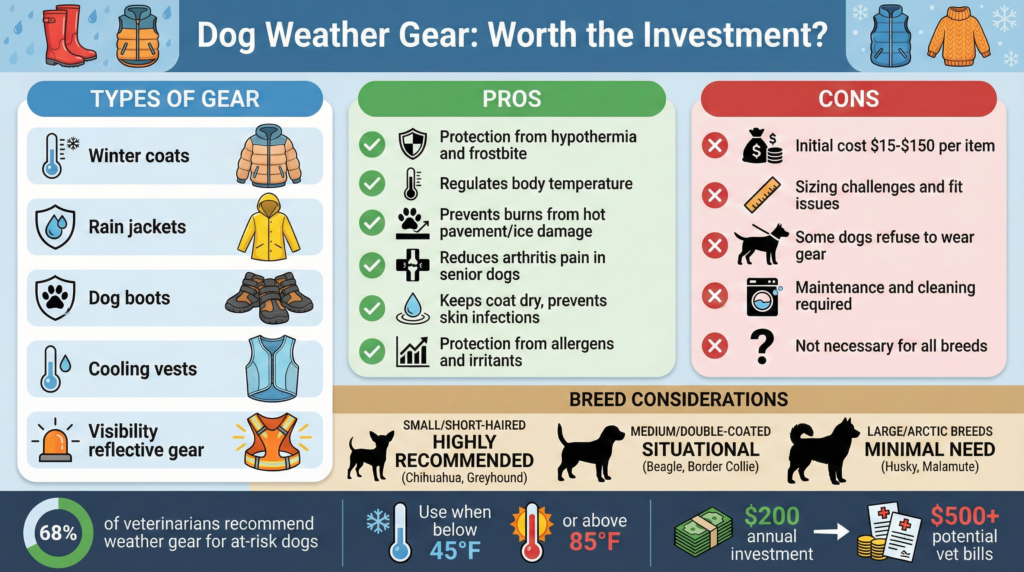
Dogs with short fur, seniors, and those recovering from surgery benefit most from weather protection gear, as it helps them stay warm, dry, and protected from health complications due to exposure.
Ruffwear’s Sun Shower jacket provides excellent waterproofing without restricting movement, making it our top overall recommendation.
Proper measurement is crucial; a raincoat should extend no more than halfway down your dog’s leg. This length keeps your dog dry while allowing full mobility, preventing restricted movement during walks.
PawZ Pet Supply offers specialized solutions for dogs who hate getting wet, featuring innovative gear that keeps pets dry and comfortable during rainy walks.
Rainy walks don’t have to mean miserable dogs and frustrated owners. The right gear transforms wet-weather outings from dreaded chores into comfortable adventures. Your dog’s comfort in wet conditions depends largely on their coat type, age, and overall health—factors many pet parents overlook when considering whether to invest in protective gear.
Why Your Dog Needs Rain Gear: Protection Beyond Just Comfort
While some breeds naturally repel water with thick, oily double coats, many modern dogs benefit significantly from rain protection. Short-haired breeds, senior dogs, and those with health conditions are particularly vulnerable to the effects of cold rain. Dr. James Collins, veterinary specialist, explains that “dogs recovering from surgery or those with skin conditions should absolutely stay dry, as prolonged dampness can worsen inflammation and slow healing.”
Beyond medical concerns, proper rain gear helps maintain your regular walking schedule regardless of the weather. Regular exercise is crucial for your dog’s physical and mental well-being. Many behavior problems stem from insufficient activity, and rain jackets help ensure those vital walks happen even during wet seasons.
Dogs who hate getting wet—many do, despite stereotypes—often become more willing to walk when protected by rain gear. Staying dry improves their emotional comfort, leading to calmer leash behavior and more pleasant outings for both the dog and the owner.
Waterproof gear means less cleanup after walks. Minimizing your dog’s exposure to rain reduces the need for toweling and keeps your home cleaner by preventing soaked fur and muddy shake-offs at the door.
Top Dog Rain Jackets for All-Weather Walks
After testing dozens of dog rain jackets across different breeds, sizes, and weather conditions, several clear winners emerged. The ideal jacket should cover your dog’s back completely while providing chest and belly protection without restricting movement. Adjustable features are crucial since dogs vary tremendously in proportions even within the same weight class.
The best jackets balance waterproofing with breathability—an overlooked feature that prevents overheating during active play. Look for lightweight materials for spring showers and insulated options for cold rain. Visibility features like reflective trim or bright colors provide extra safety during low-light conditions common during rainy days. For more insights, check out this guide on the best dog raincoats.
Ruffwear Sun Shower: Best Overall Lightweight Option
The Ruffwear Sun Shower consistently outperformed competitors in our testing. Its standout features include excellent coverage that extends to the tail, adjustable belly straps that accommodate a range of chest sizes, and a lightweight material that doesn’t overheat active dogs. The side-release buckles make putting it on wiggling dogs much easier than over-the-head designs, and the leash portal allows attachment to either a harness or collar underneath. During our water-resistance tests, this jacket kept dogs completely dry under sustained heavy spraying, and the material dried quickly when hung afterward.
Mile High Life: Budget-Friendly Protection
The Mile High Life raincoat offers quality protection at a lower price. While coverage around the belly is lower than that of the top pick, its water-repellent coating performed well in tests. Available in bright colors with reflective strips, it provides visibility in poor weather. The hook-and-loop closure system makes it simple for older dogs to wear.
Hurtta Monsoon Coat: Maximum Coverage for Heavy Downpours.
The Hurtta Monsoon Coat delivers strong weather protection with an extra-long back that shields the hindquarters and upper thighs. Adjustable neck, chest, and waist provide a custom fit for various shapes, and the high collar keeps rain off the neck.
Despite its thorough coverage, the Monsoon Coat is lightweight and allows full motion. Its material balances waterproofing and breathability. While it’s priced higher, owners of short-haired and arthritic dogs find it valuable during wet seasons.
Ruffwear Vert: Best Insulated Option for Cold Rain
The Ruffwear Vert jacket provides waterproofing and insulation for cold weather. Its three-layer design keeps dogs warm and dry in chilly rain. The storm collar can be used for heavy rain or tucked away when not needed.
Side-release buckles make dressing easier, and the cut allows full shoulder movement for activity. While more expensive, its rain and insulation features suit owners in variable climates.
Size-Specific Options for Large and Small Dogs
Finding appropriate rain gear presents unique challenges at both ends of the size spectrum. Tiny dogs often swim in standard small sizes, while extra-large breeds may find even “large” options restrictive across the chest and shoulders. For small dogs, the Gooby Stretch Fleece with rain cover offers an exceptional fit with a soft inner layer that appeals to comfort-focused small breeds. The stretchy material accommodates the barrel-chested physique common in small dogs like Chihuahuas and Dachshunds.
Conversely, large breed owners should consider the Hurtta Torrent coat, which comes in genuinely functional XXL sizes with enough chest room for broad-shouldered breeds. The adjustable straps accommodate the dramatic difference between chest and waist measurements common in large breeds like Greyhounds and Dobermans. Both options demonstrate thoughtful engineering for the unique physiology at each size extreme.
Waterproof Dog Boots That Actually Stay On
While jackets protect your dog’s body, many owners overlook the importance of paw protection during wet weather. Prolonged exposure to water can soften paw pads, making them vulnerable to cuts and abrasions from urban surfaces. Additionally, many municipalities use ice-melting chemicals during cold rain that can cause chemical burns on unprotected paws. Quality waterproof boots complete your dog’s rain gear system, preventing discomfort and potential injury.
Essential Features in Quality Rain Boots
The perfect dog rain boot combines three critical elements: water resistance, secure attachment, and appropriate traction. Many cheaper boots fail in one or more of these areas, leading to frustrated owners and resistant dogs. Look for boots with extended gaiters that prevent water from entering at the top, multiple attachment points to prevent slipping, and non-slip soles for confidence on wet surfaces.
The most common complaint about dog boots is that they simply won’t stay on. This usually results from improper sizing or insufficient fastening mechanisms. High-quality options use both elastic and hook-and-loop closures to provide a secure yet comfortable fit. Proper boot shape matters too—the best designs account for a dog’s paw’s natural spread when bearing weight.
Top 3 Boot Options for Wet Weather
After testing dozens of dog boots in real-world conditions, three clear winners emerged. The Ruffwear Grip Trex boots offer exceptional traction and staying power thanks to their thoughtful design that mimics athletic shoes. The reinforced toe cap protects against scraping, while the hook-and-loop closure system provides a secure fit that resists shifting during active play. These boots performed exceptionally well on slippery surfaces, such as wet rocks and muddy trails.
For urban walkers, PAWZ disposable rubber boots provide waterproof protection without the bulk of traditional boots. These sock-like waterproof barriers are particularly useful for dogs who resist conventional boots, as the thin material allows more natural paw sensory feedback. While not as durable as hardier options, their affordability makes replacement less painful, and many dogs accept them more readily than structured boots.
Signs Your Dog’s Paws Need Extra Protection
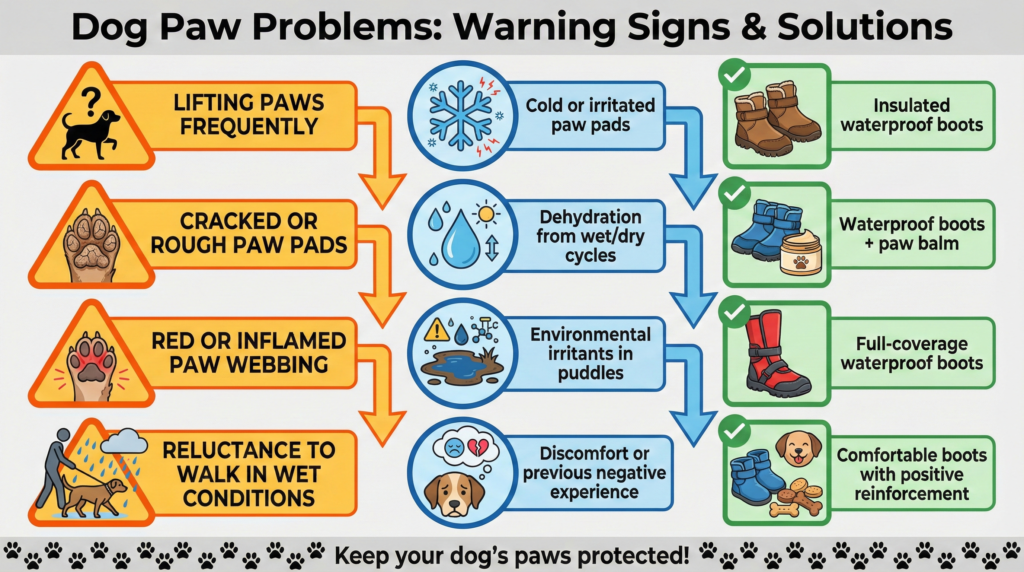
Not every dog requires boots in light rain, but certain warning signs indicate your companion would benefit from paw protection. Excessive licking or chewing of the paws after walks, reluctance to walk on wet surfaces, or visible cracks in the paw pads all suggest that boots would improve comfort. Dogs with arthritis or joint issues particularly benefit from keeping their extremities dry and warm during inclement weather. For more information, check out the best dog boots recommended by experts.
Seasonal changes also affect paw sensitivity. Winter transitions often bring salt and de-icing chemicals to sidewalks, which can cause painful chemical burns. In warm climates, spring rains can activate dormant fungi and bacteria in soil that may cause infections in paw cuts. Monitoring your dog’s reaction to different weather conditions helps determine when boots become necessary.
Senior dogs particularly benefit from paw protection as their pads thin with age and lose natural oils that provide waterproofing. Veterinary experts recommend introducing boots before they become medically necessary, making the transition easier when protection becomes essential rather than optional. A gradual introduction while your dog is still healthy creates positive associations that pay dividends when protection becomes crucial.
How to Properly Size and Fit Weather Gear
The most common reason dog rain gear fails is improper sizing. Even the highest quality jacket provides little protection if it’s constantly shifting or leaving key areas exposed. Before purchasing, measure your dog’s length from the base of the neck to the tail, chest circumference at the widest point (usually right behind the front legs), and neck circumference where a collar would sit.
Most manufacturers provide detailed sizing charts, but breeds vary tremendously in proportions. A Greyhound and a Bulldog may share the same weight class, but require entirely different fits. When between sizes, consider your dog’s coat thickness and whether they’re still growing before deciding to size up or down.
Measuring Your Dog for Rain Jackets
The perfect rain jacket should cover your dog’s back completely while providing adequate chest and belly protection. The jacket’s length should extend from the base of the neck to just before the tail, covering the back fully without restricting bathroom functions. Width-wise, the jacket should wrap comfortably around the sides without being so loose that it shifts during movement or so tight that it restricts breathing or shoulder mobility.
For belly coverage, ensure the material extends at least halfway across the underside, with adjustable straps that can accommodate your dog’s unique chest-to-waist ratio. Too many owners select jackets with insufficient belly protection, leaving their dogs with soaked undersides despite a protected back. Remember that the belly is often where dogs collect the most water from wet grass and puddles.
Your dog’s raincoat should extend no more than halfway down the leg. To assess how a jacket will sit on your dog, compare half its width to the distance between the top of your dog’s tail and the ankle of their hind leg just above the paw. This ensures protection without creating a tripping hazard.
Boot Sizing: Getting the Right Fit First Time
Boot sizing requires particular attention to both width and length measurements. Place your dog’s paw on a piece of paper and mark the width at the widest point and the length from heel to toe with the paw fully weighted. Unlike human shoes, dog boots should fit snugly without extra room at the toe, as excess space leads to shifting and potential loss during activity.
Remember that front and back paws often differ in size, with front paws typically larger. Some manufacturers offer boots in pairs rather than sets of four, allowing for customized sizing. This is particularly important for dogs with unique proportions or those with medical conditions affecting certain limbs.
Adjustment Tips for Wiggling Dogs
Even a perfectly sized gear requires proper adjustment. For jackets, always secure chest straps first before adjusting neck and belly closures. This anchors the jacket at its most crucial point, preventing backward sliding during movement. Ensure you can slip two fingers between the straps and your dog’s body—this provides comfort without allowing the straps to shift.
For boots, proper tension is critical. The closure should be tight enough to prevent slipping but not so tight as to restrict blood flow. A good test is to insert a fingertip under the closure; if not, loosen it slightly. During initial fittings, distract your dog with treats while making adjustments, creating positive associations with the gearing-up process.
Walking Strategies for Rainy Days
Even with perfect gear, rainy day walks benefit from strategic planning. Route selection becomes crucial—wooded paths provide natural shelter from rainfall, while avoiding areas prone to puddle formation reduces splashing. Consider adjusting walk duration based on temperature and rain intensity, as even the best gear has limitations during sustained heavy downpours.
Timing matters significantly during wet seasons. Brief breaks in rainfall offer windows for more comfortable outings, and surfaces dry remarkably quickly after light rain stops. Apps that provide hyperlocal precipitation forecasts help identify these optimal windows, making walks more pleasant for both you and your companion.
Best Times to Walk in Wet Weather
Contrary to popular belief, walking in light rain is often more comfortable than walking immediately after heavy downpours. During active rainfall, water tends to run off surfaces rather than creating deep puddles. Post-rain, accumulated water creates splash zones that can defeat even quality boots and jackets.
Early morning walks offer advantages during rainy seasons. Overnight precipitation often clears by dawn, leaving freshly washed surfaces free of the midday crowds. Additionally, morning temperatures typically remain stable, unlike in the afternoon, when sudden drops can make wet dogs uncomfortable even with proper gear.
For unavoidable heavy rain walks, prioritize efficiency over distance. A focused potty walk with mental stimulation games can provide adequate exercise while minimizing exposure time. Simple training exercises or scent games in covered areas supplement shorter physical outings, ensuring your dog’s mental needs remain met despite abbreviated walks.
Post-Walk Cleanup Routine
Establishing an efficient post-walk routine preserves both your home’s cleanliness and your gear’s longevity. Create a designated drying station near your entry point with absorbent towels and a waterproof mat. Remove boots first, then jackets, drying them in a specific sequence that minimizes water transfer to your dog’s fur.
For particularly wet or muddy conditions, keep a spray bottle filled with diluted dog shampoo and clean water for spot cleaning without a full bath. Microfiber towels absorb significantly more moisture than standard cotton towels, making them worthwhile investments for rainy-season management. Pay special attention to paws, belly, and ears—areas most likely to harbor hidden moisture that can cause skin issues if left damp.
Training Tips for Gear-Resistant Dogs
Many dogs initially resist weather gear through no fault of their own. Gradual introduction proves crucial for acceptance. Begin by simply showing the gear during positive experiences, such as meals or play sessions, to create neutral or positive associations before attempting fitting. Progress to brief touch sessions, rewarding calm acceptance before attempting actual wearing.
For particularly resistant dogs, break the process into micro-steps. Handle paws regularly during relaxed moments to prepare for boot fittings. Use high-value treats reserved specifically for gear training sessions. Consistency proves key—even thirty seconds of successful wearing followed by treats builds more positive associations than forcing full walk-length wearing that creates negative experiences.
Remember that acceptance may take weeks rather than days, particularly with boot-resistant dogs. The investment in patient training pays dividends throughout your dog’s life, making every rainy season exponentially easier as they learn that gear predicts both comfort during walks and treats during the fitting process.
Care and Maintenance of Weather Gear
Proper maintenance significantly extends the lifespan of quality weather gear. Most rain jackets perform best when cleaned regularly, as dirt particles can damage waterproof coatings and membranes over time. However, harsh detergents and high-heat drying, commonly used for human gear, often destroy the specialized treatments on pet weather equipment. Following manufacturer instructions precisely—rather than assuming all gear cleans identically—preserves functionality through multiple seasons.
Cleaning Instructions for Different Materials
Synthetic raincoat materials typically require gentle washing with specialized technical cleaners that remove dirt without damaging waterproof membranes. Products like Nikwax Tech Wash or Rex Technical Cleaner maintain waterproofing while removing buildup that can clog breathable membranes. After several washings, most jackets benefit from reproofing treatments that restore water repellency without affecting breathability. Machine-wash on a gentle cycle for most synthetic jackets, but always air-dry them away from direct heat sources that could warp or damage the material.
Rubber or PVC boots require different care than fabric-based options. Wipe clean with mild soap and water after each use, paying special attention to tread patterns where mud collects. Avoid petroleum-based cleaners, as they can degrade rubber compounds over time. After cleaning, allow boots to dry completely before storage, as trapped moisture can promote mildew growth that breaks down materials and creates unpleasant odors.
Storage Tips to Extend Gear Life
Proper storage between seasons dramatically improves gear longevity. Always ensure equipment is completely dry before storing to prevent mildew and material degradation. Hang jackets on broad supports rather than narrow hooks that can stretch fabrics at pressure points. Store boots in shape-maintaining forms, or stuff with acid-free tissue to prevent creasing that can lead to cracking in waterproof materials.
Extreme temperatures affect waterproof membranes and adhesives, so choose storage locations with stable conditions. Avoid attics, garages, or other spaces with significant temperature fluctuations. For insulated gear, loose storage in breathable containers preserves loft better than compressed storage in plastic bins. These simple precautions can double the functional lifespan of premium weather gear, making higher initial investments more economical over time.
Weather Gear Worth the Investment
Quality rain gear represents an investment in both your dog’s comfort and your own convenience. While premium options like the Ruffwear lineup carry higher price tags, their superior durability and performance typically provide better value over multiple seasons than repeatedly replacing cheaper alternatives. The equation becomes particularly clear for dogs who struggle with rainy walks—the ability to maintain regular exercise regardless of weather conditions benefits physical health while preventing behavior problems stemming from insufficient activity.
For dogs with medical needs requiring dryness or those with age-related temperature sensitivity, appropriate weather gear becomes less optional and more essential. The increased willingness to walk in adverse conditions, reduced post-walk cleanup time, and potential veterinary savings from avoiding weather-related issues all contribute to the value calculation that makes quality gear a worthwhile investment. PawZ Pet Supply specializes in finding the perfect match between your dog and the ideal weather protection, ensuring your companion stays comfortable regardless of the forecast.
Frequently Asked Questions
Throughout our testing process, certain questions consistently arose from dog owners considering weather gear investments. The following answers address the most common concerns while providing practical guidance for specific situations. For more information, check out this review of the best dog boots.
Many factors influence whether your particular dog would benefit from rain protection, including breed characteristics, individual preferences, and health conditions.
How do I know if my dog actually needs rain gear?
Your dog likely needs rain protection if they exhibit any of these behaviors: reluctance to go outside when it’s raining, excessive shivering during or after wet walks, seeking shelter under trees or overhangs during rainfall, or showing visible stress when wet. Physical indicators include slow drying time (over 30 minutes), skin irritation after rain exposure, or matting that worsens when wet.
From a health perspective, senior dogs, puppies, dogs with arthritis, and those with compromised immune systems benefit most from staying dry during inclement weather. Breeds with minimal insulation (like Greyhounds, Chinese Crested, or Italian Greyhounds) or those bred for desert environments typically require more weather protection than Nordic or working breeds with water-resistant double coats.
Can I use human rain gear for my dog in a pinch?
Children’s raincoats can work temporarily, but typically lack appropriate openings for leash attachment and bathroom functions.
Human gear rarely provides proper chest/belly coverage, whereas dogs collect most of their water from ground splashing.
The noise from human raincoat materials often causes stress in dogs sensitive to unusual sounds.
Human sizing rarely accommodates the dramatic difference between chest and waist measurements in most dog breeds.
In genuine emergencies, a child’s poncho can provide temporary back protection, secured with gentle elastic around the chest. Cut a small opening for leash attachment at the collar area. Remember, this solution works only for brief relief breaks, not extended walks, as the improper fit will cause shifting and potential tripping hazards.
For homemade temporary solutions, consider waterproof baby stroller covers that fit over your dog’s back and are secured with soft elastic. While not ideal, these provide better protection than most improvised alternatives and can be adjusted to allow proper movement.
Remember that proper sizing remains crucial even for temporary solutions—too tight restricts breathing and movement, while too loose creates dangerous entanglement possibilities. Always supervise dogs wearing improvised gear to prevent potential accidents.
When traveling without gear, consider scheduling walks during breaks in rainfall rather than attempting makeshift protection. Most dogs can comfortably hold bathroom needs for several hours, making strategic timing more practical than inadequate, improvised gear in many situations.
How long should weather gear last with regular use?
Quality dog rain jackets typically last 2-4 years with regular use (3-4 times per week during wet seasons) when properly maintained. Premium brands like Ruffwear and Hurtta often sit at the upper end of this range, while budget options may need to be replaced after 1-2 seasons. Key factors affecting longevity include washing frequency, storage conditions, and your dog’s activity level and environment.
Waterproof coatings begin diminishing after approximately 20-30 washes, though reproofing treatments can restore performance.
Seam sealing typically remains effective for 2-3 years before potential failure points develop at stress areas.
Closures represent the most common failure points, with velcro lasting 1-2 years and buckles typically surviving the full gear lifespan.
Urban environments with higher pollution levels shorten the lifespan of waterproof membranes compared to rural environments.
Boots typically have shorter lifespans than jackets, with heavy-duty models lasting 1-2 seasons of regular use before tread patterns wear and waterproofing diminishes. Disposable options like PAWZ provide 2-5 uses per boot, depending on terrain and activity level. Rotating between multiple pairs extends the useful life by allowing complete drying between uses. For more information on durable footwear, check out the best dog boots recommended by experts.
Signs that replacement time has arrived include visible seam separation, persistent dampness under the jacket after rain exposure, or significant color fading that indicates UV damage to waterproof treatments. For boots, replacement becomes necessary when tread patterns have worn smooth, affecting traction on wet surfaces, or when closures no longer maintain secure positioning during normal activity. For more information on quality options, check out thebest dog boots available.
Why does my dog hate wearing boots, and how can I help?
Dogs primarily resist boots because they dramatically reduce sensory feedback from their paws—a critical source of information about terrain and stability. This sensory deprivation can cause the exaggerated high-stepping gait commonly seen in new boot wearers. Additionally, the weight difference affects proprioception (body awareness), as humans do when adjusting to ankle weights. Rather than stubbornness, this response represents a natural adaptation to altered sensory input.
A successful boot introduction requires patience and positive association-building. Start with single-boot sessions of just 30 seconds, providing high-value treats and play as a distraction. Progress extremely gradually, adding time before adding additional boots. Indoor practice sessions provide a controlled environment, free from additional weather stressors. Movement helps dogs adjust faster than standing still, so encourage gentle leashed walking immediately after fitting. Products with thinner soles, like PAWZ rubber boots, often gain acceptance faster than structured boots, providing a potential stepping stone to more protective options as acceptance grows.
Are there waterproof options for dogs with unusual body shapes?
Specialized manufacturers now offer solutions for dogs with proportions that defy standard sizing. For barrel-chested breeds like Bulldogs, Voyagers K9 Apparel creates custom-patterned rainwear with extra chest room without excessive back length. Dachshunds and similar long-backed breeds benefit from Gold Paw’s stretch rainwear that accommodates length without chest restriction. Dogs with mobility issues or arthritis often do better with side-opening designs like HurttaPro that minimize lifting of sensitive limbs during dressing.
Three-legged dogs face unique challenges with standard gear. Ruffwear’s Web Master Plus provides stability and weather protection simultaneously by combining harness support with waterproof panels. For dogs with significant weight loss from illness or surgical alterations to normal body contours, adjustable systems with multiple connection points allow customized fitting that standard designs cannot provide.
PawZ Pet Supply specializes in finding the perfect match between uniquely shaped dogs and their ideal weather protection, ensuring every dog can enjoy comfortable protection regardless of their specific body challenges. With proper measurement and specialized designs, even the most unusually proportioned dogs can enjoy the comfort and protection that make rainy-day adventures possible.
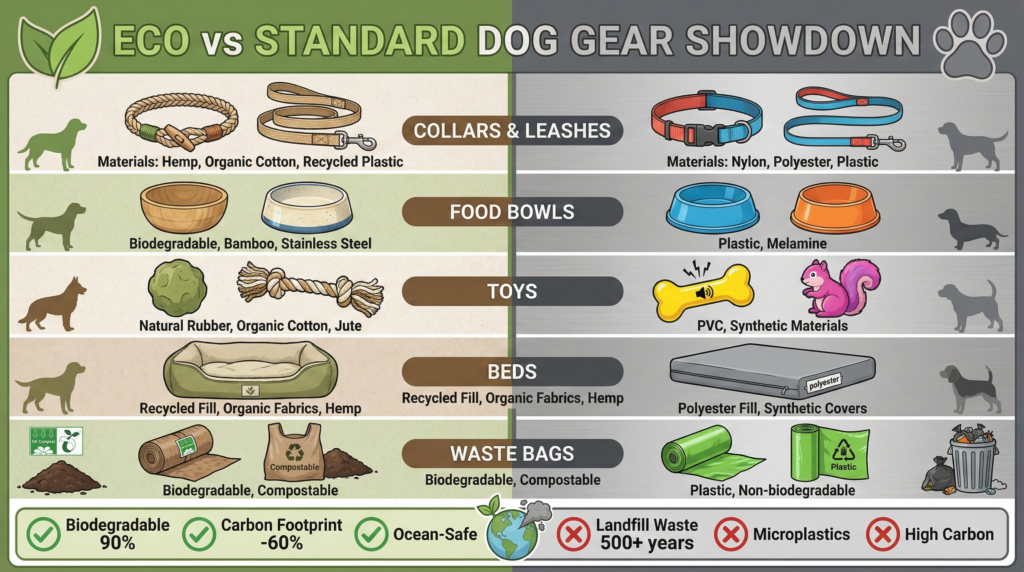
Green dog gear minimizes your carbon footprint and provides sturdy, non-toxic options for your city pet
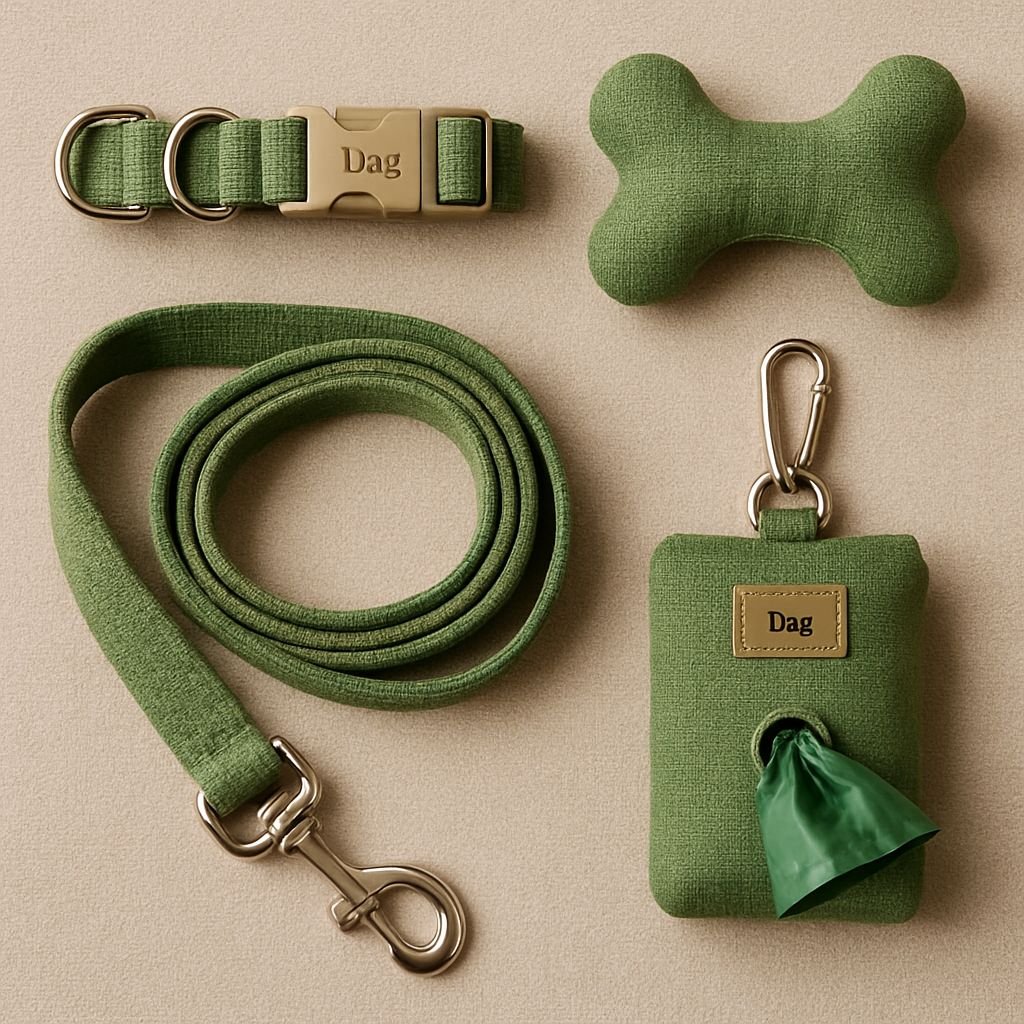
Must-have green walking accessories include biodegradable poop bags, recycled dog leashes, and foldable water bottles that lessen environmental damage
Space-saving green solutions are perfect for apartment living, offering functionality without sacrificing style or ethics
Natural materials like hemp, organic cotton, and natural rubber provide safer alternatives to conventional plastic pet products
WOOF’s dedication to green city dog gear means you can dress your furry friend responsibly without compromising on quality or style
Why Your City Dog Needs Green Gear Now
City living with a dog creates a unique set of challenges – from navigating crowded sidewalks to managing limited storage space. WOOF understands that city dog parents need gear that works as hard as they do, while still being gentle on the planet. The conventional pet industry generates substantial amounts of plastic waste annually through disposable products, chemically laden materials, and items designed for planned obsolescence. By switching to green alternatives, you’re not just making a statement about your environmental values – you’re actually investing in higher-quality, more durable products that perform better in demanding city environments.
There’s more to it than just helping the planet. A lot of regular pet items are made with dangerous chemicals, man-made materials, and coloring that can harm your dog and you. Eco-friendly options usually use safe, natural materials that won’t hurt dogs who might chew or lick their gear. Also, green dog gear tends to last longer, so you won’t have to buy new stuff as often – this saves you money over time and cuts down on trash.
City-dwelling dogs have their own set of environmental challenges, such as hot sidewalks, pollution, and a lack of green spaces. Eco-friendly dog gear is designed to help with these issues, often featuring creative solutions like cooling fabrics made from sustainable materials and paw balms made with natural, biodegradable ingredients to protect against urban irritants. By making the switch, you’re helping to protect both your local environment and your furry friend.
6 Essential Eco-Friendly Dog Walking Supplies for City Living
Regular walks are the cornerstone of city dog care, but traditional walking gear can contain harmful materials such as plastics with BPA, non-biodegradable waste bags, and synthetic fabrics treated with harsh chemicals. Switching your walking essentials to eco-friendly alternatives can immediately reduce your environmental impact without losing functionality in the city.
Eco-friendly Poop Bags and Dispensers
Let’s be honest: cleaning up after your dog is one of the least enjoyable parts of owning a pet, but it’s one of the most common ways city-dwelling dog owners affect the environment. Regular plastic poop bags can take hundreds of years to decompose, adding to the growing plastic problem in our landfills and waterways. Eco-friendly alternatives decompose in months rather than hundreds of years, significantly reducing your long-term effect on the environment. Look for bags that are certified as genuinely compostable (not just “degradable”) and dispensers made from recycled materials or natural fibers that easily attach to your eco-friendly leash system.
Leashes and Collars Made from Recycled Materials
Leashes and collars, which form the basis of your daily walk, are perfect for sustainable living. They don’t compromise on durability or style. Today’s eco-friendly options are made from innovative materials. For example, recycled plastic bottles are turned into durable, water-resistant webbing. This stands up to city grime and can be washed frequently. Hemp leashes are another great alternative. They have natural antimicrobial properties and are exceptionally strong. They also don’t have the environmental impact of nylon production. Many sustainable brands now offer adjustable designs that can be altered as your dog grows. This reduces the need for replacements as your dog gets older.
Eco-Friendly and Compact Treat Pouches
Living in the city means dog owners need to constantly reinforce training, which makes treat pouches a must-have. Unfortunately, many of these pouches are made with synthetic fabrics and plastic components that will eventually end up in a landfill. However, there are eco-friendly alternatives available that use organic cotton, hemp, or recycled materials to create a pouch that is just as functional but far less harmful to the environment. The best of these pouches can be machine-washed, which means you won’t have to use chemical cleaners, and the pouch will last longer.
On-the-go Hydration Solutions for Your Dog
In the city, it can be tough to find a clean, safe place for your dog to drink. Single-use plastic water bottles are not only wasteful, but also many dog water bottles on the market contain BPA and other harmful chemicals. Eco-friendly alternatives are usually made from stainless steel or recycled plastic that is BPA-free. They also often have creative designs to minimize water waste. The best options combine the water bottle and bowl into one compact item that can easily fit in your bag or attach to your eco-friendly leash.
Upcycled Materials for Weather-Resistant Dog Jackets
In the city, dogs are exposed to all kinds of weather, which means they need the right gear to protect them. Many dog jackets are made from synthetic materials that come from petroleum and are waterproofed with PFCs (perfluorinated chemicals), which are known to be harmful to the environment and health. But some companies are now making weather-resistant jackets out of materials that have been saved from the landfill. They’re turning plastic bottles into tough polyester fleece and old rain jackets into waterproof dog jackets.
The most forward-thinking designs feature modularity, allowing pieces to change according to the weather without having to buy multiple items. Look for jackets that have natural wool insulation (ethically sourced), recycled synthetic filling, or even creative solutions like upcycled coffee grounds incorporated into fabrics for natural odor control. These multipurpose pieces often have reflective elements for safety without adding environmentally problematic materials.
Safety Gear for Evening Walks in the City
Walking in the city often involves traversing crowded streets at night, making it necessary to have gear that increases visibility for safety. Instead of using light-up accessories that are disposable, have short lifespans, and create issues with battery disposal, there are eco-friendly options that use reflective materials in everyday items. Look for leashes and harnesses that have reflective stitching made from thread that has been recycled, visibility vests made from materials that have been upcycled, or collars that light up and are charged with solar power or kinetic energy from your dog’s movement – eliminating the need to dispose of batteries.
Green Solutions That Save Space for City Dwellers
City life often means making the most of a small apartment, so pet supplies that are compact and serve multiple purposes are a must. The problem with traditional pet products is that they take up too much room, contain dangerous chemicals that can build up in small spaces, and clutter up carefully planned decor. Eco-friendly options, on the other hand, are designed with care to be both pleasing to the eye and kind to the planet.
Environmentally friendly dog accessories suitable for apartment living focus on quality rather than quantity, promoting a minimalist lifestyle that reduces consumption and increases functionality. Many products have multiple uses or can be collapsed for storage, maximizing usefulness while minimizing environmental damage. These designs, which are mindful of space, frequently use natural materials that blend in with city interiors rather than clashing with them, creating a balance between your living space and your dog’s needs.
Compact Dog Bowls and Feeding Stations
It can be tricky to find a feeding station that fits into a small space and is also practical. Traditional ceramic or plastic bowls take up a lot of floor space and are often made from materials that might not be safe. Eco-friendly options include collapsible silicone bowls made from food-grade recycled materials that can be folded flat when they’re not being used, elevated feeders made from sustainable bamboo that also have storage underneath, and innovative wall-mounted systems that keep feeding areas completely off the floor.
Space-Saving Beds and Furniture
Urban living often means making the most of a small space, and dog beds can take up a lot of room. Eco-friendly options offer smart solutions with designs that work for both you and your dog. Consider a side table with a built-in dog bed underneath, an ottoman that doubles as a bed, or a modular furniture system that can be rearranged as needed. Look for options made with natural, renewable materials like organic cotton, sustainably sourced wood, and natural latex, instead of traditional polyurethane foam, which can release gases in enclosed spaces.
Organizing Your Pet Supplies
Living in the city means dealing with limited space, and it can be tough to find room for all your dog’s toys and accessories. You can help out the environment and keep your home tidy by choosing eco-friendly storage options. Look for canvas bins made from organic cotton or hemp that you can fold up when they’re not in use, or consider stackable containers made from biodegradable materials like bamboo or wheat straw composite. You can also repurpose items you already have at home to use as pet supply organizers. The goal is to find storage solutions that help you reduce your use of plastic, keep your home organized, and minimize your impact on the environment.
Green Play: Eco-Friendly Toys for Indoor and Outdoor Use
Urban dogs need playtime, too, especially since they might not have as much access to nature for exercise and exploration. The problem is that many traditional dog toys are made with harmful materials like BPA, phthalates, and synthetic rubber compounds that come from petroleum. Not only are these toys not designed to last, but they also end up in the trash and, ultimately, the landfill. Eco-friendly options, on the other hand, use natural, renewable materials that are better for your dog and the environment.
Green toys are often more robust than their traditional counterparts, meaning you don’t have to replace them as often and therefore reduce waste. A lot of eco-friendly brands also offer recycling programs for their products once they’ve reached the end of their life, creating a closed-loop system that reduces the impact on the environment. When you buy these carefully crafted alternatives, you’re not just buying a toy – you’re supporting innovation that challenges the status quo in the industry.
Eco-Friendly Rubber Dog Toys
If you have a dog who loves to chew, you know the struggle of finding a toy that can withstand their strong jaws. But if you’re also trying to be mindful of your environmental impact, this can be even more challenging. That’s where natural rubber comes in. This material is not only durable, but it’s also harvested sustainably from rubber trees, making it a great alternative to synthetic materials made from petroleum. The best natural rubber dog toys are made from rubber that is harvested in a way that allows the trees to continue producing for many years, making it a truly renewable resource. When shopping for natural rubber dog toys, look for companies that are transparent about where their rubber comes from and avoid toys with fillers or colorants that could make the rubber less biodegradable.
Organic Cotton and Hemp Rope Toys
Interactive rope toys are great for satisfying your dog’s instinct to tug, and they also promote dental health. Unfortunately, traditional synthetic rope toys shed microplastics that eventually pollute the environment when the toy is thrown away. Organic cotton and hemp rope toys are a great alternative that provide the same texture and dental benefits. Plus, they’re made with natural fibers that will biodegrade once the toy is thrown away. The plant-based fibers used in these toys require less water and fewer pesticides to grow than traditional cotton, making their environmental impact much smaller from production to disposal.
Eco-Friendly Brain Games Made from Recycled Materials
City dogs don’t always get to experience the wide range of natural stimuli that their country cousins do. That’s where interactive puzzle toys come in. These toys give your dog’s brain a workout, and they can be made from recycled materials, reducing the demand for new plastic. Look for puzzles made from recycled ocean-bound plastics or post-consumer waste. If the puzzle is colored, make sure the color comes from non-toxic, water-based inks. The best toys are designed to be taken apart when they’re no longer usable, which makes them easier to recycle. Your dog gets years of fun, and the planet gets a little bit of a break.
Eco-Friendly Replacements for Tennis Balls
Despite their popularity, tennis balls are not the best choice for dog toys. They wear out quickly, creating waste, and they are made from materials that are not eco-friendly. Instead, consider durable alternatives like balls made from natural rubber, balls with a cork core covered in organic cotton, or balls made from repurposed materials. These options are not only more sustainable, but they often come with added benefits. For example, some brands make their balls with special textures that help clean your dog’s teeth as they play. Others have a treat-dispensing feature to keep your dog engaged. And they manage to do all this without adding any environmentally harmful materials.
Eco-Friendly Grooming Products That Safeguard City Waterways
City dogs encounter particular grooming difficulties due to pollution, scarce natural water sources for washing, and contact with sidewalk treatments such as de-icing chemicals and pesticides. Traditional pet shampoos frequently contain sulfates, parabens, synthetic scents, and other components that are washed down drains and ultimately affect aquatic ecosystems. Opting for biodegradable, plant-based grooming products lessens this environmental impact while usually offering milder choices for dogs with sensitive skin.
Environmentally Friendly Shampoos and Conditioners
Plant-based cleaning products made from renewable sources like coconut and corn clean just as well as those made from petroleum, but they don’t linger in the environment. The best green shampoos and conditioners avoid artificial preservatives and instead use natural antimicrobials like rosemary extract or grapefruit seed extract that break down harmlessly after use. Look for concentrated formulas in recyclable or compostable packaging that reduce transportation emissions and packaging waste while delivering more baths per bottle – maximizing value while minimizing environmental impact.
Eco-Friendly Grooming Tools
Water conservation is a growing concern in urban areas due to increasing infrastructure challenges and drought conditions. Traditional methods of bathing can waste a lot of water, especially for larger breeds or dogs that need frequent washing due to city dirt. Waterless shampoos made from natural ingredients, specially designed low-flow nozzle attachments, and innovative microfiber drying mitts that reduce the need for towel laundry all help to save a significant amount of water over the lifetime of your dog. Some forward-thinking brands have even designed shower attachments specifically to reduce water usage while improving the efficiency of rinsing.
Eco-Friendly Pest Control
City living comes with its own set of pest problems, from fleas that live in buildings to ticks picked up in the park. Traditional pest control methods often use chemicals that build up in waterways when they’re washed off during baths or swims. Eco-friendly pest control uses ingredients like neem oil, cedar, and diatomaceous earth that are safe for the environment and still keep pests away. The best eco-friendly pest control products come in minimal, recyclable packaging and focus on preventing pests rather than treating them. This reduces the amount of chemicals and packaging waste used.
How to Spot Genuine Eco-Friendly Dog Products
With the rising demand for eco-friendly pet products, the market is seeing a surge in “greenwashing” – deceptive advertising that overstates environmental advantages. To weed out the genuinely sustainable products from the rest, you need to look beyond the marketing hype. The first step is to scrutinize the materials used, the manufacturing process, and the company’s commitment to the environment. This will help you find products that are not just eco-friendly in name, but also in practice.
How to Navigate Green Certifications and Labels
Third-party certifications are a helpful way to quickly identify products that adhere to certain environmental standards. Look for well-known certifications like GOTS (Global Organic Textile Standard) for fabric items, FSC (Forest Stewardship Council) for wooden products, or USDA Organic for consumables and some textiles. Be cautious of ambiguous terms like “eco-friendly” or “natural” that don’t have accompanying certifications or specific explanations about what makes the product sustainable. The most reliable brands will clearly explain their materials, sourcing practices, and the specific environmental benefits their products have over traditional alternatives.
Identifying Greenwashing in Pet Products
As the consumer demand for sustainable products increases, greenwashing tactics are becoming more advanced. Typical signs include packaging that seems eco-friendly, but the product inside is made from traditional materials, unclear claims without specific details, or focusing on one green attribute while ignoring other issues. Authentic eco-friendly brands usually address sustainability in a comprehensive way, considering raw materials, manufacturing processes, packaging, product lifespan, and disposal at the end of life. They also often show environmental commitments beyond their product line through conservation initiatives, carbon offset programs, or community involvement.
Choosing Local vs. Imported Goods: The Carbon Footprint Dilemma
Transportation emissions significantly contribute to the environmental impact of many products, especially weighty items like dog food or large items like dog beds. Opting for locally made products can often decrease this portion of environmental impact, while also supporting local economies and making it easier to verify production standards. However, some sustainable materials may need to be imported, creating a trade-off between the sustainability of the material and the impact of transportation. The greenest approach takes both into account, aiming for locally-made products that use sustainable materials whenever possible, and making careful compromises when necessary based on your own environmental priorities.
Price Points: When to Invest and When to DIY
Green dog products often come with a higher initial price tag than their conventional counterparts, reflecting the costs of fair labor practices, quality materials, and environmentally friendly manufacturing processes. However, these initial investments usually pay off in the long run through longer product lifetimes, reducing the total cost of ownership over time. For budget-conscious pet owners, focusing on green versions of items that need to be replaced often (like waste bags or toys) can have the biggest environmental impact, while DIY projects can meet other needs using materials you already have. The greenest approach balances strategic buying of high-quality essentials with creative reuse of existing materials.
DIY Projects: Make Your Own City Canine Necessities
Making your own canine accessories is possibly the most eco-friendly way to pet parenting – reusing materials that are already available instead of creating a demand for new production. City environments provide a wealth of resources for creative reuse, from old human clothes to packaging materials that would otherwise be waste. DIY projects also let you customize to your dog’s unique needs and likes, often resulting in items that work better than mass-produced options.
Recycled T-Shirt Dog Toys
Old t-shirts make excellent materials for crafting sturdy, washable dog toys, giving a second life to items that would otherwise be discarded. The elasticity and absorbency of jersey knit make it perfect for braided tug toys, stuffed squeakers, or interactive puzzles. To make the toy more appealing, you can soak it in broth and then freeze it. This will create a long-lasting, stimulating toy that has no environmental footprint. These DIY alternatives not only eliminate packaging waste, but they also provide safe, non-toxic play options tailored to your dog’s tastes and chewing strength.
DIY Treat Recipes for Training
City-based training often requires a lot of positive reinforcement to keep your dog’s attention amongst the hustle and bustle, which can lead to a lot of packaging waste from store-bought treats. Making your own treats not only cuts down on this waste, but also allows you to have full control over what’s going into your dog’s body – a plus for city-dwelling dogs who often have allergies or sensitivities. Simple recipes using human-grade ingredients like sweet potato, chicken, or pumpkin can be made into high-value rewards that are perfect for tough city training scenarios. Preparing them in batches in reusable silicone molds makes them the perfect size for training, and they can be stored in repurposed glass jars for easy, grab-and-go access.
Storage Solutions from Reused Containers
It’s surprising how many containers you end up with when living in an urban apartment. Instead of recycling them (which still requires energy to process), why not give them a second life as storage for your dog’s supplies? Coffee cans can become airtight treat storage, shoe boxes can be used to organize leashes, and plastic food containers can be made into portable first aid kits. Not only does this eliminate the need to buy new storage products, but it often provides more personalized solutions than what you can buy in stores. With a few simple modifications like adding rope handles or applying non-toxic paint, you can create functional, attractive storage that reflects your personal style and extends the life of the materials you already have.
Five Leading Eco-Friendly Companies Transforming the World of Urban Dog Accessories
Although homemade methods are the most sustainable, there are certain items that need to be commercially produced. Thankfully, some forward-thinking companies have stepped up to meet the increasing demand for truly sustainable pet products that are designed for urban living. These trailblazing brands merge environmental awareness with practical solutions for city life, creating products that improve the urban dog experience and reduce the environmental footprint at the same time.
These brands shine in their holistic approach to sustainability, taking into account everything from where they source their materials to how they manufacture their products, package them, ensure they last a long time, and dispose of them at the end of their life. They’ve all come up with creative solutions to the typical challenges of urban dog ownership without ever compromising their commitment to being green.
1. West Paw
West Paw, a company based in Montana, was the first to introduce the idea of infinitely recyclable dog toys. They achieved this through their innovative Zogoflex material. Zogoflex is a non-toxic, FDA-compliant polymer that can be returned and remolded into new products over and over again. Their closed-loop manufacturing system, which is powered by renewable energy, produces durable products. These products are specifically designed for power chewers in environments where play space is limited. West Paw’s Join the Loop program allows customers to return worn toys for recycling. This creates a zero-waste product lifecycle. This is particularly valuable for urban dog parents who have limited disposal options and dogs who quickly destroy conventional toys.
2. Earth Rated
Earth Rated has taken the challenge of urban dog waste management head-on by rethinking the traditional poop bag. Instead of the typical plastic that takes hundreds of years to decompose in a landfill, they’ve developed a truly compostable option made from vegetables that can break down in compost conditions in just a few months. But they didn’t stop at poop bags. The company has also developed other bathroom essentials like bamboo-based wipes, all designed with apartment living in mind, where convenience and odor control are key. And they’ve done it all while maintaining a strict commitment to sustainability throughout their supply chain.
3. Beco Pets
Offering a range of daily necessities for city dogs, Beco uses innovative materials such as bamboo fiber, rice husk rubber, and recycled ocean-bound plastic in its products. Their food bowls are made from waste rice husks that would have otherwise been burned, causing air pollution. Instead, they are transformed into a robust, dishwasher-safe material that is ideal for apartment living. The company’s city-centric approach also includes space-saving designs like collapsible travel bowls and stackable food storage, meeting the unique demands of compact city living spaces while maintaining an impressive environmental record.
Aside from their products, Beco showcases its commitment to the environment by maintaining a plastic-neutral certification. This means that they remove as much plastic from the environment as they use in their production and packaging processes. This commitment to making a systemic change, instead of just innovating their products, shows the comprehensive thinking that truly sustainable brands possess.
4. P.L.A.Y. Pet Lifestyle
Knowing that city dogs often don’t get as much exercise as they need, P.L.A.Y. focuses on creating beds from recycled plastic bottles that have been turned into soft, sturdy fabric. They’ve figured out a way to turn about 10-20 plastic bottles into each bed, making comfortable places for pets to sleep and keeping waste out of landfills at the same time. P.L.A.Y.’s designs are also made to fit in with the look of a modern apartment, with options like beds that look like real furniture, so you don’t have to sacrifice style for your pet’s comfort.
P.L.A.Y. takes its commitment to the environment a step further with programs like Warm Bellies, which donates a bed to a shelter dog for every purchase. This addresses both environmental and animal welfare issues. Their minimal plastic packaging and carbon offset programs further show how fully they embrace sustainability, setting them apart as a truly eco-conscious brand.
5. Wild One
Wild One is a brand that combines a sleek city look with a commitment to the environment. They produce matching walking kits, carriers, and accessories for the fashion-forward urban pet owner. Their products are made from innovative materials like recycled plastic that is free of BPA, natural rubber, and organic fabrics. These materials are designed to stand up to the unique challenges of city living, like sidewalk salt, pollution, and limited access to laundry facilities. Wild One is committed to minimalist, multifunctional design. This approach addresses the lack of space that is common in city homes and reduces unnecessary consumption. Their products serve more than one purpose and are designed to look good together, which reduces the temptation to make impulse purchases.
What to Do Next: Developing a Green Routine for Your Urban Dog
Switching to eco-friendly dog care is more of a process than a quick change. Start by figuring out which of your current products have the biggest environmental impact – usually things that you replace often, like waste bags, treats, or toys that consistently create waste. Replace these items first as you run out of them, then slowly move on to items that last longer, like beds, carriers, and grooming tools. This gradual method prevents waste from throwing away items that are still good to use while methodically lowering your environmental impact through careful replacements.
Think about making a sustainability plan that fits your city lifestyle and beliefs. Some pet owners put plastic reduction first, while others want to support local businesses or get rid of certain chemicals. This focus can help you wade through the many “green” marketing claims and choose products that really match your environmental goals. Keep in mind that perfect sustainability is hard to achieve – the goal is to keep getting better, not to be perfect. Celebrate each positive step and remember that it’s about the bigger picture.
Common Questions
When you start to make the switch to eco-friendly urban dog care, you’ll likely have a few questions about how well these products perform, where you can buy them, and how to use them. These are all valid concerns for city dwellers who are trying to balance their environmental values with the practicalities of owning a dog in the city.
Are green dog products sturdy enough for daily city use?
Many green dog products actually outperform their conventional counterparts in durability tests, especially those designed specifically for urban environments. Natural rubber typically offers superior tear resistance compared to synthetic versions, while hemp webbing often provides greater strength than nylon alternatives. The perception of inferiority stems from earlier generations of green products that sometimes sacrificed performance for sustainability. Today’s options leverage innovative materials science to create products that withstand urban challenges like concrete sidewalks, frequent washing, and limited storage options while maintaining environmental credentials. Look for brands that specifically highlight durability testing and offer guarantees – many green companies provide more robust warranties than conventional competitors precisely because their products last longer.
Are sustainable dog accessories more expensive than traditional ones?
The cost difference between traditional and sustainable dog products can vary widely depending on the category, with some eco-friendly options actually saving money over time due to their durability. Consumable items like waste bags usually cost 15-30% more than traditional alternatives, while larger purchases like beds or carriers may cost 30-50% more due to the higher quality materials and more ethical manufacturing processes used. However, this initial cost difference often disappears when you calculate the cost-per-use over the product’s lifespan, as sustainable options usually last a lot longer. Many city dog owners report saving money in the long run after switching to sustainable products, especially for items that need to be replaced often, like toys or walking gear that can withstand daily city use better than cheaper, disposable alternatives.
What materials make dog products truly eco-friendly?
Sustainable Materials Commonly Used in Urban Dog Gear
Hemp Hemp is a fast-growing crop that generally requires less water than conventional cotton and can be grown with minimal pesticide use. The fibres are naturally strong and resistant to mould and odour, making hemp a durable choice for leashes, collars, and some toys.
Recycled Ocean Plastic Plastic recovered from oceans and coastal areas helps reduce environmental pollution while being repurposed into tough, long-lasting materials. It is often used for items such as bowls, toy components, leads, and grooming tools, offering durability comparable to virgin plastic.
Natural Rubber Natural rubber is derived from latex harvested from rubber trees without killing them, making it a renewable resource. While not suitable for home composting, it can biodegrade under certain conditions and is commonly used for chew toys and treat-dispensing products due to its flexibility and resilience.
Organic Cotton Organic cotton is grown without synthetic pesticides or fertilisers, reducing environmental impact and soil degradation. It is widely used for bedding, soft toys, and accessories like bandanas, where softness and breathability are important.
Bamboo Bamboo grows rapidly and regenerates without replanting, making it a highly renewable resource. When processed responsibly, it can be used in products such as brushes, bowls, and blended textiles. However, its sustainability depends on how it is processed and bonded.
Beyond these core materials, some brands are exploring alternatives to conventional plastics, including wheat-straw composites, mushroom-based packaging, and upcycled industrial waste transformed into durable pet products. Forward-thinking manufacturers often combine several sustainable materials to take advantage of their different strengths while reducing environmental impact across a product’s entire lifecycle.
Looking Beyond the Material Itself
Sustainability is not just about what a product is made from, but also where and how those materials are sourced. Truly responsible companies are transparent about their supply chains and avoid vague claims such as “eco-friendly” without supporting details. Many also publish information on efforts to reduce water and energy use, minimise waste, and ensure fair labour practices throughout production.
End-of-life considerations matter too. Some materials, such as natural rubber or untreated plant fibres, may biodegrade over time under suitable conditions, while others—like metals and certain plastics—are best suited to established recycling streams. Brands that offer take-back or repair programmes for hard-to-recycle items demonstrate a stronger commitment to sustainability beyond the point of sale.
By considering both material choices and practical design, it becomes easier to find dog gear that aligns with environmental values while meeting the everyday needs of city-living dogs.
Can My Dog’s Old Toys and Accessories Be Recycled?
Most traditional pet products are difficult to recycle due to mixed materials, contamination concerns, and limited local recycling infrastructure. Municipal recycling schemes usually do not accept items such as tennis balls, plush toys, or mixed-plastic chew toys.
That said, some specialist programmes are helping to close this gap. TerraCycle partners with selected pet brands to recycle worn-out products, and a few manufacturers—such as West Paw—operate closed-loop schemes where their products can be returned and reprocessed.
When recycling isn’t an option, repurposing is often the most sustainable choice. Old fabric toys can become cleaning cloths, washed dog beds can be donated to animal shelters, and damaged rubber toys can be reused as drainage fillers in plant pots.
Cleaning Eco-Friendly Dog Gear Without Harsh Chemicals
Proper care helps sustainable products last longer and reduces the need for replacement. Different materials benefit from different low-impact cleaning methods:
Fabric items (beds, soft toys): Wash with unscented, biodegradable detergent. Adding half a cup of white vinegar helps neutralise odours and provides mild disinfection without leaving residues.
Rubber or silicone toys: A paste of baking soda and water can lift stains and odours using gentle abrasion rather than harsh chemicals.
Leather and hemp gear (leads, collars): Clean with a small amount of diluted castile soap and warm water. This removes dirt without damaging natural fibres or finishes and avoids the stronger solvents found in many conventional cleaners.
Simple habits—such as wiping gear after wet walks, allowing items to dry fully before storage, and cleaning regularly—can significantly extend product life. This is especially valuable for apartment living, where replacing bulky items is inconvenient and wasteful.
If you’re a WOOF customer looking to get the most from your sustainable dog gear, a detailed material-specific care guide can help ensure your purchases stay functional and comfortable for years of urban adventures.
When shopping for dog gear, most people pay attention to fabric, padding, or how it looks. But the hardware, like clips, rings, buckles, and fasteners, often determines if the gear is safe, durable, and works well.
Low-quality hardware can make leads, harnesses, collars, and car restraints break. This guide explains the different types of dog gear hardware, when to use them, and how to pick the best option for your dog.
Why Dog Gear Hardware Matters
Dog gear hardware must handle:
Sudden pulling or lunging
Daily wear and tear
Moisture, dirt, and temperature changes
Your dog’s size, strength, and behaviour
Even strong webbing won’t help if the clip breaks. Choosing the right hardware keeps your dog safer and makes the gear last longer.
Common Types of Dog Gear Hardware
1. Trigger Clips (Snap Hooks)
Best for: Everyday leads and light-to-medium dogs. Trigger clips are spring-loaded and easy to use with one hand. However, cheaper versions can break under pressure or get stuck if dirt gets inside.
Look for:
Solid metal construction
Smooth spring action
No visible gaps at the hinge
Avoid if: You have a strong puller or a large, powerful dog.
2. Bolt Snap Clips
Best for: Medium dogs and general walking
Bolt snaps work like trigger clips but are stronger. However, their springs can still wear out over time.
Tip: Stainless steel bolt snaps last longer in wet or coastal environments.
3. Carabiner-Style Clips
Best for: Strong dogs, reactive dogs, hiking, and training
Carabiners, especially locking types, are some of the strongest options available.
Advantages:
Extremely strong
Resistant to sudden force
Locking versions help prevent accidental release.
The downside is that they are heavier and take longer to attach.
4. D-Rings and O-Rings
Best for: Attachment points on collars and harnesses
These rings connect leads, tags, or accessories.
Choose based on:
Welded rings (stronger, safer)
Thickness appropriate to dog size
Rounded edges to prevent strap wear
Do not use thin, unwelded rings for anything that needs to support weight.
5. Buckles (Plastic vs Metal)
Plastic Buckles
Best for: Lightweight harnesses and small dogs
Modern plastic buckles can be strong, but their quality can vary a lot.
Check for:
Thick plastic
Secure locking “click”
No flex when squeezed
Metal Buckles
Best for: Large dogs, working dogs, and long-term durability
Metal buckles weigh more, but they are much stronger and last longer.
Choosing the Right Material
Stainless Steel
Rust-resistant
Strong and durable
They are ideal for wet climates, such as the UK.
Brass
Corrosion-resistant
Strong but heavier
Common in premium gear.
Zinc Alloy
Common and affordable
The strength of zinc alloy hardware can vary widely among manufacturers.
Fine for light use, not ideal for heavy pullers
Matching Hardware to Your Dog
Small Dogs
Lightweight hardware to avoid strain
Smooth edges to prevent rubbing
Good-quality plastic or lightweight metal is usually enough.
Medium Dogs
Metal clips and welded rings
Stay away from hardware that is too thin.
Large or Strong Dogs
Locking carabiners or heavy-duty bolt snaps
Choose metal buckles instead of plastic ones.
Only use thick, welded D-rings.
Red Flags to Watch Out For
Visible seams or cracks in metal
Springs that stick or feel weak
Sharp edges or rough welds
Plastic that bends easily
Hardware that feels too light for its size
If hardware looks flimsy, it most likely is.
Final Thoughts
Dog gear hardware may not be exciting, but it is very important. Choose safety and quality: Check your dog’s gear today and replace any hardware you are unsure about to keep your dog safe and your equipment lasting longer.
Don’t wait for something to break. Check your dog’s gear now and take action. Secure, reliable hardware is the foundation of your dog’s safety.
Walking your dog should be safe, comfortable, and fun. The harness you choose affects this. With so many options, picking the right one can be tough. This guide will help you choose the best harness for daily walks.
1. Understand the Benefits of a Harness
Harnesses distribute pressure more evenly across your dog’s body than collars do, reducing strain on the neck and protecting the trachea. They also provide better control, making walks safer, especially for energetic or strong dogs.
2. Consider Your Dog’s Size, Breed, and Behavior
Size: Measure your dog’s chest and neck to ensure a proper fit. Most harnesses include a sizing guide.
Breed: Some breeds, like Greyhounds or Bulldogs, have special body shapes and may need a different style of harness.
Behavior: For dogs that pull, use a no-pull harness. If your dog walks calmly, use a basic harness.
3. Types of Dog Harnesses
Back-Clip Harness: The leash clips onto the back. This type works well for small dogs or for well-trained dogs that don’t pull.
Front-Clip Harness: The leash attaches at the chest, helping to reduce pulling by guiding movement.
Dual-Clip Harness: This harness features both front and back clips, giving you more control options.
Step-In Harness: This style is easy to put on, especially for dogs that dislike harnesses over their heads.
4. Key Features to Look For
Adjustability: Choose harnesses with multiple adjustment points for a snug fit.
Padding: Soft, breathable padding keeps your dog comfortable and prevents chafing.
Reflectivity: Reflective strips or stitching make your dog easier to see in low light during walks.
Easy to Clean: Pick a machine-washable harness for convenience.
Sturdy Hardware: Look for strong buckles and D-rings to keep your dog safe and extend the harness’s lifespan. Fit and Comfort
A harness should fit well—you should be able to slip two fingers between it and your dog’s body. Check for rubbing or discomfort during and after walks.
5. Test and Adjust
Let your dog try the harness indoors first. Adjust the straps as needed to ensure your dog moves comfortably and securely.
6. Consult Your Veterinarian or Trainer
If unsure, ask your vet or a professional trainer. They can suggest harness options for your dog.
Conclusion The right harness makes daily walks safer and more enjoyable. Consider your dog’s size, behavior, and comfort, and look for key features to find the best fit.
I remember my first three-mile hike with my dog. I grabbed a cheap leash and water, assuming I’d handle any issues as they arose.
Twenty minutes in, the leash clasp snapped when my dog lunged at a squirrel. I had no water but muddy puddles, and had to carry every waste bag in my pockets, feeling like a terrible game-show contestant.
That experience taught me a key lesson: your dog’s gear can make the difference between frustration and enjoyment. The equipment you choose affects every outing, whether in a small apartment or on weekend adventures.
Understanding What Makes Dog Gear Actually Practical
Through many hikes and walks, I’ve learned practical gear solves the real problems you face and won’t fail when challenged. It’s not about buying the most or the cheapest gear, but about finding what actually works.
Functional dog gear starts with strong materials. I once thought all nylon was the same until I watched a cheap leash fray after two months.
Quality nylon webbing, the kind that’s tightly woven and treated for weather resistance, feels completely different in your hands.
It has weight to it, the edges don’t fray easily, and it maintains its integrity even after getting soaked and dried repeatedly.
Metal hardware is non-negotiable for me now. Those plastic clips might look sleek and modern, but I’ve had too many break at really inconvenient times.
A solid metal clasp might add a few ounces to your gear, but it’s worth every bit of that extra weight when you’re dealing with an excited 60-pound dog who just spotted another dog across the trail.
The difference becomes obvious the first time you see a plastic clip snap under pressure while a metal clasp holds firm.
What separates truly practical gear from flashy accessories is how well it addresses real-world problems. Urban dog owners face completely different challenges than those living in suburban houses with yards.
If you’re in an apartment, storage space is genuinely valuable; you can’t dedicate an entire closet to dog equipment.
Collapsible bowls, multi-function tools, and gear that packs down small become essential rather than just nice-to-have features.
Getting the Fit Right
Getting the fit right matters more than people expect. I once bought an expensive harness online without measuring, thinking ‘medium’ would work.
It wasn’t.
The chest strap sat too far back, creating pressure points that made my dog uncomfortable, and the whole thing shifted around during walks instead of staying in position.
Proper measurement takes about 5 minutes and prevents returns or equipment issues. To fit a harness, measure neck circumference at the widest point, chest circumference right behind the front legs, and length from the base of the neck to the base of the tail.
These measurements decide which harness styles will work best for your dog’s body type.
The two-finger rule is based on how pressure is distributed across your dog’s body. When a collar or harness is properly fitted, you should be able to slide two fingers between the gear and your dog’s skin comfortably.
Tighter than that, and you’re restricting blood flow and potentially causing discomfort.
Looser than that, and the gear can slip off or shift out of position when you need control most.
Different activities require different fit considerations. A harness for casual neighborhood walks can be slightly looser because you’re not dealing with challenging terrain or sudden directional changes.
Hiking harnesses need to fit snugly. Uneven ground and natural obstacles cause your dog to move unpredictably. Loose gear can catch on branches or shift during climbs, creating hazards.
Building Your Core Gear System
Starting fresh with dog gear can be overwhelming. I recommend building your collection strategically: begin with daily essentials and add specialized gear for your activities.
Your Primary Leash
You’ll handle your everyday leash most often, so invest in quality. For general use, a 5- to 6-foot leash strikes the right balance between control and freedom.
This length prevents your dog from wandering too far while still allowing them enough space to sniff, explore, and do their business without feeling constantly restrained.
Material choice matters. I’ve used cotton rope, cheap nylon, quality nylon, and leather; each has unique traits.
Cotton looks nice, but soaks up water and dries slowly, which is a problem if you walk in the morning when the grass is dewy.
Budget nylon often feels harsh and can cause rope burn if your dog pulls suddenly. Quality nylon webbing with slight texture and tight weave strikes the best balance for most situations.
It’s durable, water-resistant, comfortable to hold, and affordable.
Leather deserves special mention for its unique properties. A quality leather leash improves with age as it softens and molds to your grip.
It’s naturally strong, looks professional, and doesn’t absorb water the way cotton does.
The downside is cost and maintenance; leather needs conditioning to prevent drying and cracking.
Handle design matters more than you’d think. I used to ignore this until a long walk left my palm raw from a poorly designed handle.
Padded handles with soft neoprene or fleece wrapping distribute pressure more evenly across your hand. This makes longer walks genuinely more comfortable.
Some handles are ergonomically shaped to fit your hand’s natural curve. This reduces fatigue during extended outings.
Hands-Free Leashes for Active Adventures
Once you hike or jog with your dog, hands-free leashes are transformative. I resisted trying one, thinking waist attachment would feel odd.
The first time I used one on a trail run, though, I immediately understood what I’d been missing.
Hands-free leashes typically wrap around your waist with an adjustable belt, then connect to your dog via a bungee-style cord that absorbs shock from sudden movements. This setup distributes pulling force across your core rather than concentrating it in your arm and shoulder, making it much easier to handle a strong dog during active pursuits.
The bungee component is crucial; it acts as a shock absorber when your dog changes direction or speed. Without that elastic element, every pull would jerk your whole body. This makes the experience unpleasant for both of you. Quality bungee cords stretch smoothly and return to their original length. Cheap versions lose their elasticity quickly and start feeling saggy after a few uses.
Choosing the Right Harness
Harnesses solve problems that collars can’t. This is especially true for dogs who pull or for activities that require more control. The attachment point location dramatically changes how the harness works. Understanding these differences helps you choose the right style.
Back-clip harnesses attach at the top of your dog’s back, between the shoulder blades. This design lets your dog move its shoulders naturally. It’s ideal for hiking, running, and any activity requiring a full range of motion.
The downside is that back-clip harnesses offer less control over pulling. When your dog pulls, the attachment moves in the same direction, which keeps the behavior going.
Front-clip harnesses attach at the chest. The mechanics work completely differently. When a dog pulls forward while wearing a front-clip harness, the tension causes them to turn slightly toward you instead of continuing straight ahead.
This gentle redirection discourages pulling without causing discomfort. Front-clip harnesses are excellent for training and urban walking, where precise control is needed.
I’ve found that dual-attachment harnesses offer the most versatility. These designs include both a back clip and a front clip, allowing you to switch between configurations as needed.
I use the front clip when walking through crowded city streets, where I need control. Then I switch to the back clip when we hit the trails, so my dog has full freedom of movement.
The material and construction quality of harnesses vary widely. The best have multiple adjustment points to customize the fit across your dog’s body.
Cheaper versions might adjust only in one or two places. This means you’re stuck with whatever fit comes closest to your dog’s proportions, instead of being able to dial in the perfect fit.
Padding makes a significant difference in comfort, especially for dogs who wear harnesses for extended periods. Quality padding stays soft even after getting wet and dried multiple times, while cheaper foam padding tends to compress and lose its cushioning properties relatively quickly.
Essential Accessories That Solve Real Problems
Beyond leashes and harnesses, several accessories address specific pain points that active dog owners consistently encounter. I’ve learned to assess these items based on how effectively they solve actual problems rather than how clever or innovative they seem.
Hydration Solutions
Keeping your dog hydrated during outdoor activities used to mean carrying a separate bowl and water bottle, which was bulky and inefficient. The integrated water bottle and bowl designs changed this completely for me.
These bottles include an attached bowl that flips out from the top or side, allowing you to pour water directly into the drinking surface without needing a separate container.
The best designs include a locking mechanism that prevents accidental spills when the bottle is bouncing around in your pack. I’ve used versions without this feature, and inevitably, I’d reach for water only to find the bottle had leaked all over everything else in my bag.
A simple twist-lock or flip-lock mechanism prevents this frustration entirely.
Capacity matters based on your activity duration and your dog’s size. A 20-ounce bottle works fine for short walks or hikes with small to medium dogs, but for larger dogs or longer outings, a larger capacity is needed.
I carry a 27-ounce bottle for serious hikes, which provides enough water for my dog without adding excessive weight.
Collapsible bowls offer another space-saving solution, particularly useful if you prefer carrying water in a standard bottle. These bowls fold flat or collapse to a minimal thickness, making them easy to fit in a pocket or a small pack compartment.
Silicone versions are more durable than fabric, maintaining their shape better and cleaning more easily after use.
Waste Management
Nobody enjoys talking about poop bags, but having a reliable waste management system makes every walk more pleasant. I used to just stuff bags in my pocket, which worked until I forgot about them and ended up with an unpleasant surprise later.
Dedicated bag dispensers that attach to your leash handle or belt loop keep bags accessible without taking up pocket space.
The dispenser design matters; cheap plastic versions crack and break relatively quickly, especially in cold weather when the plastic becomes brittle. Metal or high-quality polymer dispensers last significantly longer and function more reliably.
Some include a small carabiner or clip for easy attachment to various gear, while others use a loop system that slides over your leash handle.
Bag quality varies more than you’d expect. Ultra-thin bags save material and cost less, but they’re also more likely to tear at the worst possible moment.
Slightly thicker bags cost a bit more but provide much better reliability and reduce the stress of wondering whether the bag will hold up during use.
Visibility and Safety Gear
Reflective elements and high-visibility colors are legitimate safety features that can prevent accidents. I walk early in the morning when it’s still dark, and the difference between reflective gear and non-reflective gear is striking.
Drivers, cyclists, and other pedestrians can see a dog wearing reflective equipment from much greater distances, giving everyone more time to react and avoid potential conflicts.
LED collars and clip-on lights take visibility even further. These battery-powered lights make your dog visible from hundreds of feet away, even in complete darkness.
Some designs offer multiple modes, steady light, slow flash, and rapid flash, allowing you to choose the pattern that provides the best visibility for your specific situation.
Reflective leashes and harnesses work by bouncing light back toward their source, making them particularly effective when illuminated by headlights or flashlights. The reflective material is often woven directly into the webbing or applied as trim along the edges, providing 360-degree visibility rather than reflecting only from one angle.
Adapting Your Setup for Different Scenarios
The gear configuration that works perfectly for urban walking might need adjustment for other activities. I’ve developed different loadouts for different situations, keeping the core items consistent while swapping specialized equipment based on my plans.
Urban Walking
City walks prioritize control, visibility, and the management of encounters with other dogs and people. I use a front-clip harness for steering ability, especially when navigating crowded sidewalks or crossing busy streets.
A standard 5-6 foot leash provides the right balance, long enough that my dog doesn’t feel constantly restrained, short enough that I can maintain close control when needed.
Visibility matters more in urban environments than people often realize. Cars, bicycles, and pedestrians all pose potential conflicts, and being clearly seen reduces risks.
I use gear with reflective elements even during the day because parked cars pulling out or cyclists approaching from behind need to see us clearly to avoid problems.
Trail and Hiking
Hiking setup shifts toward freedom of movement and hands-free operation. I switch to a back-clip harness that allows full shoulder range of motion, essential for scrambling over rocks or navigating uneven terrain. The hands-free leash attaches around my waist, keeping my hands free for balance and allowing me to use trekking poles if needed.
Hydration becomes critical on longer hikes. I carry a larger-capacity water bottle with an attached bowl, planning for roughly 1 ounce of water per pound of dog weight per hour of activity in moderate temperatures.
Hot weather significantly increases requirements, sometimes doubling the amount needed.
Emergency gear matters more when you’re farther from immediate help. I include a basic first-aid kit with items specifically for dogs, gauze for wrapping injured paws, tweezers for removing thorns or ticks, and a small LED flashlight in case we’re on the trail longer than expected.
Frequently Asked Questions
What length leash is best for walking a large dog?
A 5-6-foot leash provides the best balance for large dogs during regular walks. This length gives you enough control to manage your dog in various situations while still allowing them reasonable freedom to move and explore.
Longer leashes make it harder to maintain control in unexpected situations, while shorter leashes can feel too restrictive for both you and your dog.
Do dogs really need harnesses, or are collars enough?
Harnesses distribute pressure across your dog’s chest and shoulders instead of concentrating force on their neck, the way collars do. For dogs who pull, have respiratory issues, or join in active pursuits like hiking, harnesses provide better control and reduce the risk of injury.
Collars work fine for well-trained dogs who walk calmly on leash, but harnesses offer advantages in most situations.
How do I keep my dog hydrated on long hikes?
Carry a dedicated dog water bottle with an attached bowl, planning for about one ounce of water per pound of body weight per hour of moderate activity. A 50-pound dog needs about 50 ounces for a one-hour hike in moderate temperatures.
Double this amount in hot weather.
Take water breaks every 15-20 minutes during strenuous activity.
What features should I look for in a hands-free leash?
A quality hands-free leash needs a comfortable, adjustable waist belt that evenly distributes weight, a bungee section that absorbs shock from sudden movements, and durable metal hardware at all connection points. The bungee component should stretch smoothly and return to its original length consistently.
Look for designs that allow quick release in emergency situations.
Are reflective collars necessary for daytime walks?
Reflective elements provide safety benefits even during daylight hours. Parked cars pulling into traffic, cyclists approaching from behind, and runners or other walkers all benefit from seeing you and your dog clearly.
While reflective gear becomes essential during low-light conditions, having it on daytime walks adds an extra layer of safety that costs nothing once you’ve invested in the equipment.
How much weight can a dog safely carry in a backpack?
Dogs should never carry more than 25% of their body weight, which means a 60-pound dog maxes out at 15 pounds of gear. Start with much less weight initially, perhaps 10% of body weight, and gradually increase as your dog builds strength and becomes accustomed to wearing the pack.
Always distribute weight evenly between both sides of the pack.
Do dog boots actually stay on during hikes?
Quality dog boots with proper closure systems stay on reliably during hikes. Look for boots that use multiple closure methods, typically a combination of elastic, velcro, and sometimes drawstrings.
The fit needs to be snug without restricting circulation.
Dogs need time to acclimate to wearing boots, so practice with short sessions before attempting serious trail use.
What’s the difference between front-clip and back-clip harnesses?
Front-clip harnesses attach at the chest and redirect pulling dogs toward you, naturally discouraging pulling behavior. Back-clip harnesses attach between the shoulder blades, allowing full shoulder motion but providing less control over pulling.
Front-clip works better for training and urban walking, while back-clip suits hiking and running, where natural movement matters more than steering control.
Key Takeaways
Start with foundation pieces, quality leash, properly fitted harness, and reliable water solution, before adding specialized equipment.
Measure your dog accurately and understand their specific body type to confirm proper fit across all gear categories.
Prioritize durability and function over aesthetics, choosing materials like quality nylon webbing and metal hardware that withstand intensive use.
Build separate configurations for different activities instead of trying to create a single setup that works equally well for everything.
Test new equipment in low-stakes situations before relying on it for challenging adventures where gear failure creates genuine problems.
Invest in visibility features such as reflective elements and LED lights to enhance safety in low-light conditions.
Remember the 25% weight limit for dog backpacks and pack strategically to maintain balance and comfort.
Most dog owners throw together a random collection of gear before their first trail outing. You might even find yourself grabbing whatever leash is by the door and filling a plastic grocery bag with kibble when you should be investing in purpose-built equipment that actually works when you need it.
To build a reliable outdoor kit for your dog, start with safety fundamentals, such as a proper harness and first-aid supplies. Add comfort items like collapsible bowls and protective booties, while prioritizing compact, durable designs and avoiding Instagram-worthy accessories that fail in real conditions.
Here’s a real example. If you’re heading out for a six-mile hike with rocky terrain and no water sources, your dog needs more than a regular collar and a bowl from home.
Don’t respond with, “I’ll just bring a regular leash and let them drink from streams.” This puts your dog at risk for Giardia and gives you zero control on technical terrain.
Avoid saying, “Any cheap harness will work for now.” This comes across as wishful thinking and feels risky when your 65-pound dog spots a deer on a narrow trail.
Instead, try something like, “I’ll get a padded no-pull harness with a handle, a hands-free leash system, and a leakproof water bottle with attached bowl.” This approach will keep both of you safe and comfortable because you’re prepared for real trail conditions.
You’ll notice your dog stays hydrated and under control until you reach the summit viewpoint, or you encounter other hikers with off-leash dogs. You have the tools to manage the situation calmly.
This practical foundation gives you a starting point. Building your gear collection gradually will improve both your confidence and your dog’s safety on every adventure.
The outdoor recreation market for dogs has exploded in recent years, and finding efficient dog gear means cutting through marketing hype to focus on what actually solves problems on the trail. Durable harnesses prevent injuries, proper hydration systems keep dogs healthy in the heat, and innovative storage solutions let you carry everything you need without feeling like a pack mule.
Whether you live in a small apartment and need space-saving solutions or you’re planning multi-day backpacking trips with your dog, the right equipment makes the difference between stressful outings and confident adventures. The gear below has been tested by thousands of outdoor enthusiasts and their dogs, from weekend day-hikers to serious backpackers who cover serious miles in challenging terrain.
20 Practical Dog Gear Items for Every Trail
1. Ruffwear Front Range Harness
A veterinarian-approved no-pull harness with padded chest and belly straps that distribute pressure away from the neck. The aluminum V-ring on the chest gives you front-clip control for pullers, while reflective trim keeps your dog visible at dawn or dusk.
Available in sizes from extra-small to extra-large with many adjustment points for a custom fit.
This bungee-style leash clips around your waist, freeing both hands for trekking poles or scrambling over rocks. The shock-absorbing design handles sudden pulls without jerking you forward, and dual handles near the collar give you quick control when you need it.
Works as a standard 5-foot leash, too, making it perfect for apartment dwellers who want a versatile option.
A well-designed dog backpack lets healthy, conditioned dogs carry their own water, snacks, and poop bags on longer hikes. The Kurgo Baxter features padded saddlebags with reflective trim, an integrated harness with front and rear leash attachment points, and a sturdy handle to help your dog over obstacles.
Recommended for dogs 30 pounds and up who can safely carry 10-15% of their body weight.
This 270ml stainless steel bottle includes an attached bowl that screws onto the top. Unlike plastic options that can leach chemicals or crack in your pack, the stainless steel construction is nearly indestructible and doesn’t retain odors.
The bowl design means you’re not fumbling with separate pieces when your dog is panting on a hot trail.
When you’re covering a serious distance and can’t carry enough water for both you and your dog, a portable filter bottle solves the problem. The LifeStraw removes bacteria, parasites, and microplastics from streams and lakes, giving you safe hydration on demand.
The 15-ounce capacity with attached bowl makes it easy to offer clean water every mile or two.
These food-grade silicone bowls collapse flat to less than half an inch thick and weigh almost nothing. The set includes two bowls so you can separate food and water at camp, and the sturdy construction means they won’t tip easily on uneven ground.
Each bowl holds up to 5 cups, enough for large-breed dogs.
A pre-assembled first aid kit designed specifically for dogs on the trail. Includes bandage wraps, non-stick gauze pads, antiseptic wipes, tweezers for tick removal, a digital thermometer, and an emergency guidebook with common trail injuries.
The waterproof case is about the size of a large pencil case and fits easily in a backpack side pocket.
When trails get rocky, hot, icy, or covered in sharp debris, quality boots protect your dog’s paws from cuts, burns, and abrasions. The Grip Trex feature Vibram soles for traction, a closure system that stays secure without cutting off circulation, and breathable mesh that prevents overheating.
Dogs often have wider front paws than rear paws. That’s why we sell our dog boots in pairs—so you can mix sizes and get the perfect fit on all four paws.
For summer hiking or dogs that overheat easily, an evaporative cooling vest can prevent heat exhaustion. You soak the vest in water, wring it out, and the evaporation creates a cooling effect that lasts for several hours.
The Swamp Cooler features three layers of cooling technology and reflects heat with light-colored surfaces.
This rechargeable LED collar makes your dog visible up to 500 yards away, which is critical for early morning starts, late finishes, or camping. The collar offers steady glow or flashing modes, charges via USB in two hours, and provides from 6-12 hours of runtime.
Dogs need insulation from cold ground just like humans. This travel dog bed has a double offset soft to touch quilted quality construction; Measuring 30 x 39 inches, a poly-suede makes the top comfortable.
The durable ripstop fabric stands up to claws and rough surfaces, while the synthetic fill keeps working even if it gets damp.
If your hiking includes river crossings, lake swimming, or paddleboarding with your dog, a proper life jacket is essential safety gear. Strong Buoyancy for Swimming: Designed for canine swimmers of all skill levels, this high-performance large dog life jacket provides maximum flotation to keep your pup safe in the water, reflective trim for visibility, and adjustable straps for a snug fit that allows whole leg movement.
In tick country, you need a reliable removal tool that gets the entire tick without leaving mouthparts embedded in skin. This veterinarian-recommended set includes tweezers and a hook-shaped remover that slides under the tick and twist it out cleanly. Lightweight and compact enough to keep in your first aid kit or pocket.
14. Earth Rated Poop Bag Dispenser with Leash Clip
This practical dog gear item solves the problem of constantly running out of bags mid-walk. The dispenser holds a whole roll of bags, clips securely to any leash or pack, and includes a built-in hook for hanging full bags if you need to pack them out.
The bags are thick, leakproof, and scented to control odors.
15. Garmin Alpha 200i Dog GPS Tracker and Training Device
For off-leash hiking in areas where it’s permitted, a GPS tracker gives you real-time location data. Hence, you always know where your dog is, even in dense forests or over ridgelines. The Alpha 200i tracks up to 20 dogs from up to 9 miles away, includes training functions, and supports two-way satellite messaging.
After muddy, dusty, or sandy hikes, you need a way to clean your dog before they get in the car or tent. This portable shower attaches to any standard water bottle. It delivers a gentle spray for rinsing paws, the belly, and the coat.
The ergonomic design makes it easy to control water flow with one hand while you scrub with the other.
Dogs with short coats, light-colored fur, or pink noses can get sunburned on exposed alpine trails or desert hikes. This veterinarian-formulated sunscreen is non-toxic if licked, provides SPF 30 protection. Easy application – Non aerosol spray makes it super easy to apply via. your hand or directly on your pet’s coat.
Essential for high-altitude or long-exposure situations where shade is limited.
In an emergency, a loud whistle carries much farther than your voice and doesn’t tire you out. This whistle produces 120 decibels and works when wet, making it reliable in any weather.
Clip it to your pack or wear it around your neck on solo hikes with your dog so you can signal for help if needed.
When you need to secure your dog at camp, trailheads, or outdoor cafes, this rope-and-hardware system sets up in seconds on trees, posts, or vehicle bumpers. The swiveling carabiner prevents tangling, the kernmantle rope is weather-resistant, and the whole system packs down small.
Extends up to 36 feet and includes reflective trim for nighttime visibility.
20. Gamma2 Vittles Vault Stackable Pet Food Container
For multi-day trips or car camping, you need an airtight, bear-resistant container to store kibble and treats. The Vittles Vault is made from thick, durable plastic that keeps food fresh and protected from moisture, pests, and critters.
Designed to accommodate various kibble sizes and shapes, the large dog food storage container offers flexibility in storing up to 40 pounds of dry pet food effectively.
After reviewing hundreds of options and testing gear in real trail conditions, the Ruffwear Front Range Harness, combined with a Tuff Mutt hands-free leash, emerges as the most essential foundation for any hiking setup. These two pieces of practical dog gear instantly improve control, reduce strain on both human and dog, and work flawlessly whether you’re navigating a busy urban trail or scrambling over rocky terrain miles from anywhere.
The Front Range Harness earns top marks because it distributes pulling force across the chest instead of the throat, includes a sturdy handle for assists, and offers enough adjustment points to fit nearly any dog shape from compact terriers to deep-chested shepherds. Pair it with the hands-free leash system, and you’ve suddenly got both hands available for poles, navigation, snacks, or steadying yourself on steep sections while your dog stays securely connected to your core.
Once you have those fundamentals dialed in, add the H2O4K9 stainless steel water bottle and a set of Comsun collapsible bowls to solve hydration and feeding. These four items cover safety, control, water, and food in a package that fits in one small stuff sack by your door.
From there, build out based on your specific adventures.
Planning overnight trips? Add the Kurgo Baxter backpack and Ruffwear sleeping pad.
Hiking in tick country or rocky terrain?
Grab the first aid kit and Grip Trex boots. Heading to high altitude in summer?
The cooling vest and dog-safe sunscreen become essential.
The key is avoiding the trap of accumulating dozens of single-use accessories that take over your apartment and rarely get used. Start with versatile, multi-purpose, practical dog gear that earns its place on every outing, then expand thoughtfully as you encounter specific challenges or push into new environments.
Ready to upgrade your trail gear and hike with more confidence? Start with a properly fitted no-pull harness and hands-free leash system today, test them on a few local walks, then add a water bottle and collapsible bowl before your next adventure. With those core items in place, you and your dog can tackle longer trails, rougher terrain, and more ambitious trips without the stress of broken leashes, dehydrated dogs, or that sinking feeling when you realize you forgot something critical back at the trailhead.
Frequently Asked Questions
How much weight can my dog safely carry in a backpack?
Most veterinarians recommend healthy, well-conditioned dogs carry no more than 10-15% of their body weight in a properly fitted pack. A 50-pound dog should max out around 5-7 pounds of gear, including the pack itself.
Start with just the empty pack for short walks, gradually add weight over several weeks, and always check for rubbing or gait changes.
Puppies under 18 months, senior dogs, and those with joint problems shouldn’t carry any weight at all, as their growth plates or joints can’t handle the extra stress.
What’s the best way to introduce boots to a dog that has never worn them?
Start indoors with lots of high-value treats and patience. Put one boot on, immediately reward with treats, then remove it after just a few seconds.
Repeat until your dog stays calm, then add the second boot.
Work up to all four boots over several short sessions, always ending on a positive note. Once they’ll stand in the shoes without trying to shake them off, encourage a few steps with treats, then try a short walk in a familiar area.
Most dogs need 3-7 practice sessions before they’ll walk normally in boots, and some never fully adjust.
The Ruffwear Grip Trex has the easiest learning curve because it’s lightweight, and the closures don’t squeeze too hard.
Do I really need separate first-aid supplies for my dog, or can I use my own kit?
While some items like gauze, tape, and antiseptic wipes work for both humans and dogs, you need dog-specific items for proper trail care. Dogs need different bandaging techniques because they can’t be told to keep pressure on a wound, their normal body temperature is higher than humans’ at 101-102.5°F, and they need specialized tools like tick removers designed for fur.
A good compromise is carrying a combined kit with shared basics plus dog-specific additions like a muzzle (even friendly dogs may bite when injured and in pain), paw protection, and a copy of your vet’s phone number for emergency advice.
How do I know if my dog is overheating on a hot trail?
Watch for excessive panting that doesn’t slow down during breaks, drooling more than usual, dark red or purple gums and tongue, weakness or stumbling, vomiting, or collapse. Flat-faced breeds like bulldogs and pugs overheat faster than other dogs.
If you see warning signs, immediately move to shade, offer cool (not ice-cold) water, wet their chest and belly with it, and don’t continue hiking.
Pour water on their paw pads and on the inner thighs, where blood vessels run close to the surface. If symptoms don’t improve within 10 minutes or your dog collapses, this is a veterinary emergency.
Prevention works better than treatment, so hike in early morning or evening during hot months, take frequent breaks, bring extra water, and consider a cooling vest.
Are expensive dog hiking harnesses really worth the cost compared to cheap ones?
Quality harnesses from brands like Ruffwear, Kurgo, or RC Pet typically run $40-80 compared to $15-25 for budget options. Still, the difference shows up in durability and dog comfort. Cheap harnesses often use thin webbing that digs into skin, hardware that breaks or bends under stress, and stitching that fails after a few months.
Premium harnesses use padded, breathable materials to prevent rubbing, aluminum or stainless steel hardware rated for heavy-duty pulling, and reinforced stress points that last for years.
If you only do occasional short walks on flat terrain, a budget harness might work fine. For regular hiking, large or strong dogs, or technical terrain where you need the handle to assist your dog, spending more up front saves money. It prevents the risk of a broken harness at the worst possible moment.
What should I do if my dog cuts their paw on the trail several miles from the trailhead?
First, stay calm since dogs pick up on your stress. Clean the wound with saline solution or clean water to remove dirt and debris to help reduce infection.
Apply gentle pressure with a non-stick gauze pad for several minutes to stop bleeding.
Once bleeding slows, apply a thin layer of antibiotic ointment if you have it, cover with a non-stick pad, then wrap with a self-adhesive bandage wrap like Vetrap. The wrap should be snug enough to stay in place but loose enough to slip a finger underneath.
If you have a boot, put it over the bandaged paw for protection on the hike out.
Check the wrap every 30 minutes to make sure it’s not too tight (watch for swelling below the wrap) and carry your dog if they’re limping badly. Most minor cuts can wait until you reach your regular vet, but deep wounds, flaps of skin, or cuts that won’t stop bleeding need emergency care as soon as you get to the trailhead.
How often should I offer my dog water on a hike?
A good rule is to offer water every 20-30 minutes on moderate trails, more often in hot weather or on strenuous climbs. Please don’t wait for your dog to seem thirsty since they may be focused on the trail and not signal their needs clearly.
Offer small amounts each time rather than letting them gulp down large quantities, which can lead to bloat in deep-chested breeds. Carry at least twice as much water as you think you’ll need since dogs dehydrate faster than humans, especially when panting heavily.
On longer hikes, plan your route around reliable water sources and carry a portable filter like the LifeStraw so you can refill without relying entirely on what you packed. If your dog refuses water many times, starts acting lethargic, or their gums feel dry and sticky, cut the hike short and get them to a cool, shaded area with water immediately.