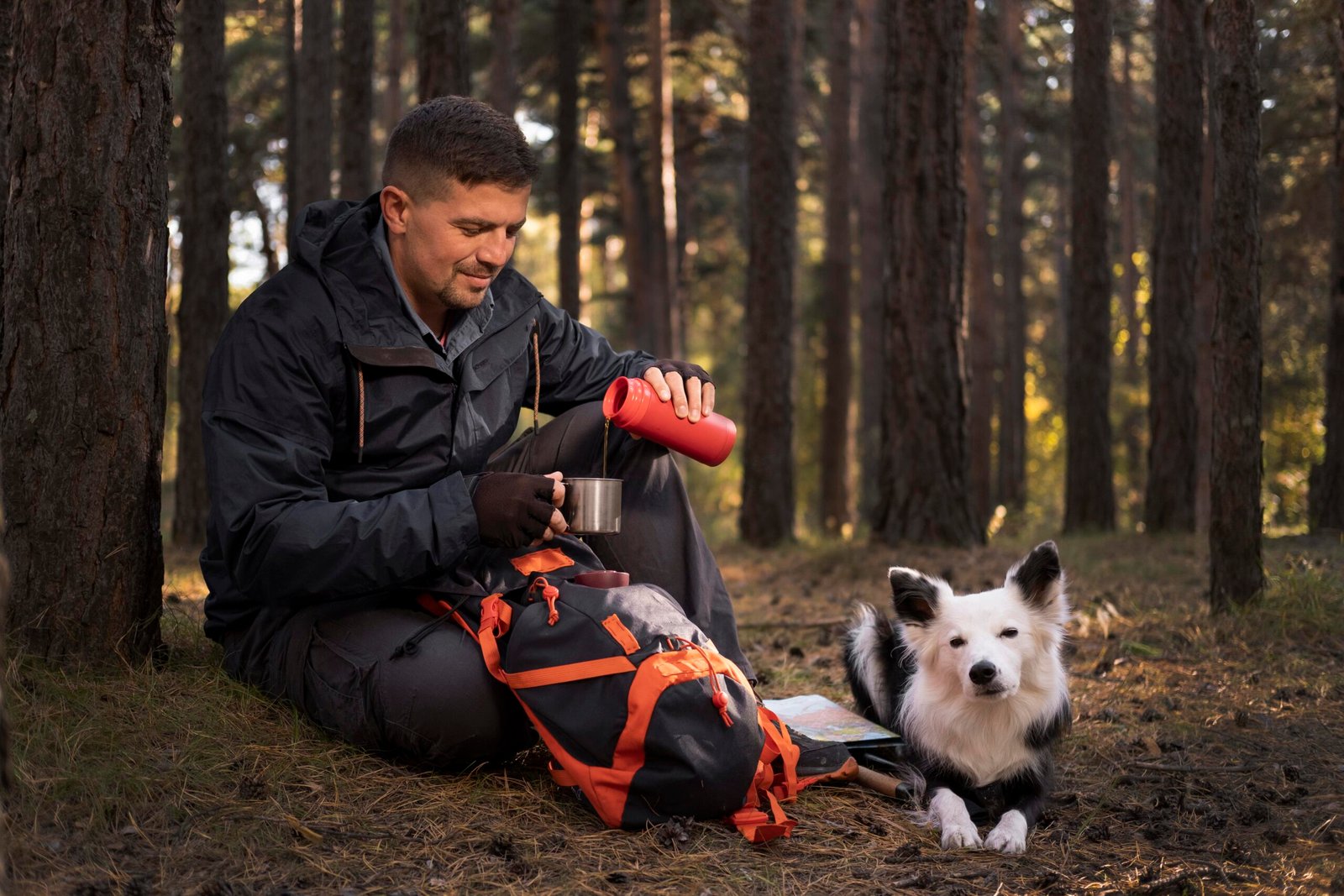
Most dog owners throw together a random collection of gear before their first trail outing. You might even find yourself grabbing whatever leash is by the door and filling a plastic grocery bag with kibble when you should be investing in purpose-built equipment that actually works when you need it.
To build a reliable outdoor kit for your dog, start with safety fundamentals, such as a proper harness and first-aid supplies. Add comfort items like collapsible bowls and protective booties, while prioritizing compact, durable designs and avoiding Instagram-worthy accessories that fail in real conditions.
Here’s a real example. If you’re heading out for a six-mile hike with rocky terrain and no water sources, your dog needs more than a regular collar and a bowl from home.
Don’t respond with, “I’ll just bring a regular leash and let them drink from streams.” This puts your dog at risk for Giardia and gives you zero control on technical terrain.
Avoid saying, “Any cheap harness will work for now.” This comes across as wishful thinking and feels risky when your 65-pound dog spots a deer on a narrow trail.
Instead, try something like, “I’ll get a padded no-pull harness with a handle, a hands-free leash system, and a leakproof water bottle with attached bowl.” This approach will keep both of you safe and comfortable because you’re prepared for real trail conditions.
You’ll notice your dog stays hydrated and under control until you reach the summit viewpoint, or you encounter other hikers with off-leash dogs. You have the tools to manage the situation calmly.
This practical foundation gives you a starting point. Building your gear collection gradually will improve both your confidence and your dog’s safety on every adventure.
The outdoor recreation market for dogs has exploded in recent years, and finding efficient dog gear means cutting through marketing hype to focus on what actually solves problems on the trail. Durable harnesses prevent injuries, proper hydration systems keep dogs healthy in the heat, and innovative storage solutions let you carry everything you need without feeling like a pack mule.
Whether you live in a small apartment and need space-saving solutions or you’re planning multi-day backpacking trips with your dog, the right equipment makes the difference between stressful outings and confident adventures. The gear below has been tested by thousands of outdoor enthusiasts and their dogs, from weekend day-hikers to serious backpackers who cover serious miles in challenging terrain.
20 Practical Dog Gear Items for Every Trail
1. Ruffwear Front Range Harness
A veterinarian-approved no-pull harness with padded chest and belly straps that distribute pressure away from the neck. The aluminum V-ring on the chest gives you front-clip control for pullers, while reflective trim keeps your dog visible at dawn or dusk.
Available in sizes from extra-small to extra-large with many adjustment points for a custom fit.
2. Tuff Mutt Hands-Free Dog Leash
This bungee-style leash clips around your waist, freeing both hands for trekking poles or scrambling over rocks. The shock-absorbing design handles sudden pulls without jerking you forward, and dual handles near the collar give you quick control when you need it.
Works as a standard 5-foot leash, too, making it perfect for apartment dwellers who want a versatile option.
3. Kurgo Baxter Dog Backpack
A well-designed dog backpack lets healthy, conditioned dogs carry their own water, snacks, and poop bags on longer hikes. The Kurgo Baxter features padded saddlebags with reflective trim, an integrated harness with front and rear leash attachment points, and a sturdy handle to help your dog over obstacles.
Recommended for dogs 30 pounds and up who can safely carry 10-15% of their body weight.
4. H2O4K9 Stainless Steel Dog Water Bottle
This 270ml stainless steel bottle includes an attached bowl that screws onto the top. Unlike plastic options that can leach chemicals or crack in your pack, the stainless steel construction is nearly indestructible and doesn’t retain odors.
The bowl design means you’re not fumbling with separate pieces when your dog is panting on a hot trail.
5. Little Chonk Pet Water Filter Bottle
When you’re covering a serious distance and can’t carry enough water for both you and your dog, a portable filter bottle solves the problem. The LifeStraw removes bacteria, parasites, and microplastics from streams and lakes, giving you safe hydration on demand.
The 15-ounce capacity with attached bowl makes it easy to offer clean water every mile or two.
6. Comsun Collapsible Dog Bowls (2-Pack)
These food-grade silicone bowls collapse flat to less than half an inch thick and weigh almost nothing. The set includes two bowls so you can separate food and water at camp, and the sturdy construction means they won’t tip easily on uneven ground.
Each bowl holds up to 5 cups, enough for large-breed dogs.
7. Rubyloo Trail Ready Dog First Aid Kit
A pre-assembled first aid kit designed specifically for dogs on the trail. Includes bandage wraps, non-stick gauze pads, antiseptic wipes, tweezers for tick removal, a digital thermometer, and an emergency guidebook with common trail injuries.
The waterproof case is about the size of a large pencil case and fits easily in a backpack side pocket.
8. Ruffwear Grip Trex Dog Boots (Sold in Pairs)
When trails get rocky, hot, icy, or covered in sharp debris, quality boots protect your dog’s paws from cuts, burns, and abrasions. The Grip Trex feature Vibram soles for traction, a closure system that stays secure without cutting off circulation, and breathable mesh that prevents overheating.
Dogs often have wider front paws than rear paws. That’s why we sell our dog boots in pairs—so you can mix sizes and get the perfect fit on all four paws.
9. Ruffwear Swamp Cooler Cooling Vest
For summer hiking or dogs that overheat easily, an evaporative cooling vest can prevent heat exhaustion. You soak the vest in water, wring it out, and the evaporation creates a cooling effect that lasts for several hours.
The Swamp Cooler features three layers of cooling technology and reflects heat with light-colored surfaces.
Available in six sizes.
10. Flashseen LED Dog Collar
This rechargeable LED collar makes your dog visible up to 500 yards away, which is critical for early morning starts, late finishes, or camping. The collar offers steady glow or flashing modes, charges via USB in two hours, and provides from 6-12 hours of runtime.
Adjustable to fit necks from 8 to 24 inches.
11. Chuckit Sleeping Pad
Dogs need insulation from cold ground just like humans. This travel dog bed has a double offset soft to touch quilted quality construction; Measuring 30 x 39 inches, a poly-suede makes the top comfortable.
The durable ripstop fabric stands up to claws and rough surfaces, while the synthetic fill keeps working even if it gets damp.
12.Outward Hound Granby Splash Dog Life Jacket
If your hiking includes river crossings, lake swimming, or paddleboarding with your dog, a proper life jacket is essential safety gear. Strong Buoyancy for Swimming: Designed for canine swimmers of all skill levels, this high-performance large dog life jacket provides maximum flotation to keep your pup safe in the water, reflective trim for visibility, and adjustable straps for a snug fit that allows whole leg movement.
13. Tick Twister Pro Tick Removal Set
In tick country, you need a reliable removal tool that gets the entire tick without leaving mouthparts embedded in skin. This veterinarian-recommended set includes tweezers and a hook-shaped remover that slides under the tick and twist it out cleanly. Lightweight and compact enough to keep in your first aid kit or pocket.
14. Earth Rated Poop Bag Dispenser with Leash Clip
This practical dog gear item solves the problem of constantly running out of bags mid-walk. The dispenser holds a whole roll of bags, clips securely to any leash or pack, and includes a built-in hook for hanging full bags if you need to pack them out.
The bags are thick, leakproof, and scented to control odors.
15. Garmin Alpha 200i Dog GPS Tracker and Training Device
For off-leash hiking in areas where it’s permitted, a GPS tracker gives you real-time location data. Hence, you always know where your dog is, even in dense forests or over ridgelines. The Alpha 200i tracks up to 20 dogs from up to 9 miles away, includes training functions, and supports two-way satellite messaging.
Premium option for serious backcountry users.
16. Kurgo Mud Dog Travel Shower
After muddy, dusty, or sandy hikes, you need a way to clean your dog before they get in the car or tent. This portable shower attaches to any standard water bottle. It delivers a gentle spray for rinsing paws, the belly, and the coat.
The ergonomic design makes it easy to control water flow with one hand while you scrub with the other.
17. Gentle Creatures Sunscreen Spray SPF 30
Dogs with short coats, light-colored fur, or pink noses can get sunburned on exposed alpine trails or desert hikes. This veterinarian-formulated sunscreen is non-toxic if licked, provides SPF 30 protection. Easy application – Non aerosol spray makes it super easy to apply via. your hand or directly on your pet’s coat.
Essential for high-altitude or long-exposure situations where shade is limited.
18. Fox 40 Sonik Blast CMG Whistle
In an emergency, a loud whistle carries much farther than your voice and doesn’t tire you out. This whistle produces 120 decibels and works when wet, making it reliable in any weather.
Clip it to your pack or wear it around your neck on solo hikes with your dog so you can signal for help if needed.
19. Ruffwear Knot-a-Hitch Dog Hitching System
When you need to secure your dog at camp, trailheads, or outdoor cafes, this rope-and-hardware system sets up in seconds on trees, posts, or vehicle bumpers. The swiveling carabiner prevents tangling, the kernmantle rope is weather-resistant, and the whole system packs down small.
Extends up to 36 feet and includes reflective trim for nighttime visibility.
20. Gamma2 Vittles Vault Stackable Pet Food Container
For multi-day trips or car camping, you need an airtight, bear-resistant container to store kibble and treats. The Vittles Vault is made from thick, durable plastic that keeps food fresh and protected from moisture, pests, and critters.
Designed to accommodate various kibble sizes and shapes, the large dog food storage container offers flexibility in storing up to 40 pounds of dry pet food effectively.
Final Thoughts: Building Your Go-To Trail Kit
After reviewing hundreds of options and testing gear in real trail conditions, the Ruffwear Front Range Harness, combined with a Tuff Mutt hands-free leash, emerges as the most essential foundation for any hiking setup. These two pieces of practical dog gear instantly improve control, reduce strain on both human and dog, and work flawlessly whether you’re navigating a busy urban trail or scrambling over rocky terrain miles from anywhere.
The Front Range Harness earns top marks because it distributes pulling force across the chest instead of the throat, includes a sturdy handle for assists, and offers enough adjustment points to fit nearly any dog shape from compact terriers to deep-chested shepherds. Pair it with the hands-free leash system, and you’ve suddenly got both hands available for poles, navigation, snacks, or steadying yourself on steep sections while your dog stays securely connected to your core.
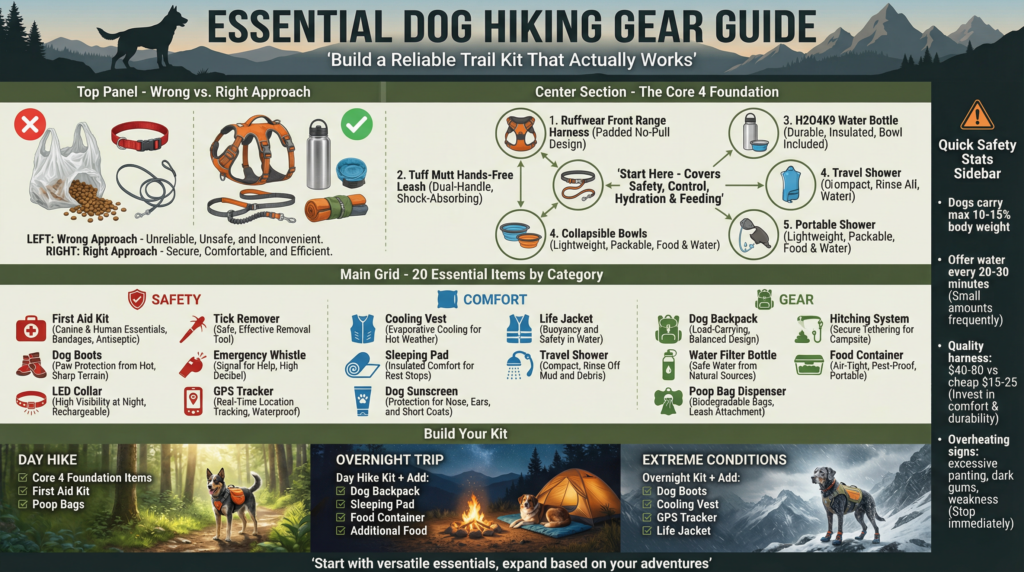
Once you have those fundamentals dialed in, add the H2O4K9 stainless steel water bottle and a set of Comsun collapsible bowls to solve hydration and feeding. These four items cover safety, control, water, and food in a package that fits in one small stuff sack by your door.
From there, build out based on your specific adventures.
Planning overnight trips? Add the Kurgo Baxter backpack and Ruffwear sleeping pad.
Hiking in tick country or rocky terrain?
Grab the first aid kit and Grip Trex boots. Heading to high altitude in summer?
The cooling vest and dog-safe sunscreen become essential.
The key is avoiding the trap of accumulating dozens of single-use accessories that take over your apartment and rarely get used. Start with versatile, multi-purpose, practical dog gear that earns its place on every outing, then expand thoughtfully as you encounter specific challenges or push into new environments.
Ready to upgrade your trail gear and hike with more confidence? Start with a properly fitted no-pull harness and hands-free leash system today, test them on a few local walks, then add a water bottle and collapsible bowl before your next adventure. With those core items in place, you and your dog can tackle longer trails, rougher terrain, and more ambitious trips without the stress of broken leashes, dehydrated dogs, or that sinking feeling when you realize you forgot something critical back at the trailhead.
Frequently Asked Questions
How much weight can my dog safely carry in a backpack?
Most veterinarians recommend healthy, well-conditioned dogs carry no more than 10-15% of their body weight in a properly fitted pack. A 50-pound dog should max out around 5-7 pounds of gear, including the pack itself.
Start with just the empty pack for short walks, gradually add weight over several weeks, and always check for rubbing or gait changes.
Puppies under 18 months, senior dogs, and those with joint problems shouldn’t carry any weight at all, as their growth plates or joints can’t handle the extra stress.
What’s the best way to introduce boots to a dog that has never worn them?
Start indoors with lots of high-value treats and patience. Put one boot on, immediately reward with treats, then remove it after just a few seconds.
Repeat until your dog stays calm, then add the second boot.
Work up to all four boots over several short sessions, always ending on a positive note. Once they’ll stand in the shoes without trying to shake them off, encourage a few steps with treats, then try a short walk in a familiar area.
Most dogs need 3-7 practice sessions before they’ll walk normally in boots, and some never fully adjust.
The Ruffwear Grip Trex has the easiest learning curve because it’s lightweight, and the closures don’t squeeze too hard.
Do I really need separate first-aid supplies for my dog, or can I use my own kit?
While some items like gauze, tape, and antiseptic wipes work for both humans and dogs, you need dog-specific items for proper trail care. Dogs need different bandaging techniques because they can’t be told to keep pressure on a wound, their normal body temperature is higher than humans’ at 101-102.5°F, and they need specialized tools like tick removers designed for fur.
A good compromise is carrying a combined kit with shared basics plus dog-specific additions like a muzzle (even friendly dogs may bite when injured and in pain), paw protection, and a copy of your vet’s phone number for emergency advice.
How do I know if my dog is overheating on a hot trail?
Watch for excessive panting that doesn’t slow down during breaks, drooling more than usual, dark red or purple gums and tongue, weakness or stumbling, vomiting, or collapse. Flat-faced breeds like bulldogs and pugs overheat faster than other dogs.
If you see warning signs, immediately move to shade, offer cool (not ice-cold) water, wet their chest and belly with it, and don’t continue hiking.
Pour water on their paw pads and on the inner thighs, where blood vessels run close to the surface. If symptoms don’t improve within 10 minutes or your dog collapses, this is a veterinary emergency.
Prevention works better than treatment, so hike in early morning or evening during hot months, take frequent breaks, bring extra water, and consider a cooling vest.
Are expensive dog hiking harnesses really worth the cost compared to cheap ones?
Quality harnesses from brands like Ruffwear, Kurgo, or RC Pet typically run $40-80 compared to $15-25 for budget options. Still, the difference shows up in durability and dog comfort. Cheap harnesses often use thin webbing that digs into skin, hardware that breaks or bends under stress, and stitching that fails after a few months.
Premium harnesses use padded, breathable materials to prevent rubbing, aluminum or stainless steel hardware rated for heavy-duty pulling, and reinforced stress points that last for years.
If you only do occasional short walks on flat terrain, a budget harness might work fine. For regular hiking, large or strong dogs, or technical terrain where you need the handle to assist your dog, spending more up front saves money. It prevents the risk of a broken harness at the worst possible moment.
What should I do if my dog cuts their paw on the trail several miles from the trailhead?
First, stay calm since dogs pick up on your stress. Clean the wound with saline solution or clean water to remove dirt and debris to help reduce infection.
Apply gentle pressure with a non-stick gauze pad for several minutes to stop bleeding.
Once bleeding slows, apply a thin layer of antibiotic ointment if you have it, cover with a non-stick pad, then wrap with a self-adhesive bandage wrap like Vetrap. The wrap should be snug enough to stay in place but loose enough to slip a finger underneath.
If you have a boot, put it over the bandaged paw for protection on the hike out.
Check the wrap every 30 minutes to make sure it’s not too tight (watch for swelling below the wrap) and carry your dog if they’re limping badly. Most minor cuts can wait until you reach your regular vet, but deep wounds, flaps of skin, or cuts that won’t stop bleeding need emergency care as soon as you get to the trailhead.
How often should I offer my dog water on a hike?
A good rule is to offer water every 20-30 minutes on moderate trails, more often in hot weather or on strenuous climbs. Please don’t wait for your dog to seem thirsty since they may be focused on the trail and not signal their needs clearly.
Offer small amounts each time rather than letting them gulp down large quantities, which can lead to bloat in deep-chested breeds. Carry at least twice as much water as you think you’ll need since dogs dehydrate faster than humans, especially when panting heavily.
On longer hikes, plan your route around reliable water sources and carry a portable filter like the LifeStraw so you can refill without relying entirely on what you packed. If your dog refuses water many times, starts acting lethargic, or their gums feel dry and sticky, cut the hike short and get them to a cool, shaded area with water immediately.
Leave a Reply