
The debate about whether mixed-breed dogs—often called “mutts” or “mongrels”—are healthier and live longer than purebred dogs has gone on for years. Many people believe mixed breeds are healthier due to “hybrid vigor.”
However, recent research suggests the reality is more nuanced.
To explore this topic further, let’s examine the health and lifespan considerations for both mixed-breed and purebred dogs.
⚕️ Health Comparisons: The Role of Genetics
Many people argue that mixed-breed dogs are healthier because of hybrid vigor. This theory suggests that a wider, more varied gene pool reduces the likelihood that a dog will inherit two copies of a harmful recessive gene, which often causes inherited disorders.
Purebred Health Risks
- Breed-Specific Genetic Disorders
Purebred dogs have closed gene pools to preserve breed standards. As a result, they are more likely to develop inherited conditions, such as:- German Shepherds → hip dysplasia
- Boxers & Great Danes → dilated cardiomyopathy
- Cavalier King Charles Spaniels → heart and eye diseases
- Physical Conformation Issues
Some purebred dogs are bred for traits that negatively affect health:- Flat-faced breeds (e.g. Bulldogs, Pugs) often suffer from:
- Breathing difficulties
- Poor temperature regulation
- Flat-faced breeds (e.g. Bulldogs, Pugs) often suffer from:
Mixed-Breed Health Advantages and Considerations
- Reduced Risk of Specific Recessive Disorders
- Mixed-breed dogs are less likely to inherit certain breed-specific genetic conditions.
- Studies show these inherited disorders occur less frequently in mixed breeds than in purebreds.
- Varying Genetic “Cocktails”
- Health outcomes depend heavily on ancestry.
- If both parent breeds share risks (e.g. two large breeds prone to hip dysplasia), the mixed-breed dog may still develop those conditions.
- Similar Risk for Common Ailments
- Large studies (including the Dog Aging Project) show mixed-breed and purebred dogs experience common health issues at similar rates, such as:
- Dental disease
- Arthritis
- Ear infections
- Large studies (including the Dog Aging Project) show mixed-breed and purebred dogs experience common health issues at similar rates, such as:
⏳ Lifespan Comparisons: Size Is Key
When it comes to lifespan, size matters more than breed type.
- Mixed Breeds and Longevity
- Some studies suggest mixed-breed dogs live slightly longer on average—by about 1.2 to 1.3 years.
- This may reflect hybrid vigor, but the difference is not dramatic or consistent across studies.
- The Size Factor
- The most important factor affecting lifespan is body size.
- Smaller dogs—purebred or mixed—generally live longer than larger dogs.
- Example:
- Small purebreds (e.g. Chihuahuas) may live 15+ years
- Very large dogs often have much shorter lifespans
- Example:
- Most dogs live 10–13 years, regardless of breed type.
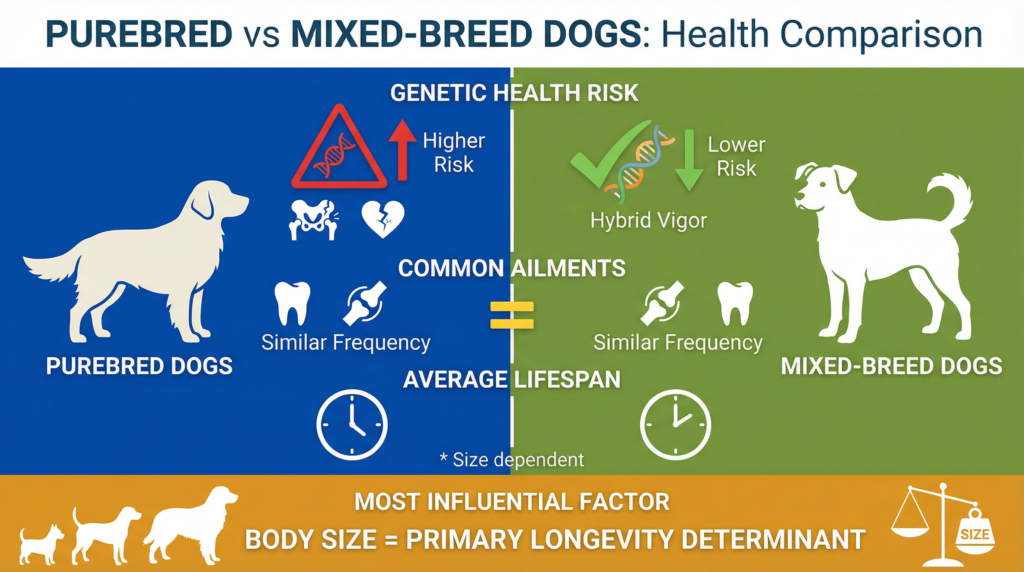
📊 Purebred vs. Mixed-Breed Overview
- Genetic Health Risk
- Purebred dogs: Higher risk of specific inherited, breed-related disorders
- Mixed-breed dogs: Lower risk of breed-specific inherited disorders due to genetic diversity
- Common Ailments
- Both groups show similar rates of general health issues such as arthritis and dental disease
- Average Lifespan
- Varies widely in both groups
- Strongly influenced by body size and ancestry
- Most Influential Factor
- Body size is the primary determinant of longevity for all dogs
✅ The Bottom Line: Care and Breeding Matter Most
While hybrid vigor may offer mixed-breed dogs some protection from inherited disorders, both mixed-breed and purebred dogs can live long, healthy lives.
Key factors influencing health and lifespan include:
- Genetics
- Body size
- Quality of breeding
- Owner care
Responsible Breeding
- Good purebred breeders:
- Use genetic testing
- Screen ancestry carefully
- Actively avoid passing on inherited diseases
- Well-bred purebreds can have an excellent chance of a long, healthy life
Owner Care Matters Most
- Consistent preventative veterinary care
- Proper nutrition
- Regular exercise
- Maintaining a lean body weight
These are arguably the most important contributors to a dog’s overall health and longevity.
🐶 Final Thought
Choosing a dog—whether purebred or mixed—should be an informed decision based on:
- Size
- Energy level
- Temperament
- Compatibility with your lifestyle
Above all, a commitment to lifelong care and well-being is what truly makes the difference.
Mixed Breeds vs. Purebreds: A Closer Look at Health and Lifespan
The difference in health and longevity between mixed-breed dogs (“mutts” or “mongrels”) and purebred dogs is widely debated. Though common wisdom supports mixed breeds for their presumed health advantages from “hybrid vigor,” recent research shows the answer is more complex than a simple comparison.
Here is a comparison of the health and lifespan considerations for both mixed-breed and purebred dogs.
⚕️ Health Comparisons: The Role of Genetics
Hybrid vigor suggests that mixed-breed dogs, with their broader gene pool, are less likely to inherit two copies of problematic recessive genes that cause inherited disorders.
Purebred Health Risks
- Breed-Specific Genetic Disorders: Because purebred dogs are maintained in closed gene pools to maintain breed standards, they have a higher risk of specific inherited conditions. For example, large breeds like German Shepherds are prone to hip dysplasia, Boxers and Great Danes are susceptible to dilated cardiomyopathy, and breeds like the Cavalier King Charles Spaniel have a high prevalence of cardiac and ocular diseases.
- Some purebred dogs bred for extreme physical features, such as Bulldogs and Pugs, often suffer from respiratory and temperature-regulation issues.
Mixed-Breed Health Advantages and Considerations
- Mixed-breed dogs typically face fewer breed-specific inherited diseases, with research showing lower prevalence of some genetic conditions than in purebreds.
- A mixed-breed dog’s diverse ancestry means health risks vary; mixes of breeds with shared health issues may not see reduced risk.
- Recent studies show that both mixed-breed and purebred dogs face common conditions such as dental disease and arthritis at similar rates.
⏳ Lifespan Comparisons: Size is Key
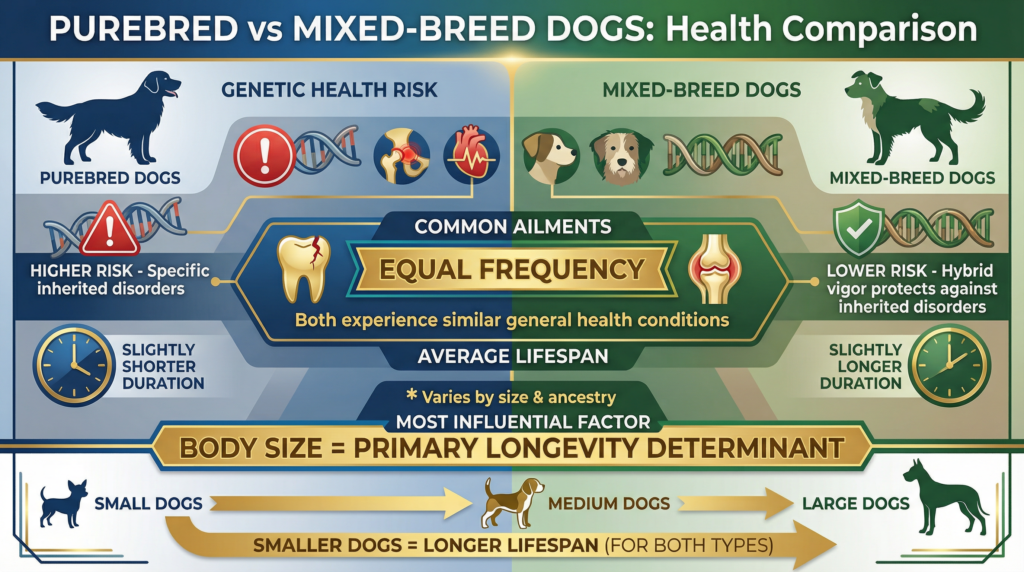
When it comes to how long dogs live, differences between purebreds and mixed breeds usually matter less than the dog’s body size.
- Mixed Breeds and Longevity: Some studies have shown that, on average, mixed-breed dogs live slightly longer than purebred dogs—sometimes by a margin of 1.2 to 1.3 years. This could reflect hybrid vigor, though the difference is not always dramatic or consistent across studies.
- Dog size is the biggest factor in lifespan. Small dogs, purebred or mixed, live longer than larger dogs. The average dog lives 10–13 years, with giant breeds at the lower end of that range.
✅ The Bottom Line: Care and Breeding Matter Most
While hybrid vigor may suggest mixed-breed dogs have genetic advantages, health and longevity in all dogs depend on multiple factors beyond ancestry.
The most important factors are:
- Body Size: Small dogs typically live longer than large dogs, regardless of breed status.
- Good Breeding: Good purebred breeders use genetic testing and detailed family trees to avoid common inherited problems. This gives purebred dogs a stronger chance for a long and healthy life.
- Owner Care: Consistent preventative veterinary care, a proper diet, regular exercise, and maintaining a lean body weight are arguably the biggest contributors to a long and happy life for any dog.
Choosing a companion, whether purebred or mixed, should be an informed decision based on which dog’s size, energy level, and temperament best fit your lifestyle, and should be coupled with a commitment to their lifelong well-being.
Leave a Reply