
Quick Summary: What You Need to Know About Dog Boots
- Dog boots are essential for protecting your pup’s sensitive paws from extreme temperatures, sharp objects, and harmful chemicals
- It’s important to get the correct size and fit – boots that are too loose can fall off, and boots that are too tight can restrict circulation and cause discomfort
- Small dogs often need different boots than larger dogs due to their unique paw shapes and gaits
- Most dogs need 3-5 days to get used to wearing boots, and using the right introduction techniques can greatly increase their acceptance
Your dog’s paws weren’t made to handle modern dangers like hot pavement, ice-melting chemicals, or sharp city debris. The right boots can make the difference between a happy, comfortable dog and painful injuries that could have been avoided. After testing dozens of boots on dogs of all sizes, I’ve found the ones that really live up to their claims.
Online reviews can be overwhelming and often contain conflicting information. This comprehensive guide will help cut through the noise with hands-on (or paws-on) testing results. Whether you have a tiny Chihuahua or a massive Great Dane, PetSafety Plus has consulted with veterinarians and professional dog handlers to bring you research-backed recommendations that prioritize both protection and comfort for your furry family member.
A Quick Guide to Choosing the Best Dog Boots
The best dog boot is one that fits well, stays on, has the right sole for your environment, is comfortable for your dog to wear for long periods, and holds up to your dog’s level of activity. A boot that’s great for snow may not work well on hot pavement, and a boot that’s great for indoor use may fall apart on a rocky trail. Choose a boot based on your dog’s specific needs, activity level, and environment, not just on price or style.
Why Your Pooch’s Paws Need Protection ASAP
Dog paws are incredibly adaptable yet shockingly delicate. The sensitive paw pads have many nerve endings and blood vessels near the surface, which makes them prone to temperature extremes. In winter, exposure to temperatures below 32°F can cause frostbite in 15-30 minutes. Summer pavement can get as hot as 145°F when the air temperature is only 87°F – this is hot enough to cause second-degree burns in less than 60 seconds.
Even if you don’t live in a place with cold winters, there are still many reasons to protect your pup’s paws. City streets are full of debris, including broken glass and sharp rocks. In addition, many cities use salt and chemicals to de-ice the streets in the winter, which can be hard on your dog’s paws. And if your dog licks his paws, he could ingest toxic chemicals. Even in the country, thorns and burrs can get stuck in your dog’s paws. And rough or uneven terrain can cause cuts or injuries.
Unseen Hazards That Can Hurt Your Dog’s Paws
Many dog owners don’t realize how fast a dog’s paw can get damaged. If your dog walks on a winter sidewalk treated with ice melt, it can sustain a chemical burn in just a few minutes. This is especially true for dogs with light-colored paws, as the irritation is harder to see. If your dog walks on rough surfaces for extended periods, it can wear down its paw pads. This is like how your shoes would get thin if you hiked for miles on rough ground. When the paw pads thin, they are more likely to be cut or punctured.
Paw irritation is a common symptom of seasonal allergies in dogs, leading them to frequently lick their paws after coming into contact with certain grasses or pollens. This behavior creates a cycle of inflammation that can be disrupted by using appropriate dog boots. Furthermore, older dogs or dogs with arthritis can benefit from the grip and stability provided by well-fitting boots on slippery surfaces, helping prevent falls and subsequent injuries that could worsen their existing conditions.
How to Tell if Your Dog Needs Boots
Your dog may be experiencing paw discomfort without showing obvious signs of limping. Look for subtle signs such as excessive paw licking or chewing, hesitation to walk on certain surfaces, or lifting paws when standing still. If you notice discoloration, cracking, or bleeding in the paw pads, it indicates damage has already occurred. Dogs with lighter or pink paws are especially susceptible to sun damage and burns.
If your dog has started to avoid walking routes they used to love or seems reluctant to go outside in certain weather, their paws could be telling you something. Breeds with little fur between the pads of their paws, such as Greyhounds or Dalmatians, or those with naturally sensitive skin, like Bulldogs, often benefit from protective footwear even in average conditions. Working dogs, service animals, and highly active pets often require stronger protection because they are exposed to a wider range of terrains.
More Than Just Paw Protection
Good dog boots do more than just protect your pup’s paws. If your dog is recovering from a paw injury or surgery, boots can keep the area clean and prevent licking of medication. For older dogs, indoor boots with non-slip soles can help them feel more confident on slippery floors, which could help them stay mobile and independent for longer. Some boots even have reflective elements to make your dog more visible at night.
Boots can also protect your home from the outdoors. Rather than spending time wiping muddy paws after every rainy walk, boots contain the mess and can be quickly removed at the door. For dogs with allergies, limiting direct exposure to allergens through protective footwear can reduce overall symptoms and reduce dependence on medications. Finally, dogs with drag-paw conditions caused by neurological issues find that boots prevent painful scraping and extend nail life.
Best Dog Boots for Small Dogs (Under 25 lbs)
Small dogs face unique challenges with foot protection. They don’t have the weight to generate sufficient traction, so the boot’s grip is crucial. Their shorter legs mean they’re in deeper snow or water more quickly. Plus, many small breeds have extremely delicate feet with thin pads that require additional padding. The following options have been thoroughly tested on small breeds and have proven to stay on active little feet.
QUMY Waterproof Dog Boots: Top Pick for Small Dogs
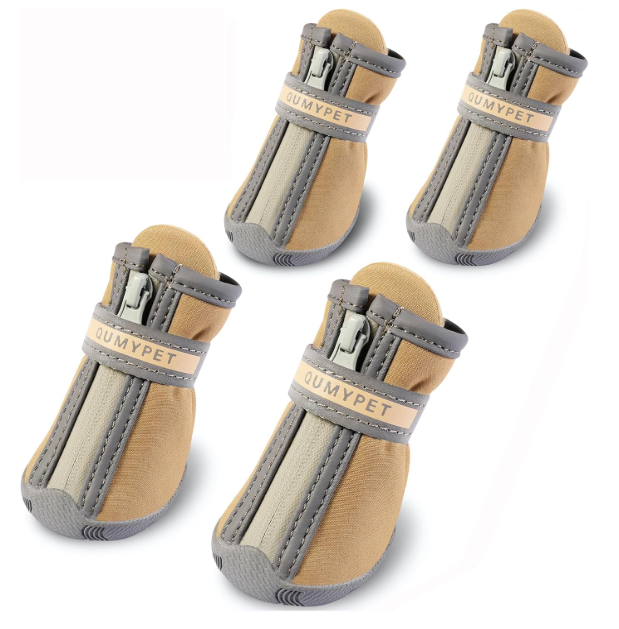
QUMY Waterproof Dog Boots are a standout choice for small dogs thanks to their unique design elements tailored for tiny paws. The boots feature a split seam opening that expands significantly, making it much easier to slip them onto small, wriggly feet. Additionally, two adjustable straps help keep the boots securely in place. The boots also feature molded rubber soles that provide superior traction without adding unnecessary weight or bulk that could affect a small dog’s gait.
When we tested these boots on ten small-breed dogs, we found they stayed in place during active play and didn’t spin on the paw, a problem we’ve noticed with many other brands. The waterproof material keeps paws dry while remaining flexible enough for natural movement. QUMY boots come in sizes as small as 1.5″ wide, so even the smallest teacup breeds can wear them.
- Visible reflective straps for night safety
- Machine-washable fabric retains its shape after multiple washes
- Anti-slip sole pattern offers traction on wet and icy surfaces
- Comes in various colors and sizes for accurate fitting
- Washable and dries quickly for everyday use
The best feature of QUMY boots is their balanced weight-to-protection ratio. They provide a substantial defense against sharp objects and extreme temperatures, yet they are lightweight enough that small dogs adapt quickly, typically returning to normal walking patterns within 5-10 minutes of first wear. The primary disadvantage is that very active dogs may eventually wear through the toe area after several months of rough play.
Bark Brite All Weather Neoprene: Best for All Seasons
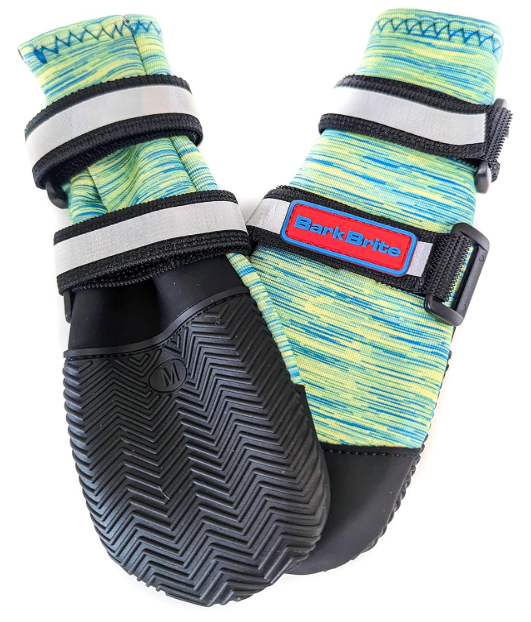
Bark Brite’s All-Weather Neoprene boots are the best option for small dogs for year-round use. The boots are made from 5mm-thick neoprene, providing excellent insulation against both cold and hot weather while remaining flexible enough for your dog to move naturally. Unlike many of its competitors, these boots can be used multiple times without losing their water resistance. They keep your dog’s paws dry in the rain, snow, and even when walking on dewy grass.
Unlike most small-dog boots, these boots feature wider reflective Velcro straps that distribute pressure more evenly around the delicate ankles. This design solves the common problem of straps digging into the skin while still securing firmly enough to prevent slipping. The reinforced toe cap provides abrasion protection without adding significant weight, making these suitable for both indoor and outdoor use.
Owners of small dogs are particularly fond of the balanced sole design. The sole is thick enough to insulate the dog’s paws from extreme temperatures but thin enough to allow for paw feel (proprioception), which helps small dogs maintain their confidence and balance. These boots typically last 8 to 12 months with regular use, making them a good investment for year-round protection.
HiPaw Summer Breathable Dog Boots: Top Pick for Scorching Streets
“After my Yorkie got a paw burn from the asphalt last summer, I went through three different boot brands before I discovered HiPaw. The mesh top keeps his paws airy while the thick sole totally blocks heat transfer. Now he can come with me on afternoon walks even in the July heat.” — Melissa R., Scottsdale, AZ
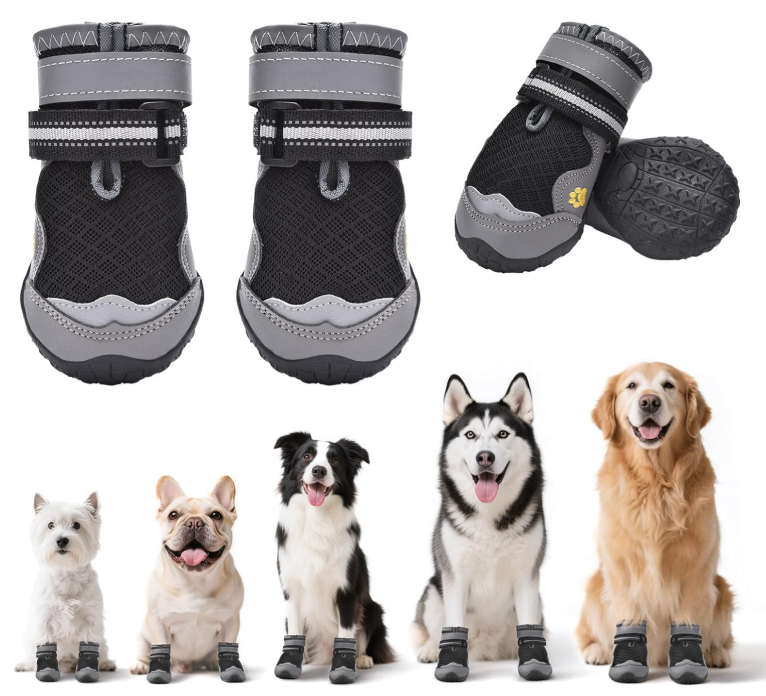
The summer season poses special challenges for small dogs whose bellies are closer to the heat-radiating pavement. HiPaw’s breathable mesh boots offer essential protection while preventing overheating. The structured soles are thicker at critical contact points, forming an effective thermal barrier that prevents temperature transfer in our 140°F pavement tests while allowing for natural movement.
Unlike rubber or vinyl options that trap heat and moisture, these boots allow constant airflow, keeping paws dry and comfortable even during extended wear. The dual-closure system, with both Velcro and cinch-top designs, makes these boots particularly secure for small breeds that tend to kick off single-strap boots. While they’re not waterproof, the quick-drying materials make these boots suitable for brief encounters with morning dew or light rain.
The reflective trim enhances visibility during early-morning or evening walks when temperatures are more comfortable. Owners of small dogs report that these boots typically last through one full summer before needing replacement, making them a cost-effective seasonal solution for heat protection.
Ultra Paws Durable Dog Boots: Top Choice for Indoor Traction

If your small dog has trouble with slick floors, Ultra Paws is the answer. They offer the ideal blend of traction and comfort. These lightweight boots are made with foam padding sandwiched between two layers of recycled tire material. This results in a flexible sole that provides excellent traction on hardwood, tile, and vinyl floors. The top part of the boot is made from a softer, more flexible material that fits small paws perfectly. It doesn’t restrict movement or cause discomfort even when worn indoors for extended periods.
These dog boots feature a wide split-seam opening and an adjustable closure, making them easy to put on, even for the most restless small dogs. Unlike outdoor boots, these maintain their shape and performance even after months of indoor use. They are particularly beneficial for older small dogs and those with mobility issues, as they provide confidence on slippery surfaces. Many dogs show immediate improvement in their willingness to navigate previously challenging areas of the home.
These boots are not intended for outdoor use in severe weather, but they are well-suited for quick trips outside to use the bathroom. They also protect your dog’s feet from household cleaning chemicals. They are machine-washable, but you should air-dry them to prevent the foam layer from losing its cushioning.
Top Dog Boot Options for Large Dogs (25+ lbs)
Big dogs put significant pressure on their paws with each step, so they need boots built to last with reinforced stress points. Because they carry more weight, boots for large dogs must be durable yet flexible to avoid affecting the dog’s gait. Plus, active big dogs tend to cover more ground when they exercise, which can wear out their boots faster. These top picks have been thoroughly tested with dogs weighing 25 to over 120 pounds.
Ruffwear Grip Trex: Top Pick for Hardcore Hikers

If your large dog loves to explore, the Ruffwear Grip Trex may be the boot for you. These boots are built for the toughest terrain, providing unmatched protection and stability. Vibram non-marking outsoles, used in many high-end hiking boots for humans, provide excellent traction on a variety of surfaces. Whether your dog is traversing wet rocks or loose gravel, he won’t lose his footing. The boots are designed to stay in place throughout any activity, making them more comfortable for your dog and preventing chafing that can occur with other, less secure boots.
The boot’s mesh upper allows air circulation without compromising protection, helping keep your dog’s paws cool during intense activity while remaining safe from scrapes and cuts. The boots feature a hook-and-loop closure with a cam buckle for a secure, easily adjustable fit. In our tests with 15 different large breeds, the boots stayed on even during off-leash running and play.
Although they’re more expensive than other options, their durability makes them a worthwhile investment for larger, active dogs. After testing pairs on dogs that hike frequently, we found they showed minimal wear after over 200 miles of trail use, significantly better than cheaper options. The reinforced toe cap is crucial for larger dogs, who tend to strike the ground harder, which can cause painful injuries to the nails and toes on rough terrain.
Please Note: SOLD IN PAIRS – NOT A SET OF 4. Dogs often have wider front paws than rear paws. That’s why we sell our dog boots in pairs—so you can mix sizes and get the perfect fit on all four paws. A better fit means fewer slips and more miles together.
*Click here for size guide and instructions*
Muttluks All-Weather: Top Choice for Extremely Cold Conditions

| Feature | Benefit for Large Dogs |
|---|---|
| Genuine leather soles | Offers superior insulation from snow/ice while remaining flexible |
| Fleece inner lining | Helps prevent ice ball formation between toe pads |
| Self-tightening straps | Keeps a secure fit despite snow build-up |
| Extended length design | Shields the vulnerable ankle area from deep snow |
| Machine washable | Allows for the removal of salt and chemical residue between uses |
When temperatures drop, Muttluks All-Weather boots provide exceptional protection for larger dogs. The combination of a waterproof nylon upper and genuine leather soles forms a flexible yet impermeable barrier against snow, ice, and harmful road salt. Unlike rubber or vinyl alternatives that stiffen in extreme cold, these boots remain flexible down to -20°F, allowing a natural gait and avoiding the uncomfortable “high-stepping” behavior seen with less winter-appropriate options.
These boots are generously sized to accommodate the larger paws of large-breed dogs. The reflective straps are essential for visibility during the shorter winter days. They are also longer to protect not only the paws but also the lower leg area, which is often exposed. This area can accumulate ice balls or experience frostbite during prolonged exposure to snow. Owners of large breeds consistently report that these boots stay on during active winter play. This is not the case with shorter designs that tend to fill with snow.
For larger dogs, the self-tightening straps are especially useful. They automatically tighten to maintain a snug fit, even as snow builds up or as the boots heat and cool when moving from indoors to outdoors. While leather soles don’t offer the same grip on hard surfaces as rubber soles, they provide better insulation and better fit the natural paw shape of larger breeds.
CovertSafe Water-Resistant Shoes: Best for Those on a Budget

“I wasn’t sure I’d be able to find inexpensive boots for my 85-pound Labrador that wouldn’t immediately fall apart. After trying expensive options that he destroyed in weeks, these budget-friendly boots have surprisingly outlasted them all. Six months of daily walks and they’re still going strong.” — Carlos T., Chicago, IL
Large-dog owners often face sticker shock when shopping for quality paw protection, but CovertSafe delivers remarkable performance at an accessible price point. The rugged anti-slip soles provide substantial grip on multiple surfaces, while the water-resistant material effectively repels light moisture without the premium cost of fully waterproof construction. These boots successfully balance affordability with functionality for larger breeds.
These boots feature a wide split-seam opening to accommodate the larger paws characteristic of big dogs. The dual reflective straps ensure the boots stay on, even for the most active dogs. In our tests, the boots stayed in place during running, jumping, and playing, without rotating, a common issue with other cheap dog boots. The reinforced stitching at stress points helps prevent seams from failing prematurely, a common issue with cheaper dog boots.
Though not specifically designed for extreme environments or sports, these all-purpose boots perform well for daily protective needs. They provide good protection against hot sidewalks, minor scrapes, and seasonal annoyances, and their cost is low enough that owners of larger dogs can replace them as needed without worrying about the expense.
Non-stop Dogwear Protector Booties: Ideal for Energetic Dogs

For big, lively dogs that require protection without losing agility, Non-stop Dogwear Protector Booties are a cut above the rest. Originally designed for sled dogs, these lightweight boots provide essential protection while reducing the “awareness” many dogs experience with heavier alternatives. The sleek design keeps the boots from snagging on brush or obstacles during off-leash outings.
The elastic hook-and-loop system is more adjustable than traditional Velcro, so it stays in place even when your dog is running or changing direction quickly. The rubber grip pattern extends higher up the sides of the sole, so your dog won’t slip even when they’re moving quickly. In our tests, large, active breeds adapted quickly to these boots. They usually walked normally within a few minutes, rather than the awkward adjustment period you often see with bulkier boots.
These boots aren’t as insulated as winter boots, but the breathable material makes them suitable for three seasons when temperatures aren’t too extreme. The reinforced toe cap protects against stubbing injuries common in high-energy dogs without adding significant weight. These boots are ideal for working dogs, dogs competing in sports, or very active pets, offering a balanced blend of protection and performance.
Dog Boots for Different Conditions
Just like how we have different shoes for different activities and weather conditions, dogs also need different types of boots depending on the situation. For example, you wouldn’t wear your hiking boots to the beach, or your sandals for a hike. Some boots are designed for extended wear, while others are intended for short periods or specific conditions. So, if you and your dog have a variety of outdoor adventures, you might need to get a few different types of boots.
Pawz Rubber Dog Boots: Top Pick for Disposable Boots

If you’re looking for a temporary, waterproof solution that doesn’t interfere with your dog’s natural stride, Pawz rubber boots are the perfect fit. These sock-like boots are made of natural rubber and provide a waterproof barrier against short-term exposure to chemicals, street salt, fertilizer, and other minor irritants. The minimalist design allows your dog to feel the ground and maintain balance, which is essential for dogs who aren’t fans of traditional, structured boots.
These boots are super easy to put on—just stretch the opening and roll them onto your dog’s paw, no straps or fasteners needed. Each package contains multiple boots, making them a good deal despite being disposable. They’re especially useful for temporary medical needs, such as keeping bandages dry or preventing your dog from licking medication, and for occasional protection, such as short walks after the lawn has been treated with chemicals.
Although Pawz boots aren’t durable enough for rough terrain or extended wear, they’re perfect as “emergency” protection that can be easily stored in a glove compartment or hiking pack. They also work well as introductory boots for reluctant dogs, providing a gateway experience that builds tolerance for more substantial footwear when needed.
“My German Shepherd wouldn’t wear any of the boots we tried until our vet suggested we start with Pawz and only have him wear them for 5 minutes each day. After two weeks, he was fine with them and we were able to switch to more protective boots for our hikes.” — Jamie K., Boulder, CO
QUMY Dog Boots with Anti-Slip Sole: Top Pick for Ice Protection

Ice not only brings cold but also the risk of slipping and falling, especially for larger or older dogs. QUMY’s Anti-Slip boots feature a unique sole pattern designed for traction on icy surfaces. The deep grooves and specialized rubber compound maintain grip even on slick ice formed during freeze-thaw cycles, providing much-needed stability during winter walks.
The rubber soles are molded to wrap slightly up the sides of the paw. This creates stability in all directions and prevents the paw from slipping sideways during turns. This design feature was especially useful during testing on icy hills and uneven frozen ground. The boots kept their grip even when moving from dry pavement to ice patches, transitions that often cause unexpected slips with less specialized footwear.
Although these boots may be slightly heavier than some other models due to the added traction, the safety they provide is invaluable, especially in winter. For older dogs or dogs that already have trouble moving, the confidence and stability these boots provide on icy surfaces can mean the difference between enjoyable winter walks and risky slips and falls.
*Click here for size guide and instructions*
Getting the Right Measurement for Your Dog’s Paws
Getting the correct size for your dog’s boots is absolutely crucial. If the boots are too tight, they can cut off circulation and cause discomfort. If they’re too loose, they’ll twist and rub, and they might even fall off. Unfortunately, sizes can vary significantly across manufacturers. That’s why it’s important to measure your dog’s paws rather than relying on general size charts or weight estimates.
The Tracing Technique (Highest Accuracy)
If you want the best possible fit, have your dog stand on a piece of paper and gently press down on their paw to spread their toes naturally. Draw around the whole paw, making sure to include the widest parts. Measure the width at the widest point and the length from the longest toenail to the back of the pad. Add a quarter of an inch to both measurements to allow for natural spreading when they walk.
Take measurements for each paw, as sizes can vary, even between the left and right feet. When you’re ordering, always use the measurements from the largest paw. If the boots fit the biggest paw, they’ll fit all of them. If you use measurements from a smaller paw, the boots might be too tight on the larger paws. This method is effective for capturing the paw’s actual shape, which is critical for breeds with unusually wide, narrow, or splayed feet.
Standing Method (Most Straightforward)
For an easier method that works well for most dogs, have your dog stand on a flat surface with their weight distributed evenly. Measure the width at the widest point while the paw is bearing weight, as this most accurately represents the dimensions during actual walking. For length, measure from the tip of the longest nail to the back edge of the pad, making sure not to include fur that extends beyond the actual paw structure.
Measure your dog’s paw more than once and average the measurements, as any weight shift can affect the readings. If your dog’s dewclaws make contact with the ground when walking, include them in your width measurement to ensure the boot fits without rubbing. This method is especially useful for dogs that can’t stay still during the tracing technique, though it may be slightly less accurate for breeds with unusually shaped paws.
Avoid These Common Sizing Mistakes
| Mistake | Consequence | Solution |
|---|---|---|
| Measuring paw while compressed | Boots are too small and restrict blood flow | Make sure the paw is bearing its natural weight |
| Measuring fur along with paw | Boots are too large and cause slipping/rubbing | Wet fur or press the measuring tool against the skin |
| Only using weight-based guides | Improper fit for breeds with unusual paws | Always measure the actual dimensions of the paw |
| Not measuring all four paws | Poor fit on some feet and inconsistent protection | Measure each paw individually |
| Not taking gait into consideration | Boots that twist during natural movement | Observe the dog’s walking pattern before selecting a style |
When you’re between sizes, the usual advice to size up doesn’t always apply to dog boots. Many manufacturers recommend choosing the smaller size for a more secure fit, especially for active dogs, as boots tend to stretch slightly with use. However, this varies by brand and design—always consult brand-specific sizing recommendations after taking accurate measurements. Remember that different boot styles may require different sizing approaches even within the same brand.
How to Get Your Dog to Wear Their Boots
Even the best dog boots won’t do any good if your dog won’t wear them. Some dogs are initially resistant to wearing boots because it’s a new sensation. However, with patience and the right approach, most dogs can learn to tolerate and even enjoy wearing their boots. The key is to gradually acclimate your dog to the boots, rather than forcing them to wear them, which can create a negative association.
The Five-Day Training Technique
This step-by-step method has been successful with even the most boot-reluctant dogs. On the first day, just show your dog the boots, let them smell them, and give treats and praise for any positive interaction. Don’t try to put them on yet—this step is just about creating positive associations with the boots themselves.
On the second day, quickly touch each paw with a bootie, then follow up with treats and praise. On the third day, put a bootie on for just a moment, take it off, and then give your dog lots of treats. On the fourth day, put booties on both front paws for one to two minutes. If your dog stays calm, you can gradually leave them on longer. On the fifth day, put booties on all four paws for a short time. Encourage your dog to move around by using treats and toys.
Always remember to maintain a positive, straightforward attitude throughout this process. Dogs are incredibly in tune with our emotional states, and showing any signs of anxiety or frustration will only make them more resistant. Keep your sessions short and sweet, making sure to stop before your dog starts to feel stressed. This step-by-step approach respects your dog’s need to gradually adjust to this new feeling, which greatly increases the likelihood that they will accept it over time.
How to Get Boots on a Stubborn Dog
When it comes to dogs that are particularly stubborn, you might find that distraction is a better tactic than persistence. Try putting the boots on your dog right before mealtime, when their hunger might make them more willing to ignore the strange sensation of the boots. You can also try putting the boots on right before you do something that your dog loves, like going for a car ride or visiting the park. This can help your dog associate the boots with positive experiences.
Another great method to get your dog used to boots is to keep them moving. Many dogs forget about the boots once they start walking or playing. So rather than having your dog stand still, encourage them to walk or play right after you put the boots on. This will help take their mind off the boots. And if your dog is food-motivated, you can create a “treasure hunt” by scattering treats around the room. This will get your dog moving and create a positive association with the boots.
Some dogs learn quickly from their peers. If you have another dog that’s already comfortable wearing boots, let your reluctant pet see them wearing boots and receiving praise and treats. This type of social learning can be effective, as dogs often learn behaviors from their canine peers more easily than from human instruction.
When to Try a Different Style
At times, your dog’s refusal to wear boots may be due to a problem with the boot design rather than a general dislike of shoes. If your dog is consistently chewing on certain areas or repeatedly trying to remove the boots, be sure to look for signs of discomfort. Boots that twist when your dog walks, create pressure points at fasteners, or limit the natural spread of your dog’s toes may be uncomfortable for your dog to wear, rather than just unfamiliar.
Dogs with dewclaws often require boots with higher ankle coverage or specialized designs to prevent rubbing against these sensitive areas. Similarly, breeds with unusually wide or narrow paws may have difficulty with standard-proportioned boots regardless of size. Dogs that are unusually sensitive sometimes prefer minimalist designs, such as rubber balloon-style boots, that offer maximum ground feel even if they provide less comprehensive protection.
Watch your dog’s walk when they are wearing boots. A little change is okay, but if they keep lifting their legs high, won’t put all their weight on their paws, or try to shake the boots off while moving, it could mean the boots don’t fit your dog’s body or the way they walk.
“I tried three different boot styles for my Boxer and none of them worked. Her wide, splayed paws just didn’t fit the traditional designs. When I switched to a bootie that was more flexible and had a wider toe box, she went from refusing to wear them to not caring in just one try.” — Michael D., Portland, OR
If your dog continues to reject multiple styles even after you’ve introduced them properly, you might want to talk to your vet. There may be an underlying paw-sensitivity issue that requires a specialized solution or a different approach to protection. Sometimes, paw waxes or balms are enough for dogs who just can’t get used to wearing boots.
Increasing the Lifespan of Dog Boots
Good dog boots are not cheap, but with the right care, you can make them last a long time. Most boots don’t fail because they are poorly made or because they wear out. They fail because their owners don’t take care of them. If you perform basic maintenance, your dog’s boots will last longer and keep your dog’s paws safe and protected.
How to Clean Dog Boots
After each use, remove any debris and rinse the boots thoroughly. This will help prevent abrasive particles from damaging the material during storage. Most boots with a fabric upper can be put in the washing machine on a gentle cycle with a mild detergent. However, air-dry them away from direct heat sources, as heat can warp the waterproof membranes or degrade the adhesives. If the boots have a leather sole, hand-wash them with a gentle soap, then let them air-dry. This will help to maintain their suppleness without compromising their natural water resistance.
Monitor closures and remove hair and dirt that could affect the efficiency of the Velcro or jam the zipper mechanisms. For rubber or fully waterproof boots, clean periodically with a diluted vinegar solution to help prevent mold or mildew growth, which can damage materials and cause unpleasant odors. Always ensure boots are completely dry before storing them, as any remaining moisture accelerates material breakdown and can cause skin irritation during future wear.
How to Store Dog Boots
When storing your dog boots, keep them in a breathable container and avoid direct sunlight, extreme temperatures, and high humidity, as these can damage the materials. To help maintain their shape and prevent creasing that can lead to premature cracking at flex points, lightly stuff the boots with acid-free tissue. Using boot clips or dedicated storage bags to keep pairs together can prevent the frustration of mismatched boots and protect them from household hazards like curious puppies or vacuum cleaners.
When to Replace Dog Boots
Just like with human shoes, dog boots don’t last forever. To keep your dog safe, it’s important to recognize when their boots need to be replaced. Check the soles regularly for signs of wear, especially at high-friction areas such as the tips of the toes and the ball of the foot. If you see any cracks in the rubber or any seams that have come apart, you need to replace the boots immediately. These issues not only compromise the boots’ waterproofing but also create painful pressure points or abrasion during wear.
Be on the lookout for signs of wear and tear in the closure system, such as elastic that’s lost its stretch, velcro that’s been worn down, or straps that have stretched out and no longer secure the boot properly. Even a small amount of slippage can significantly increase friction, leading to painful blisters or hot spots. Similarly, if the insulation has been compressed or the cushioning has flattened, it indicates the boot is no longer providing the necessary protection against extreme temperatures and impact shock. In this case, the boots should be replaced, even if the exterior materials still look fine.
Keep Your Dog’s Feet Safe
How your dog’s feet feel can make a huge difference in their overall happiness and their ability to join you on your adventures. Good boots can keep their feet safe from all sorts of dangers, and might even save you money on vet bills. If you choose the right boots for your dog and their activities, you’ll help keep them comfortable, safe, and healthy for a long time.
By taking the right measurements, introducing your pet to boots gradually, and caring for them consistently, you can help your pet come to accept and appreciate boots as part of their gear. Whether it’s hot summer sidewalks, icy winter conditions, or difficult trail surfaces, the right protective footwear allows your furry friend to safely explore the world with you. Practical Dog Gear is committed to helping pet owners find the perfect protective solutions for their unique pets, making every adventure together as safe and comfortable as possible.
*Click here for size guide and instructions*
Commonly Asked Questions
- How can I tell if my dog needs boots?
- What separates summer dog boots from winter ones?
- Are high-end dog boots worth the cost?
- Is it safe for puppies to wear boots?
- How snug should dog boots be?
- Do all dogs eventually get used to wearing boots?
How long is it safe for dogs to wear boots?
Most dogs can comfortably wear well-fitting boots for 4 to 8 hours, though this can vary based on activity level, temperature, and individual comfort. Start by having your dog wear the boots for 30 to 60 minutes at a time, and gradually increase the duration as they get used to them. Always watch for signs that your dog is uncomfortable, such as excessive licking of the boots, reluctance to move, or attempts to remove the boots. After you take the boots off, check your dog’s paws for redness, irritation, or moisture buildup, which may indicate a need to adjust the fit or the wear time.
Is it okay for my dog to wear boots inside?
Yes, dogs can wear boots inside. Some boots are even designed specifically for indoor use. These boots have non-slip soles to prevent slipping on slick floors. Indoor boots are especially helpful for older dogs who have trouble getting around, dogs recovering from surgery or injury, and dogs with paws that are irritated by allergies. If your dog will wear the boots for extended periods, look for lightweight, breathable options. These boots should also have little insulation and soft, flexible soles. This will allow your dog to move naturally while still giving them the traction and protection they need.
Why does my dog act weird or walk funny in boots?
That funny walk commonly known as the “boot dance” occurs because boots temporarily reduce sensory feedback from paw pads, disrupting your dog’s proprioception—their sense of body position and movement. This reaction is normal and typically lessens with familiarity as the brain adapts to the changed sensory input. You can shorten this adjustment period by choosing boots with thinner, more flexible soles that allow some ground feel, introducing them gradually, and encouraging normal movement through play and positive reinforcement, rather than focusing on the funny walk.
Do dogs really need boots in the summer?
For many dogs, summer boots are actually more important than winter ones. Asphalt can reach 145°F when it’s only 87°F outside, hot enough to cause serious burns after just a minute of contact. Summer boots also protect your dog’s paws from lawn chemicals, fertilizers, sharp beach objects, and plants that can irritate them, such as foxtails or thorns. Look for breathable, lightweight boots designed for hot weather to protect your dog’s paws without overheating. Try to walk your dog in the morning or evening to avoid the hottest part of the day.

Leave a Reply