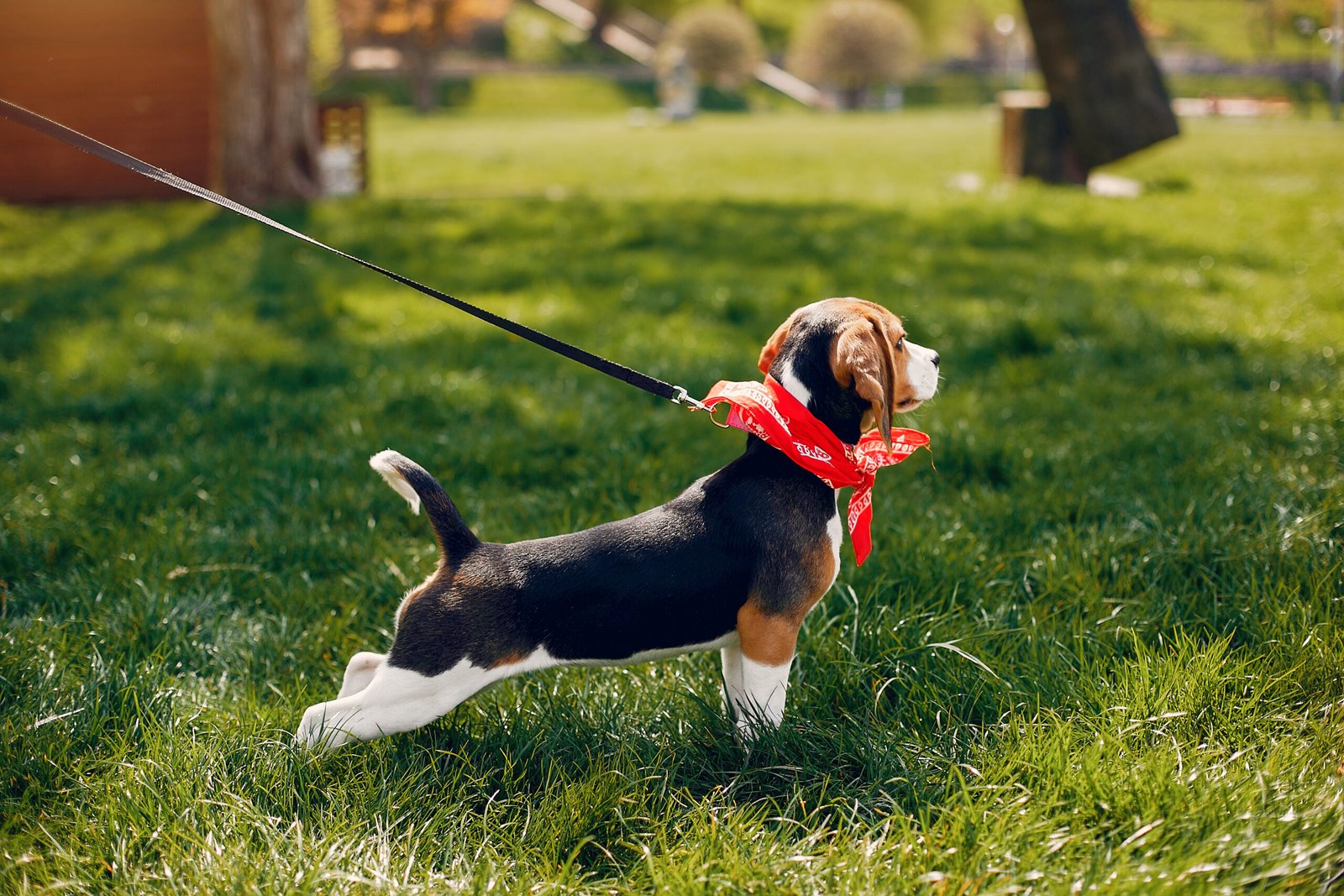
Why Do Dogs Pull on the Lead?
Dogs don’t naturally know how to walk on a lead. Pulling often works for them—they reach smells, people, or other dogs faster. Other reasons include:
- Excitement or excess energy
- Lack of training or unclear boundaries
- Anxiety or overstimulation
- Moving faster than a human naturally walks.
Understanding the reasons behind pulling lets you address the root cause. Next, let’s look at how to set your dog up for success with proper equipment.
Start With the Right Equipment
Training is most important, but using the right gear can make learning easier:
- Front-clip harnesses: These help turn your dog back toward you if they pull.
- Well-fitted flat collars: These are suitable for dogs who already have basic lead manners.
- Avoid choke chains or prong collars. These can cause pain and increase anxiety.
Equipment supports training, but alone won’t stop pulling.
Teach Loose Lead Walking (Step by Step)
Loose lead walking means your dog stays close to you without pulling. To teach this, follow these steps: Stop walking as soon as your dog pulls; reward your dog when the lead goes slack or when they check in with you; and if pulling continues, calmly change direction. Begin with short, low-distraction sessions.
1. Stop moving immediately if your dog pulls. Do not yank the lead; just wait. This teaches that pulling does not work.
2. Reward the Right Position
When your dog stays beside you, or the lead loosens, use praise or a treat and continue walking.
3. Change Direction
If pulling continues, calmly turn and walk away to redirect your dog’s focus.
4. Keep Walks Short at First
Keep early training sessions short and in quiet places. Success builds your dog’s confidence.
Use Positive Reinforcement
Reward-based training works best. Bring small treats and reward your dog for:
- Walking beside you
- Checking in with eye contact
- Staying calm around distractions
Gradually, as your dog improves, you can phase out treats and rely more on praise. Equally important is managing your dog’s energy so they’re ready to focus during training.
Manage Energy Levels
A dog with too much energy won’t walk calmly. Before training, try:
- A short play session
- Mental stimulation (puzzle toys or training games)
- Sniffing time (which is mentally tiring for dogs)
A calm, focused dog learns faster. Beyond energy, consistency is key to lasting results. Let’s see how to stick to your training plan.
Be Consistent (This Is Crucial)
Everyone who walks your dog should use the same approach. If pulling ever succeeds, your dog will keep trying it. Consistency turns training into a habit.
When to Get Extra Help
If you can’t solve pulling with training, seek help from a qualified dog trainer—personalized advice can bring results.
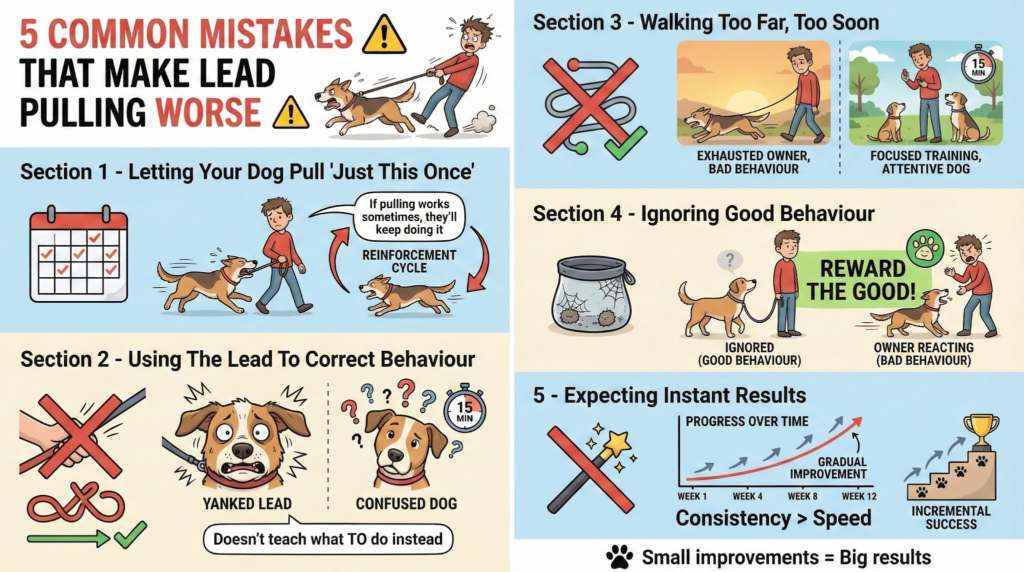
Common Mistakes That Make Lead Pulling Worse
Even well-meaning owners may encourage pulling. Avoid these mistakes:
- Letting your dog pull “just this once.”
Remember: If pulling gets your dog what they want, they’ll repeat it. Never allow it, not even once. - Using the lead to correct behaviour
Key point: Yanking the lead causes anxiety and confusion. Instead, teach what behaviors you want with reward-based training. - Walking too far, too soon
Key takeaway: Short, focused training walks build habits faster than long walks for untrained dogs. - Ignoring good behaviour
Takeaway: Reward calm walking to reinforce good habits—not just correct pulling. - Expecting instant results
Patience pays off. With repeated practice and steady effort, you’ll see your dog’s walking behaviour improve. For quicker reference, try the simple, step-by-step method below.
The Simple Training Method
Step 1: Stop When They Pull
Stop walking as soon as the lead tightens and wait calmly without pulling back.
Step 2: Reward Calm Walking
When your dog comes back to you, or the lead loosens, praise them or give a treat, then continue walking.
Step 3: Be Patient and Repeat
Takeaway: Patience pays—your dog learns that calm walking leads to rewards.
Keep Practice Short
Key takeaway: Choose short, calm walks in quiet places to help your dog succeed early on.
Stay Consistent
Everyone walking your dog should use the same approach. Consistency helps your dog learn quickly.
Conclusion
Progress will not always be perfect. Some days will be better than others, and that is normal. Keep going, reward good behaviour, and calm walks will happen.
Final Thoughts
Stopping lead pulling isn’t about strength—it’s about communication. With patience, the right tools, and consistent training, walks can become a calm, enjoyable time for both you and your dog. And remember: progress may be gradual, but every loose-lead step is a win. 🐾
Leave a Reply