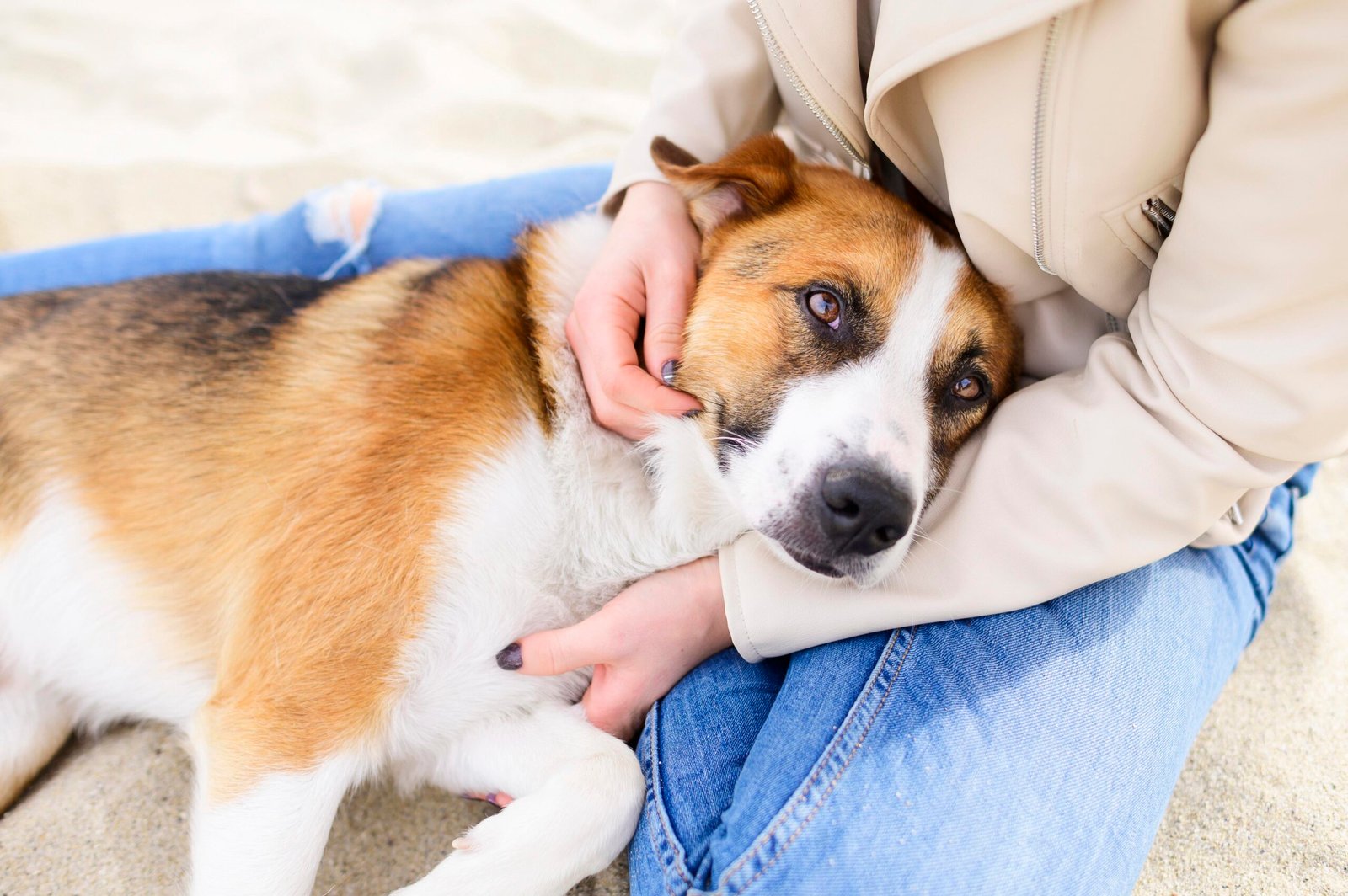
Dogs often hide pain, an instinct from their wild ancestors, when showing weakness was dangerous. This can cause dogs to suffer quietly, leaving owners unsure whether the discomfort is serious or minor.
Recognising signs of pain in dogs lets you act early, improve comfort, and keep minor issues from becoming major problems.
Common Behaviour Changes That May Signal Pain
Subtle behaviour changes are often the first warning.
- Reduced interest in walks, games, or toys
- Increased irritability, snapping, or growling
- Becoming withdrawn or unusually clingy
- Restlessness, pacing, or trouble settling at night.
A change in your dog’s personality may signal pain.
Changes in Movement, Mobility, and Posture
Pain often changes how a dog moves or stands.
- Limping or stiffness, especially after rest
- Difficulty standing, sitting, or lying down
- Hesitation when using stairs or jumping
- Hunched back or lowered head
- Slower pace on walks
Joint pain, muscle strain, or arthritis commonly affects medium to large breeds.
Vocal Signs of Pain in Dogs
Not all dogs cry out, but some do.
- Whining or whimpering
- Growling when touched
- Sudden barking without a clear cause
Take prompt action if any new or unusual vocalisation is observed.
Eating, Drinking, and Toilet Changes
Pain disrupts routines.
- Reduced appetite or reluctance to chew
- Drooling or pawing at the mouth
- Drinking more or less than usual
- Accidents indoors or straining to use the toilet
Dental pain, digestive issues, or internal discomfort may be involved.
Excessive Licking, Chewing, or Scratching
Dogs often self-soothe sore areas.
- Licking one spot repeatedly
- Chewing paws or joints
- Over-grooming that causes redness or bald patches.
This can indicate joint pain, skin irritation, or nerve discomfort.
Facial Expressions and Body Language
Pain is often visible in your dog’s face.
- Squinting or half-closed eyes
- Flattened or pinned-back ears
- Tense jaw or tight mouth
- Avoiding eye contact
Veterinarians increasingly use facial expressions as reliable indicators of pain.
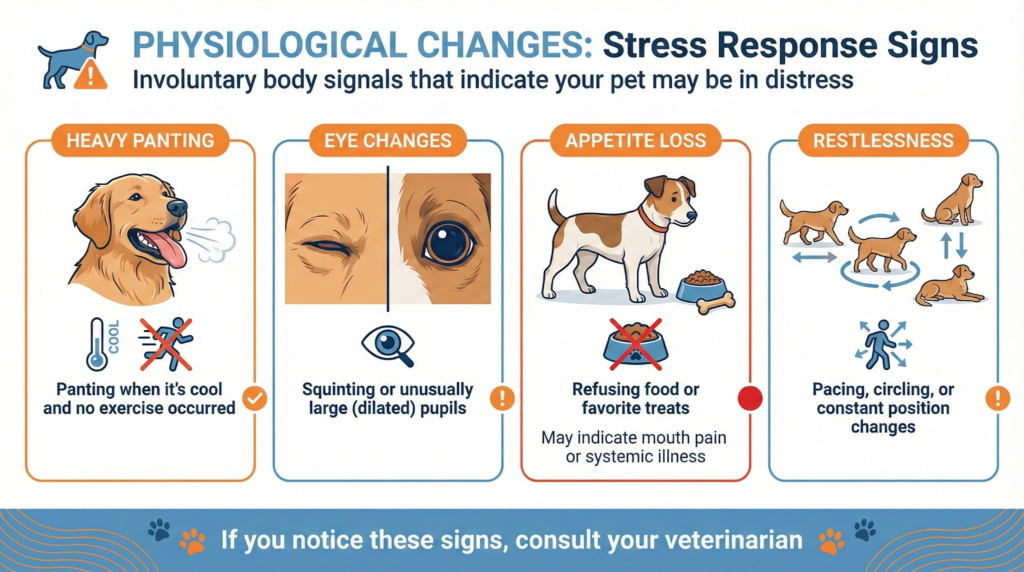
Physiological Changes
Some signs are involuntary and relate to the body’s stress response.
Signs of Pain in Puppies
Pain in puppies can be harder to spot because playfulness masks discomfort.
Watch for:
- Sudden yelping during play
- Reluctance to run or jump
- Excessive sleeping or hiding
- Limping after exercise
- Chewing at joints or paws
Growing pains, injuries, and swallowed objects are common concerns for puppies.
Signs of Chronic Pain in Senior Dogs
Chronic pain develops slowly and is often mistaken for normal ageing.
- Slower movement or shorter walks
- Difficulty rising after rest
- Sleeping more than usual
- Weight gain due to reduced activity
- Increased grumpiness or anxiety
Arthritis is common in older dogs and often responds to treatment and lifestyle adjustments.
But when are signs of pain serious enough for veterinary care? Know when to make the call.
Contact your vet if:
- Pain signs last longer than 24 hours
- Symptoms appear suddenly or worsen.
- Your dog cries out, collapses, or won’t move.
- There’s vomiting, diarrhoea, or bleeding.
⚠️ Never give human painkillers to dogs. If you suspect pain, call your vet immediately for safe advice—many medications are toxic and potentially fatal.
How Practical Dog Gear Can Help Reduce Pain
Veterinary care is essential, but the right equipment can greatly improve comfort.
Helpful options include:
- Orthopaedic dog beds for joint support
- Non-slip mats on hard floors
- Ramps or steps for sofas and cars
- Well-fitting harnesses instead of neck collars
Comfort-focused gear like supportive beds and ramps helps reduce strain on joints and muscles, preventing pain from getting worse and aiding recovery.
Frequently Asked Questions (FAQ)
How can I tell if my dog is in pain but hiding it?
Look for changes, not dramatic symptoms. If you suspect pain, keep a diary of your dog’s behaviour and consult your vet with specific examples to help them assess the situation.
Do dogs always cry when they’re in pain?
No. Many dogs never vocalise at all, even with severe discomfort.
Can dogs have pain for weeks without obvious signs?
Yes. Chronic pain develops gradually and is commonly overlooked until mobility drops significantly.
Is limping always painful?
Almost always. Even mild limping suggests discomfort and should be monitored closely.
Final Thoughts
You know your dog better than anyone. Trust your instincts—if something feels off, it probably is. Spotting pain early allows for quicker treatment, better comfort, and a happier, healthier life for your dog.
A comfortable dog isn’t spoiled — they’re supported. 🐾
Leave a Reply