A Practical guide to keeping your dog safe (and your house intact)
Dog-proofing your home is one of the best things you can do for your dog’s safety—and your own sanity. Dogs are naturally curious, and what looks harmless to us can be tempting or dangerous to them. With a few sensible adjustments, you can create a space where your dog can relax, explore, and behave like a dog without constant supervision.
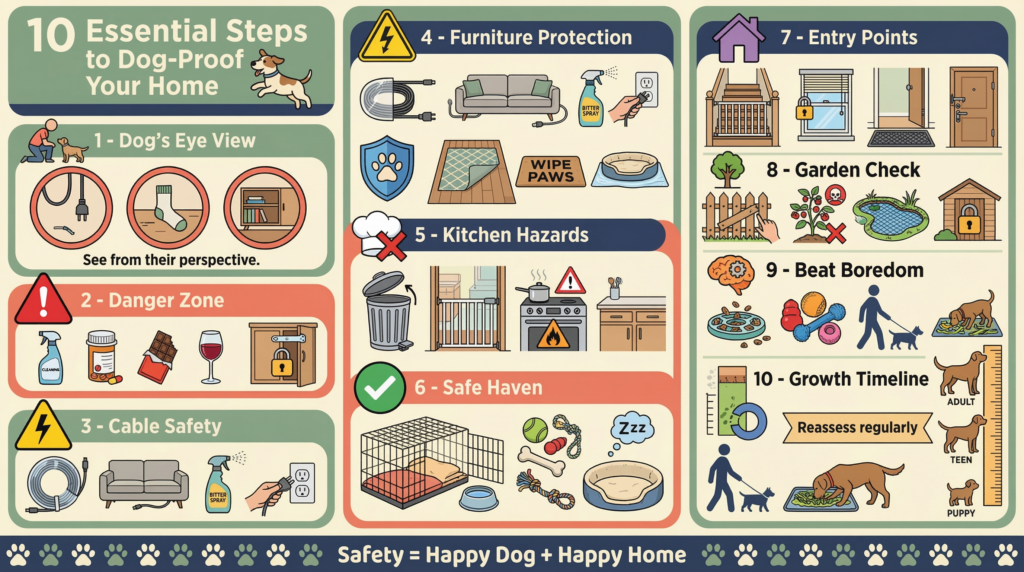
1. Start at Dog Level
See your home the way your dog does. Get down to their height and look for hazards they might spot before you do.
Pay attention to anything that:
- Hangs down
- Moves when nudged
- Smells interesting
- Can be picked up easily
If your dog can access it, they will eventually explore it. Clearing surfaces and using storage containers can significantly reduce temptation.
2. Secure Dangerous Items
Ordinary household products can be dangerous for dogs. Store harmful items securely, no matter how well-behaved your dog is.
Items to keep securely stored include:
- Cleaning sprays, tablets, and pods
- Painkillers, supplements, and vitamins
- Chocolate, grapes, raisins, onions, and artificial sweeteners
- Alcohol and caffeine
Install cupboard locks to prevent your dog from accessing hazardous items, especially if they know how to open doors with their noses.
3. Manage Cables and Plug Sockets
Cables attract dogs, especially puppies. Chewing them risks electric shock, burns, or injury—even from boredom.
Helpful steps include:
- Using cable covers or trunking
- Keeping wires behind furniture or against walls
- Unplugging unused electronics
- Applying pet-safe bitter sprays to cords
If your dog repeatedly targets cables, it’s a sign they need more enrichment or supervision, not punishment.
4. Protect Floors and Furniture
Muddy paws and shedding are part of dog life. Choose easy-care materials to protect your home without sacrificing comfort.
Consider:
- Washable throws or sofa covers
- Easy-clean rugs instead of wall-to-wall carpet
- Door mats near entrances
- Waterproof liners under beds or crates
If your dog chews things, provide suitable alternatives and actively praise them when they choose the correct item. Reinforce good choices with attention or treats.
5. Dog-Proof the Kitchen
Kitchens are full of tempting smells and hazards for dogs—especially bins and countertops.
Common dangers include:
- Hot hobs and oven doors
- Sharp utensils
- Food wrappers, bones, and packaging
Use a lidded bin to control access to garbage, keep all worktops clear of food and hazards, and install a baby gate to block the kitchen during cooking times.
6. Create Safe Zones
Dogs don’t need access to every room at all times. Creating designated, safe areas helps them settle and reduces the risk of trouble.
A good safe zone should include:
- A comfortable bed or crate
- Fresh water
- A few safe toys or chews
- Minimal hazards
Use safe areas, especially for puppies, new rescues, or dogs who get overwhelmed easily, so they have a quiet place to retreat.
7. Check Windows, Doors, and Stairs
Dogs are prone to slips, falls, or escapes near stairs, windows, and doors.
Improve safety by:
- Using stair gates if your dog rushes up and down
- Securing low windows and balcony access
- Adding non-slip mats on smooth floors
- Ensuring doors close fully and latch properly
Taking these precautions can protect your dog from injury.
8. Outdoor Areas Matter Too
Your garden can be just as risky as your home. Dogs find gaps, toxins, or hazards you may overlook.
Do a regular check for:
- Loose or damaged fencing
- Toxic plants and bulbs
- Ponds or uncovered water features
- Tools, fertilisers, and pesticides
Even small changes, like locking a shed or raising plant pots, can make a big difference.
9. Boredom Causes Trouble
Destructive behavior often comes from boredom or a lack of stimulation. Meeting needs is key.
Help prevent boredom by providing:
- Puzzle feeders and slow feeders
- Chew toys with different textures.
- Rotated toys to keep things interesting
- Daily walks and mental games
Mental stimulation is just as vital as physical exercise.
10. Adjust as Your Dog Grows
Dog-proofing is ongoing. Puppies grow, and routines change, so adapt as your dog develops.
Revisit your setup:
- After growth spurts
- When routines change
- If new behaviours appear
What worked at 10 weeks may not work at 10 months.
Final Thoughts
Dog-proofing is about safety and joy. A secure home lets your dog be themselves and keeps you prepared.
If your dog manages to find the one thing you missed, you have a very determined dog.
Leave a Reply